The Ultimate Procurement Guide: Maximizing ROI with Magnetic PVC Strip Curtains for Cold Storage & Industrial Facilities
In today's competitive industrial landscape, operational efficiency is paramount. For facility managers and procurement specialists, finding solutions that reduce overhead while boosting productivity is a constant challenge. This guide delves into one of the most impactful solutions: the industrial magnetic PVC strip curtain, a critical asset for temperature control, hygiene, and workflow optimization.
The Core Innovation: How Self-Closing Magnetic Seals Outperform Standard Strip Doors

Deconstructing the Mechanism: The Science of a Hands-Free Magnetic Seal
The ingenuity of a magnetic PVC curtain lies in its simplicity and effectiveness. Unlike traditional strip doors that rely on gravity, these curtains feature industrial-grade magnets hermetically sealed along the vertical edges of each strip. This creates a self-closing system that automatically forms a near-perfect seal after every passage, whether by personnel or machinery. This hands-free operation is not just a convenience; it's a core functional advantage that ensures the environmental barrier remains consistently intact with minimal human intervention.
Performance Gap Analysis: Why Gravity-Fed Strips Fail in High-Traffic Environments
Standard hook-on strips inevitably leave gaps. Air pressure differentials, drafts, or simple wear-and-tear cause them to rest improperly, creating pathways for energy loss and contaminant entry. In high-traffic zones, this issue is magnified, rendering them ineffective. Magnetic curtains solve this problem by actively pulling the strips together, ensuring a complete, reliable seal every time. This robust closure is the key differentiator that translates directly into measurable operational benefits.
Key Components of a Magnetic System: Strips, Magnets, and Mounting Hardware
A high-performance magnetic curtain system is an synergy of its parts. B2B buyers should consider: PVC Strips for their grade (Standard or Polar for cold), thickness, and transparency; Embedded Magnets for their strength and waterproof sealing; and Mounting Hardware (typically stainless or galvanized steel) for corrosion resistance and ease of installation. A cohesive system ensures longevity and peak performance.
Request a Quote for Your FacilityCalculating the ROI: A Financial Framework for Magnetic Curtain Investment

Quantifying Energy Savings: A Model for Cold Storage & HVAC Efficiency
The most significant return on investment comes from energy conservation. An unsealed doorway in a refrigerated environment can account for up to 50% of the cooling load. By creating a superior thermal barrier, magnetic curtains can reduce this energy loss by over 75%. This translates to immediate and substantial reductions in electricity bills, less strain on HVAC systems, and a rapid payback period on the initial investment.
The Impact of Contamination Control on Product Spoilage and Quality Metrics
In food, pharmaceutical, and electronics industries, contamination is a direct threat to the bottom line. Magnetic curtains form a robust barrier against dust, pests, and humidity, protecting product integrity. This reduction in spoilage and rejects improves yield and helps maintain compliance with stringent quality standards like HACCP and GMP, avoiding costly penalties and recalls.
Total Cost of Ownership (TCO): Beyond the Upfront Price Tag
While the initial cost may be higher than standard strips, the TCO of a magnetic system is significantly lower. The calculation must include reduced energy costs, minimized product loss, lower maintenance on HVAC systems, and the extended lifespan of a durable, well-engineered product. Smart procurement focuses on this long-term value, not just the upfront price.
Material Science Deep Dive: Selecting the Right PVC Grade for Peak Performance

Standard vs. Low-Temp (Polar) Grade: A Temperature-Based Decision Matrix
Choosing the correct PVC grade is non-negotiable. Standard Grade PVC is suitable for ambient temperatures (0°F to 150°F / -18°C to 66°C). For any sub-zero environment, Low-Temp (Polar) Grade PVC is essential. It is specially formulated to remain flexible down to -40°F/C. Using standard PVC in a freezer will cause it to become brittle and crack, leading to system failure.
The Role of Strip Thickness and Overlap in High-Impact Industrial Zones
For areas with heavy forklift and pallet jack traffic, durability is paramount. Thicker strips (e.g., .120" or 3mm) offer greater resistance to tearing and abrasion. A higher percentage of overlap (from 50% to 100%) creates a more robust physical and thermal barrier, especially on large doorways or those exposed to wind.
Ribbed vs. Smooth Strips: A Comparative Analysis for Durability and Scratch Resistance
Ribbed strips are designed with raised ridges on the surface. This design ensures that the main body of the strip does not make full contact with passing loads, significantly reducing scratching and preserving visibility over time. While smooth strips offer perfect clarity initially, ribbed strips are a strategic choice for high-traffic forklift routes to extend the product's functional life.
Application Analysis: Cold Storage and Freezer Environments

Maintaining the Cold Chain: Critical Temperature Stability with Magnetic Barriers
The integrity of the cold chain is vital for food safety and pharmaceutical efficacy. Magnetic PVC strip barriers provide an exceptionally tight thermal seal, stabilizing internal temperatures and preventing the fluctuations that can compromise product quality. Their self-closing nature ensures this protection is constant, even during peak operational hours.
How a Superior Seal Reduces Ice Buildup and Defrost Cycle Frequency
The primary cause of ice buildup on evaporator coils and freezer walls is the infiltration of warm, moist air. By creating a near-airtight seal, magnetic curtains drastically reduce this infiltration. The result is fewer and shorter defrost cycles, which saves significant energy and maintains more consistent storage temperatures.
Ensuring Food Safety Compliance (HACCP, FDA) with Heavy-Duty Freezer Curtains
Heavy-duty magnetic freezer curtains are a critical control point in any HACCP plan. They not only maintain required temperatures but also prevent cross-contamination by acting as a physical barrier and enabling hands-free movement. This helps facilities meet and exceed FDA and USDA requirements for safe food handling and storage.
Get Bulk Pricing on Freezer CurtainsApplication Analysis: Food Processing and Pharmaceutical Cleanrooms

Minimizing Airborne Particulates for ISO Cleanroom Standard Compliance
In sterile environments, controlling airborne particulates is everything. Magnetic vinyl strip doors create a floor-to-ceiling barrier that effectively blocks dust, pollen, and microbes. The smooth, non-porous PVC surface is easy to sanitize and does not shed fibers, making it an ideal and cost-effective solution for maintaining ISO cleanroom standards and protecting sensitive processes.
Enhancing Hygiene Protocols with Hands-Free, No-Contact Passage
Minimizing surface contact is a fundamental principle of hygiene. The hands-free nature of magnetic curtains eliminates the need for staff to touch door handles or push through strips with their hands, directly reducing the risk of cross-contamination between different processing zones. This simple feature is a powerful tool in any hygiene protocol.
The Role of Magnetic Curtains in Integrated Pest Management (IPM) Programs
A tight, gap-free seal is the first line of defense in any Integrated Pest Management (IPM) program. Magnetic curtains form a formidable physical barrier against insects, rodents, and other pests, preventing their entry into production and storage areas. This reduces the need for chemical pest control measures and helps ensure product purity.
Application Analysis: Warehouses and High-Traffic Logistics Hubs

Enhancing Safety and Visibility for Forklift and Pedestrian Traffic
In a busy warehouse, visibility is safety. High-quality transparent magnetic PVC strips provide a clear line of sight, allowing forklift operators and pedestrians to see what—or who—is on the other side of a doorway before passing through. This simple feature dramatically reduces the risk of costly and dangerous collisions.
Streamlining Workflow: The Impact of Self-Closing Doors on Cycle Times
Every second counts in logistics. Self-closing magnetic doors eliminate the need for forklift drivers to stop, dismount, and manually open or close a door. This creates a continuous, uninterrupted flow of traffic between the dock, staging areas, and storage, boosting productivity and shortening cycle times.
Noise Abatement Strategies: Using PVC Curtains as an Acoustic Barrier
The dense PVC material and tight magnetic seal also serve as an effective acoustic barrier. They can significantly reduce noise transmission from loud machinery on the production floor to quieter office or administrative areas, helping to meet OSHA noise exposure limits and creating a more comfortable and productive work environment for all employees.
Procurement Strategy: Leveraging OEM and Bulk Purchasing for Maximum Value
Why Factory-Direct Sourcing Delivers Superior Cost, Quality, and Customization
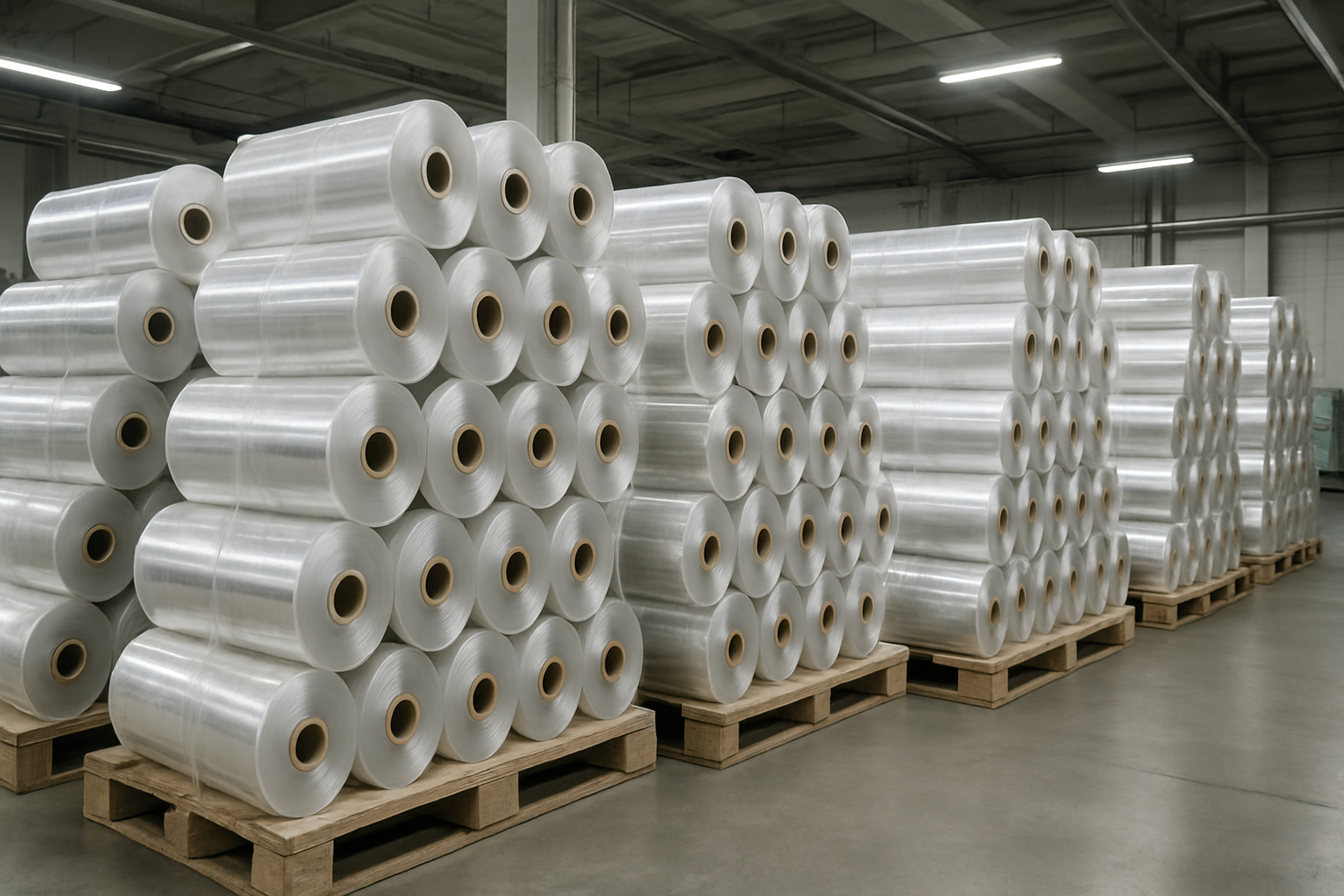
Sourcing directly from an Original Equipment Manufacturer (OEM) is the most strategic approach for B2B procurement. It cuts out distributor and reseller markups, resulting in substantial cost savings, especially on bulk orders. Furthermore, an OEM partner offers deep product knowledge, superior quality control, and the ability to provide fully customized solutions that a general supplier cannot match.
The Advantages of Custom-Sized Solutions for Non-Standard Openings
One size does not fit all. Facilities often have oversized, undersized, or irregularly shaped openings that require a tailored solution. An OEM can manufacture custom-sized magnetic curtains to your exact dimensions, ensuring a perfect fit, optimal seal, and maximum performance where off-the-shelf products would fail.
Ensuring Product Consistency and Simplified Logistics Across Multiple Facilities
For companies with multiple sites, partnering with a single OEM supplier guarantees product consistency, quality, and pricing across all locations. This simplifies procurement with standardized SKUs, streamlines maintenance procedures, and ensures that every facility benefits from the same high level of performance and safety, reinforcing brand standards nationwide or globally.
Discuss Your OEM Program NeedsA Facility Manager’s Guide to Installation and System Integration
Pre-Installation Checklist: Accurate Measurement and Header Inspection
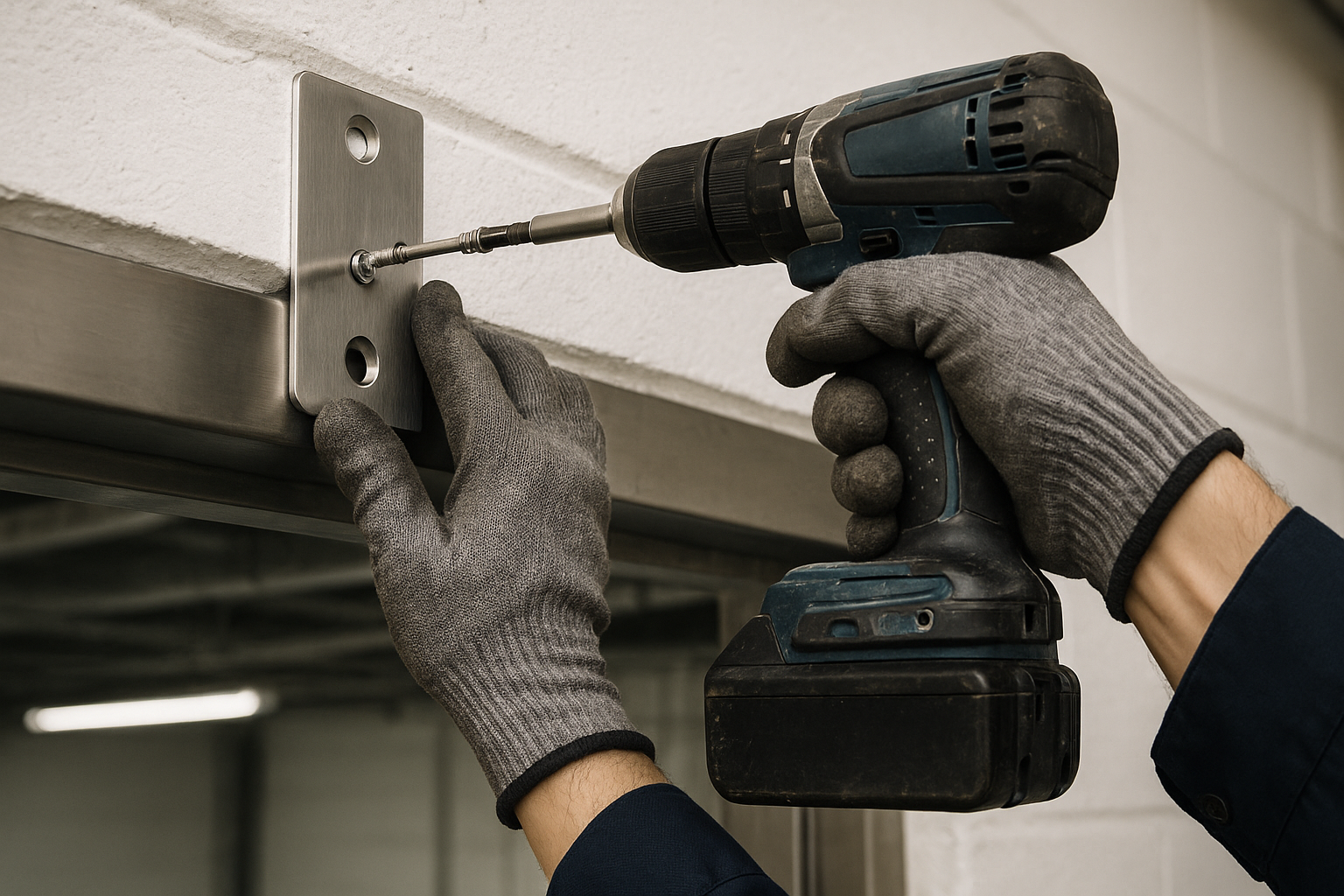
Proper installation begins with preparation. First, accurately measure the height and width of the finished opening. Second, inspect the area above the doorway (the header) to ensure it is structurally sound, level, and free of obstructions like pipes or conduits. This ensures the mounting hardware can be securely attached.
Step-by-Step Installation: Wall Mount vs. In-Jamb Mounting Hardware
Installation is straightforward. The most common method is the Wall (or Face) Mount, where the hardware track is installed on the wall above the opening. This typically provides the best seal. An In-Jamb Mount is used when there is insufficient header space. The process involves securing the track, then simply hooking the pre-punched PVC strips onto it, ensuring the correct overlap.
Post-Installation Checks for a Perfect Seal and Optimal Function
After hanging all strips, perform a final check. Ensure the strips hang just touching the floor for an optimal seal. Test the magnetic closure by walking through several times. Observe how quickly and completely the strips reseal, and check for any visible light gaps from the other side, adjusting strip overlap if necessary.
Long-Term Performance: Maintenance and Lifecycle Management

A Simple Cleaning and Maintenance Schedule for Optimal Transparency and Hygiene
To maximize the life and performance of your curtains, a simple maintenance routine is key. On a monthly basis, clean the strips with a mild soap and water solution to maintain transparency and hygiene. Avoid harsh or abrasive chemical cleaners, which can cloud or degrade the PVC material. A clear curtain is a safe curtain.
How to Inspect for Wear and Tear in Heavy-Duty Environments
Periodically inspect the curtains for signs of wear, especially in heavy-duty environments. Look for deep scratches that impair visibility, any tears near the mounting points at the top of the strips, and damage to the welded seams holding the magnets. The bottom of the strips typically sees the most wear and should be checked regularly.
Sourcing and Replacing Individual Strips to Extend Curtain Lifespan
One of the most significant advantages of a strip curtain system is its modularity. If a single strip becomes damaged, you do not need to replace the entire unit. Individual replacement strips can be sourced from your OEM supplier and easily swapped out, making repairs fast and cost-effective, and dramatically extending the lifecycle of your initial investment.
Navigating Compliance: Meeting OSHA, FDA, and Environmental Standards

Adhering to OSHA Guidelines for Workplace Safety and Visibility
Magnetic PVC curtains directly support compliance with OSHA guidelines. Their high transparency enhances visibility in high-traffic areas, helping to prevent collisions and meet safety standards for pedestrian and vehicle pathways. Furthermore, their noise reduction properties can help facilities stay within permissible noise exposure limits.
Meeting FDA and USDA Requirements in Food-Grade Environments
For facilities handling food and beverages, using materials that meet FDA and USDA standards is critical. Reputable OEM suppliers can provide magnetic PVC curtains made from accepted food-grade compounds. These curtains support HACCP plans by preventing contamination and maintaining temperature, forming a key part of a compliant food safety system.
The Role of Curtains in Fire Retardancy and Emergency Egress Plans
Many PVC formulations are available with fire-retardant properties that meet standards like NFPA-701. This is a critical consideration for safety compliance. While they form a barrier, the flexible strips can still be easily pushed through, ensuring they do not obstruct emergency egress routes for personnel evacuating a facility.
Comparative Analysis: Magnetic Curtains vs. Alternative Door Solutions

Cost-Benefit Analysis: Magnetic Strips vs. High-Speed Roll-Up Doors
High-speed roll-up doors offer a superior seal but come with a significantly higher initial cost, require electricity, and involve complex, expensive maintenance. Magnetic curtains offer comparable sealing performance for many applications at a fraction of the cost, require no power, and are simple to maintain. They represent the optimal balance of performance and value for most internal doorways.
Climate Control Effectiveness: Magnetic Curtains vs. Air Curtains
Air curtains create a barrier using a high-velocity stream of air. While effective for temperature separation, they consume a large amount of electricity and do not block physical contaminants like dust, insects, or noise. Magnetic curtains provide a physical barrier that stops all these elements while consuming zero energy, making them a more holistic and efficient solution.
Performance and Seal Integrity: Magnetic vs. Standard (Non-Magnetic) Hook-On Strips
This is the most critical comparison. The self-closing magnetic seal provides consistently superior performance over non-magnetic strips, which inevitably gap and leak energy. In any application where temperature, hygiene, or environmental separation is a priority, the enhanced seal integrity of a magnetic system makes it the clear winner and a wiser long-term investment.
Finalizing Your Specification: A Checklist for Procurement Managers

Defining Your Operational Environment: Temperature, Traffic, and Contaminants
Begin by clearly defining the needs of the specific doorway. What is the ambient temperature? Will it face freezer conditions? What type and volume of traffic will pass through (personnel, carts, forklifts)? What contaminants need to be controlled (dust, pests, moisture)? This information is crucial for selecting the right product.
Choosing the Right Material, Thickness, and Overlap Percentage
Based on your environment, select the material grade (Standard or Polar), strip thickness (thicker for heavier traffic), and overlap percentage (higher for better sealing). For example, a high-traffic freezer doorway would require Polar Grade, .120" thick strips with 100% overlap for maximum performance and durability.
Gathering Door Dimensions and Hardware Requirements for a Custom Quote
Finally, gather precise measurements of the door opening (width and height) and determine the required mounting hardware (stainless steel for wash-down areas, galvanized for dry environments). With this complete specification, you can approach an OEM supplier for an accurate, comprehensive quote tailored to your facility's needs.
Submit Your Specifications for a Custom QuoteEAV Technical Specification Table
| Entity | Attribute | Value |
|---|---|---|
| Material | Grade | Standard, Polar (Low-Temp), Ribbed, Anti-Static, Welding Grade, Anti-Insect (Yellow) |
| Thickness | .080" (2mm), .120" (3mm), .160" (4mm) | |
| Width | 8" (200mm), 12" (300mm), 16" (400mm) | |
| Performance | Temperature Range (Standard) | 0°F to 150°F / -18°C to 66°C |
| Temperature Range (Polar) | -40°F to 140°F / -40°C to 60°C | |
| UV Resistance | Formulated with UV inhibitors for outdoor/sunlight exposure | |
| Sound Reduction | Up to 15-20 dB, depending on thickness and overlap | |
| Construction | Magnet Type | Neodymium or Ferrite, RF-welded into waterproof seams |
| Hardware Material | Galvanized Steel (Standard), Stainless Steel 304/316 (Food/Pharma Grade) | |
| Mounting Options | Wall Mount (Face Mount), In-Jamb (Header Mount), Universal Mount | |
| Overlap Options | 50% (Standard), 67% (Heavy Duty), 100% (Maximum Seal) | |
| Compliance | Certifications | REACH Compliant, RoHS Compliant, Phthalate-Free options available |
| Food/Health Safety | FDA 21 CFR, USDA accepted materials available | |
| Fire Retardancy | CFM, NFPA-701 standards met |
Frequently Asked Questions
What is the primary difference between magnetic and standard PVC strip curtains?
The key difference is the self-closing mechanism. Magnetic curtains have magnets embedded in the edges that actively pull the strips together for a complete, gap-free seal. Standard curtains rely only on gravity and often leave gaps, compromising temperature and contaminant control.
How much can you realistically save on energy costs?
In temperature-controlled environments like cold storage, a properly installed magnetic strip curtain can reduce energy loss through doorways by over 75%, leading to substantial reductions in electricity consumption and strain on HVAC/refrigeration systems.
What PVC grade is required for a walk-in freezer application?
For any sub-zero application, you must use Low-Temp or Polar Grade PVC. This material is specially formulated to remain flexible at temperatures down to -40°F/C. Standard PVC will become brittle, crack, and fail in freezer conditions.
Are these curtains suitable for heavy forklift traffic?
Yes, they are ideal for high-traffic areas. For forklift traffic, it's recommended to specify a thicker strip (e.g., .120" or .160") and potentially a ribbed profile to protect against scratches and abrasion, ensuring maximum durability.
Can they be customized for non-standard door sizes?
Absolutely. Reputable OEM suppliers specialize in providing custom-sized curtains tailored to exact specifications for any opening, including oversized conveyor belts, irregular doorways, and large warehouse bays.
How do magnetic curtains improve hygiene?
They enhance hygiene in two main ways: 1) by providing a tight physical barrier against dust, pests, and airborne contaminants, and 2) by allowing for hands-free passage, which reduces the risk of cross-contamination from touching door surfaces.