Comparing Magnetic PVC Curtains and Automatic Sliding Doors — Which One Is Better for Your Facility?
When upgrading your facility’s entrance, two popular options stand out: magnetic PVC curtains and automatic sliding doors. Both provide hands-free access, but for industrial, commercial, and logistics environments, they offer vastly different benefits in terms of cost, efficiency, and safety. This guide provides a comprehensive comparison to help procurement managers and facility owners make the most informed decision for their operational needs.
Initial Investment & Lifecycle Costs: A Deep-Dive Cost-Benefit Analysis
The financial implications of any facility upgrade are paramount. A direct comparison reveals a stark contrast in both upfront and long-term costs between magnetic PVC curtains and automatic sliding doors. Procurement specialists must look beyond the initial price tag to the Total Cost of Ownership (TCO) to understand the true financial impact.

Upfront Procurement Costs: Magnetic PVC vs. Automated Systems
Magnetic PVC curtains present a significantly lower initial investment. Their simple design, consisting of PVC strips, magnets, and mounting hardware, is inherently less expensive to manufacture and procure. In contrast, automatic sliding doors require complex mechanical components, including motors, sensors, tracks, and control systems, driving the initial procurement cost substantially higher. For businesses looking for a budget-friendly yet effective solution, evaluating the cost of industrial vinyl strip doors often reveals immediate savings.
This cost difference allows for broader implementation across multiple doorways within a facility for the same budget as a single automatic door installation. It's a key consideration for large-scale operations or for companies standardizing solutions across various sites. The accessibility of custom-size plastic strip doors further enhances their cost-effectiveness for non-standard openings, avoiding the high custom engineering costs associated with automated systems.
Evaluating the True Cost of Industrial Vinyl Strip Doors vs. Powered Doors
The "true cost" extends to installation and maintenance. PVC curtains can often be installed by in-house maintenance teams with basic tools, minimizing labor costs. Automatic doors, however, mandate specialized technicians for installation, calibration, and integration with building systems, adding significant expense. This makes the ROI of magnetic PVC curtains for facilities much more attractive from the outset.
Long-Term Financial Impact: Factoring in Energy, Maintenance, and Replacement Parts
Over the long term, the financial advantages of magnetic PVC curtains become even more pronounced. They consume zero electricity, directly impacting energy bills, whereas automatic doors are a constant source of power consumption. Maintenance for PVC curtains is minimal—periodic cleaning is usually all that's required. In contrast, automatic doors need regular servicing of motors, sensors, and tracks, with replacement parts being both costly and potentially leading to operational downtime.
Furthermore, the durability of heavy-duty industrial vinyl curtains, which can absorb impacts from forklifts and pallet jacks, means fewer repairs. An automatic door suffering a similar impact could be out of service for an extended period, incurring high repair costs and disrupting workflow. This resilience is a critical factor in calculating the overall TCO.
Safety, Hygiene, and Regulatory Compliance
Beyond cost, a facility's door solution plays a critical role in maintaining a safe and hygienic environment. This is especially true in sectors like food processing, pharmaceuticals, and busy logistics hubs where compliance with regulations like OSHA, FDA, and HACCP is non-negotiable.
Meeting OSHA Guidelines for Traffic Visibility and Noise Abatement
Safety is a primary concern in any industrial setting. High-quality transparent PVC curtains provide a clear line of sight, allowing forklift operators and pedestrians to see oncoming traffic and prevent collisions—a crucial OSHA requirement. Automatic doors, particularly solid or tinted ones, can create blind spots. The flexible nature of PVC strips also presents a lower risk of injury from impact compared to a rigid, heavy automatic door.
FDA & HACCP Compliance: Why Food Grade PVC Strip Curtains Excel
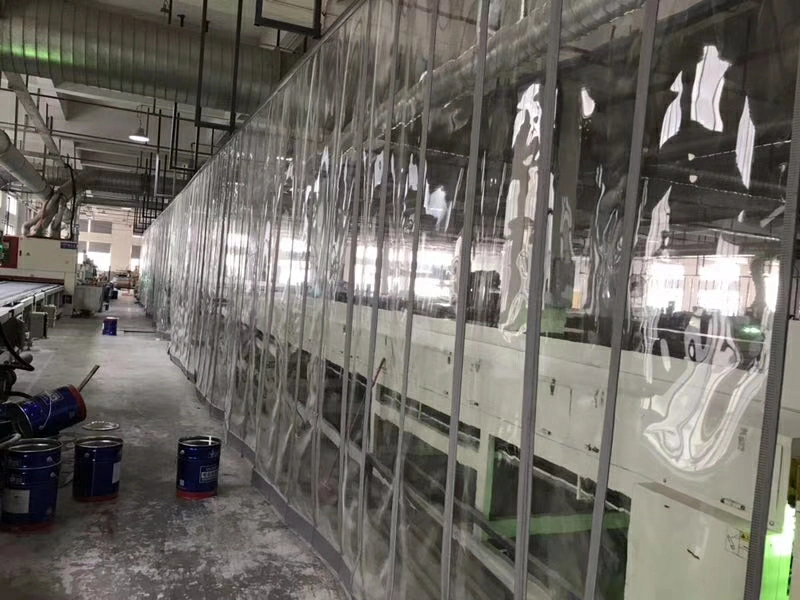
In food processing and cleanroom environments, preventing contamination is paramount. Food-grade PVC strip curtains create an effective barrier against dust, pests, and airborne particulates. Their smooth, non-porous surface is easy to clean and sanitize. The hands-free passage they afford minimizes contact, reducing the risk of cross-contamination—a key principle in HACCP plans and FDA guidelines. Automatic doors, with their complex mechanisms and floor tracks, can be harder to clean and may not provide the same level of particulate control.
Emergency Egress and Fire Retardancy Standards
While forming a barrier, PVC strip curtains do not impede emergency exits. Personnel can easily push through them during an evacuation. Many PVC materials are also available with fire-retardant properties to meet safety codes. Automatic doors, in contrast, may fail during a power outage, potentially blocking an egress path unless they have a reliable battery backup or breakaway feature, adding more complexity and cost.
Advanced Energy Efficiency & Thermal Dynamics

The Science of Thermal Barriers: How a Magnetic Seal Prevents Energy Loss
The primary function of a door in a climate-controlled environment is to prevent energy transfer. The self-closing magnetic seal on a PVC curtain creates a highly effective thermal barrier. The magnets ensure the strips snap back into place, forming a complete seal that minimizes air exchange between different temperature zones. This is a significant advantage over automatic doors, which can be slow to close and allow substantial air transfer during each cycle.
Comparing Industrial Door Solutions for Energy Efficiency in Climate-Controlled Zones
In cold storage or refrigerated areas, insulating PVC strip curtains are superior. The tight magnetic seal drastically reduces the infiltration of warm, moist air, which in turn reduces frost and ice buildup on evaporator coils. This leads to fewer and shorter defrost cycles, directly saving energy and maintaining more stable product temperatures.
Impact on HVAC Load, Defrost Cycles, and Overall Energy Consumption
By effectively separating environments, magnetic curtains reduce the workload on HVAC and refrigeration systems. This not only lowers monthly utility bills but also extends the lifespan of expensive equipment. When comparing industrial door solutions for energy efficiency, the passive, zero-energy, and highly effective sealing of magnetic PVC curtains often makes them the most financially sound choice.
Optimizing Facility Workflow & Traffic Management
Throughput Analysis: Instant Access vs. Sensor-Activated Delays
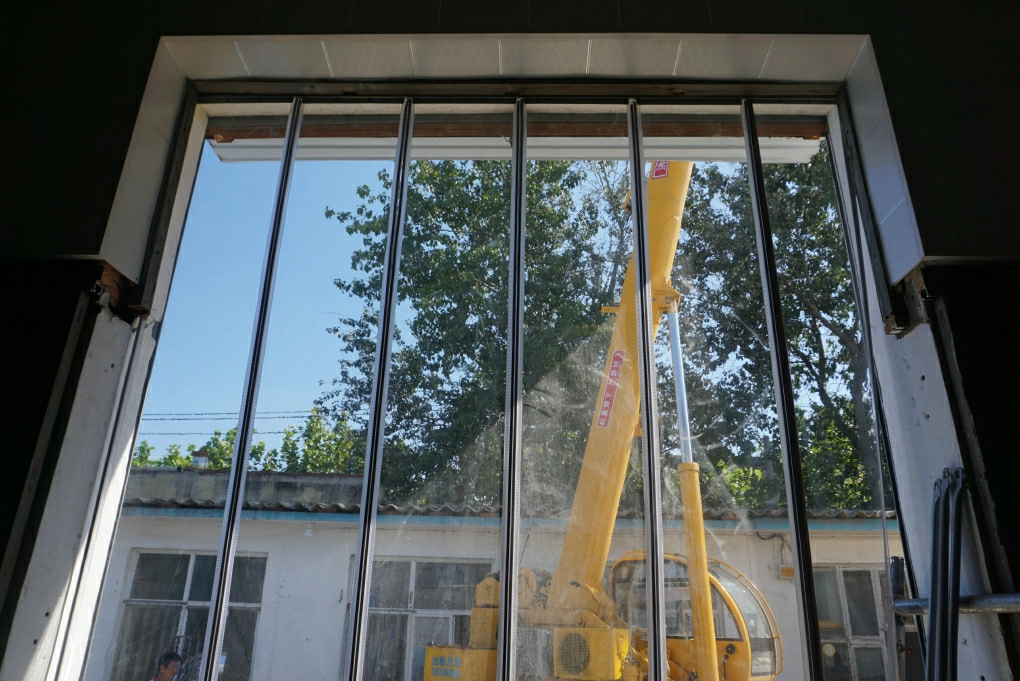
In a high-volume warehouse or logistics hub, seconds matter. Magnetic PVC curtains allow for instant, uninterrupted passage. A forklift or employee can move through without pausing. Automatic doors, governed by sensors, introduce a slight delay for sensor detection, door opening, and closing. While seemingly small, these delays accumulate over hundreds of cycles a day, leading to significant productivity loss and potential bottlenecks.
Managing Mixed Traffic: Forklift, Pallet Jack, and Pedestrian Flow
Magnetic curtains are uniquely suited for environments with mixed traffic. They accommodate everything from a person walking through to a fully laden forklift without any change in operation. Automatic doors are often designed primarily for pedestrian traffic and can be more susceptible to damage from heavy equipment, or may require separate, more robust systems for vehicle traffic.
Reducing Bottlenecks at Loading Docks and Internal Passageways
By providing seamless access, magnetic PVC curtains help to eliminate queues and bottlenecks at key transition points, such as between the loading dock and the main warehouse, or between production and storage areas. This smooth flow is critical for maintaining efficient supply chain operations and meeting tight schedules.
The Material Science of Facility Doors: PVC Grades vs. Mechanical Components
A Deep Dive into PVC: Standard, Polar, Ribbed, and Anti-Static Compounds
The versatility of PVC allows for specialized solutions. Standard grade is effective for most ambient temperatures, but for freezers, Polar (Low-Temp) grade is essential to prevent cracking. Ribbed PVC is designed to resist scratching from heavy traffic, maintaining visibility, while anti-static compounds are crucial for sensitive electronics environments. This material specialization offers a tailored solution that is often not possible with standard automatic doors.
Durability Showdown: Heavy Duty Industrial Vinyl Curtains vs. Motors, Sensors, and Tracks
Heavy-duty industrial vinyl curtains are inherently resilient. The flexible strips can absorb direct impacts from forklifts with minimal or no damage. In contrast, an impact on an automatic door can damage tracks, panels, or sensors, resulting in costly repairs and downtime. The simplicity of the PVC curtain design translates to superior durability in rugged industrial environments.
Environmental Resistance: UV Resistant Industrial Vinyl Curtains for Outdoor-Facing Openings
For doorways exposed to sunlight, UV-resistant vinyl curtains are available to prevent yellowing and degradation. This ensures a long functional life even in challenging conditions. The mechanical and electronic components of automatic doors can be more susceptible to environmental factors like dust, moisture, and temperature extremes, requiring more protection and maintenance.
Customization Capabilities & Bulk Procurement Programs
Sourcing Custom Size Plastic Strip Doors for Non-Standard Openings
Facilities rarely have uniform doorway sizes. A key advantage of PVC strip curtains is the ease of customization. Reputable manufacturers can produce curtains to fit any dimension, whether for an oversized loading bay or a small conveyor opening. This ensures a perfect fit and optimal seal, whereas customizing automatic doors for non-standard sizes is often prohibitively expensive.
The Advantages of OEM Partnerships for Multi-Facility Standardization
For corporations with multiple locations, partnering with an OEM (Original Equipment Manufacturer) for PVC curtains ensures consistency in quality, performance, and appearance across all sites. Bulk purchasing through an OEM program can lead to significant cost savings, simplified logistics, and standardized maintenance procedures, reinforcing brand standards and operational efficiency on a large scale.
Comparing Bulk Purchase Options: Factory-Direct PVC vs. Commercial Door Installers
Sourcing PVC curtains factory-direct cuts out the middleman, offering procurement managers the best possible pricing. Commercial door installers, who typically supply and fit automatic doors, add their own markup. For bulk purchases, the cost difference can be substantial, making factory-direct sourcing a strategically sound financial decision.
Head-to-Head Technical Comparison (EAV Model)
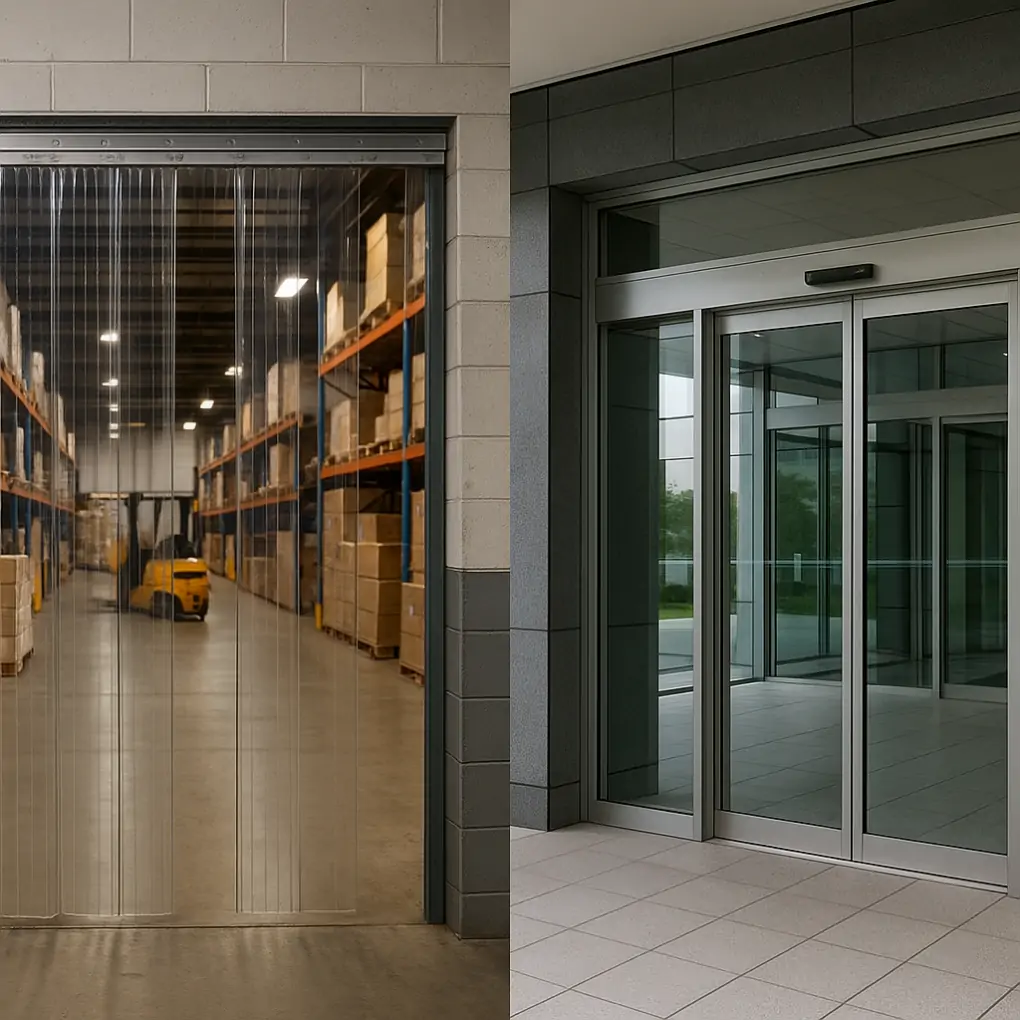
| Attribute | Magnetic PVC Curtain | Automatic Sliding Door |
|---|---|---|
| Initial Cost | Low | High |
| Energy Consumption | None | Moderate to High |
| Maintenance Needs | Low (periodic cleaning) | High (sensors, motors, tracks) |
| Installation | Simple (DIY-friendly) | Complex (requires specialists) |
| Passage Speed | Instant | Delayed (sensor activation time) |
| Seal Integrity | Very Good (self-sealing) | Excellent (when fully closed) |
| Traffic Suitability | Pedestrian, Cart, Forklift | Primarily Pedestrian/Light Cart |
| Durability | High (flexible strips absorb impact) | Moderate (prone to impact damage) |
| Noise Reduction | Good | Poor to Moderate |
| Contaminant Control | Excellent (physical barrier) | Good (when closed) |
Industry-Specific Application Guide: Which Door for Your Sector?
Cold Storage & Freezers: The Case for Insulating PVC Strip Curtains
For cold storage, the answer is unequivocally magnetic PVC curtains. Their superior thermal seal, low cost, and durability in sub-zero temperatures (with Polar Grade PVC) make them the industry standard. They prevent energy loss and reduce defrost cycles far more effectively and affordably than any automatic door.
Cleanrooms & Pharmaceuticals: Achieving Particulate Control
In cleanrooms, the primary goal is preventing contamination. The tight physical barrier of a magnetic curtain is excellent for controlling airborne particulates. Their hands-free operation and easy-to-sanitize surfaces make them a cost-effective solution for maintaining hygiene standards.
Food Processing: Why Food Grade PVC Curtains are the Standard
Similar to cleanrooms, food processing facilities rely on food-grade PVC curtains to meet HACCP requirements. They provide an effective barrier against pests and contaminants while allowing for the efficient, hands-free movement of personnel and equipment, safeguarding food safety.

Warehouses & Logistics: Choosing the Best Plastic Strip Doors for Warehouses
In high-traffic warehouses, efficiency and durability are key. Magnetic PVC curtains excel by allowing instant passage for forklifts and personnel, streamlining workflow. Their ability to withstand impacts makes them a more practical and resilient choice than fragile automatic doors in a rugged environment.
Calculating the ROI: A Practical Guide for Facility & Procurement Managers
Step 1: Auditing Your Current Energy Loss and Workflow Inefficiencies
Begin by identifying problem areas. Use thermal imaging to pinpoint energy loss around unsealed doorways. Track vehicle and personnel transit times through existing doors to identify bottlenecks. Quantifying these current inefficiencies is the first step toward building a business case for an upgrade.
Step 2: Modeling the Payback Period for Magnetic PVC Strip Curtains
With data on potential energy savings and productivity gains, you can model a payback period. Given their low initial cost and significant energy savings, magnetic PVC curtains often have a payback period of less than a year, and sometimes as short as 6-9 months in high-use refrigeration applications.
Step 3: Presenting the Financial Case for ROI of Magnetic PVC Curtains for Facilities
Present the full financial picture to stakeholders, highlighting the low upfront cost, minimal maintenance, energy savings, and productivity improvements. Emphasize the low Total Cost of Ownership (TCO) compared to the high capital and operational expenditure of automatic doors. A clear, data-backed ROI calculation makes the procurement decision simple and justifiable.
Frequently Asked Questions (FAQ) for Procurement Specialists
Which is better: plastic strip doors or sliding doors for my warehouse?
For most internal warehouse applications, especially those with forklift traffic and climate control needs, plastic strip doors (specifically magnetic ones) are better. They are more durable, cost-effective, energy-efficient, and allow for faster throughput than automatic sliding doors.
When should I choose PVC strip curtains over automatic doors?
Choose PVC strip curtains for high-traffic internal doorways, temperature-controlled zones (cold storage, freezers), areas requiring dust or pest control, and any location where budget, durability, and operational efficiency are top priorities. Automatic doors are better suited for customer-facing, high-end commercial entrances where aesthetics are paramount.
What is the real cost difference between magnetic PVC curtains and automatic doors?
The initial cost of an automatic door can be 5 to 20 times higher than a magnetic PVC curtain for the same size opening. When you factor in installation, electricity consumption, and higher maintenance costs for the automatic door, the total cost of ownership is significantly greater.
How do magnetic strip curtains for facilities handle heavy forklift traffic?
They handle it exceptionally well. By specifying heavy-duty, thicker PVC strips (e.g., .120" or 3mm) and a ribbed profile, the curtains can withstand repeated impacts from forklifts. Their flexibility allows them to absorb energy and swing back into place, unlike a rigid door which would be damaged.