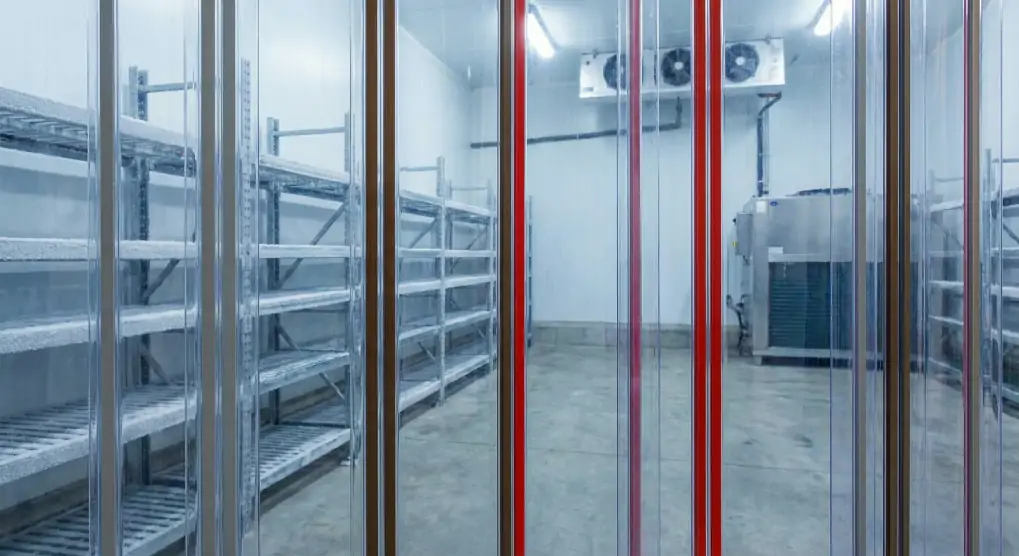
The landscape of industrial climate control and barrier technology is undergoing a seismic shift as we approach 2025. For decades, standard PVC strip curtains have been the backbone of warehouse thermal efficiency. However, the introduction and refinement of magnetic self-sealing PVC door curtains represents the most significant leap in functionality in over twenty years.
For procurement heads and factory owners, the decision to upgrade is no longer just about replacing worn-out strips; it is a strategic move towards automation-ready, energy-efficient, and safety-compliant facilities. This report delves deep into the 12 key trends defining this sector, providing a roadmap for bulk procurement and infrastructure planning.
1. Advanced Material Science Revolution in Magnetic PVC Door Curtains
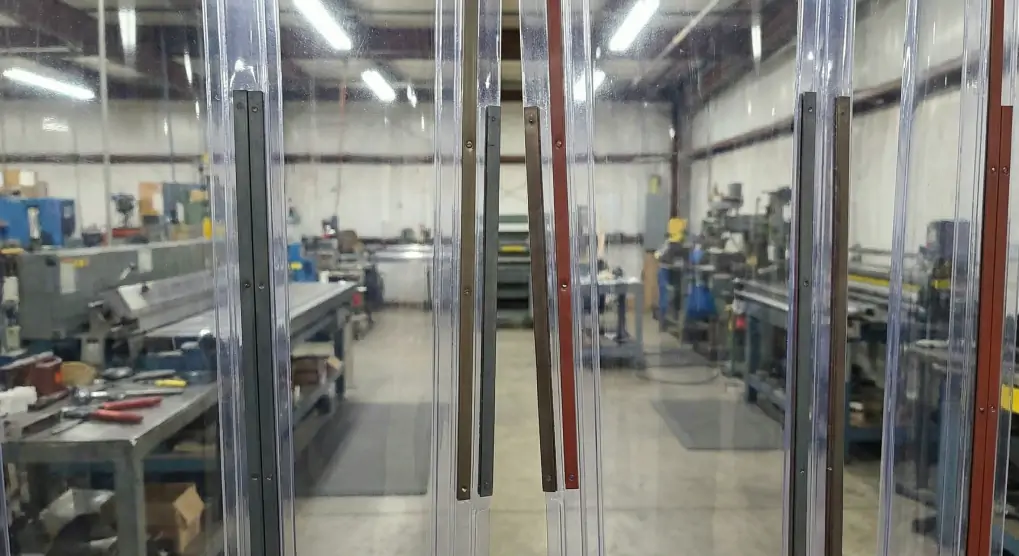
By 2025, the chemical composition of PVC (Polyvinyl Chloride) used in industrial curtains has evolved far beyond the simple plastic sheets of the early 2000s. The driving force behind this revolution is the demand for higher durability, extreme temperature resistance, and compliance with increasingly stringent global environmental standards. Procurement officers must now look beyond thickness and width to understand the molecular engineering that defines modern strip curtains.
Nanocomposite Reinforcement: The latest generation of industrial PVC strips incorporates nanocomposite fillers. These microscopic particles, often silicate-based or carbon nanotubes, are dispersed within the polymer matrix. The result is a material that exhibits a 40% increase in tensile strength and a 60% reduction in elongation under load compared to traditional PVC. For high-traffic warehouse doors where forklifts impact curtains hundreds of times a day, this translates to a lifespan extension of up to 18-24 months, significantly reducing the Total Cost of Ownership (TCO).
Non-Phthalate Plasticizers: Regulatory frameworks in the EU (REACH) and North America are pushing for the elimination of phthalates (like DEHP) due to health concerns. In 2025, premium magnetic curtains utilize DOTP (Dioctyl Terephthalate) or bio-based plasticizers derived from soy or citric acid. These alternatives not only meet health safety standards for food processing plants and pharmaceutical warehouses but also exhibit better migration resistance. This means the strips remain flexible for longer and do not turn brittle or yellow as quickly as their predecessors, maintaining the magnetic seal's integrity over years of use.
Upgrade Your Facility with Advanced Materials
Our 2025 catalog features REACH-compliant, nanocomposite-reinforced magnetic curtains designed for extreme durability. Request a material sample kit today.
Get Material Specs & Quote
UV Stabilization Technology: Yellowing and cracking due to UV exposure have historically been the Achilles' heel of clear PVC curtains, especially in loading docks exposed to direct sunlight. The 2025 standard involves the integration of Hindered Amine Light Stabilizers (HALS) directly into the extrusion process. Unlike surface coatings that wear off, intrinsic HALS capture free radicals generated by UV radiation, preventing polymer chain degradation. Field tests show that HALS-stabilized magnetic curtains retain 90% of their optical clarity after 3 years of exterior exposure, crucial for safety and visibility in busy logistics hubs.
Thermal Performance and Phase-Change Materials: An emerging trend for cold storage applications involves embedding Phase Change Materials (PCMs) within the PVC strip core. These micro-encapsulated waxes absorb and release thermal energy, acting as a thermal buffer. While standard polar grade PVC remains flexible at -40°C, PCM-enhanced strips provide an active thermal barrier that further reduces heat transfer by an estimated 15% during the critical seconds when the magnetic seal is broken during passage. This innovation is particularly relevant for blast freezers and food distribution centers aiming to minimize compressor load.
Magnetic Strip Integration: The "magnetic" aspect has also seen material upgrades. Early models used glued-on magnetic tapes which often delaminated. The 2025 standard is co-extrusion or thermal welding, where the magnetic polarity is embedded into a flexible polymer that is fused molecularly with the main PVC curtain. This ensures that the magnetic edge—often colored in warning red or industrial grey—is integral to the curtain, eliminating failure points and ensuring a snap-shut seal every single time.
2. IoT Integration and Smart Door Management Systems
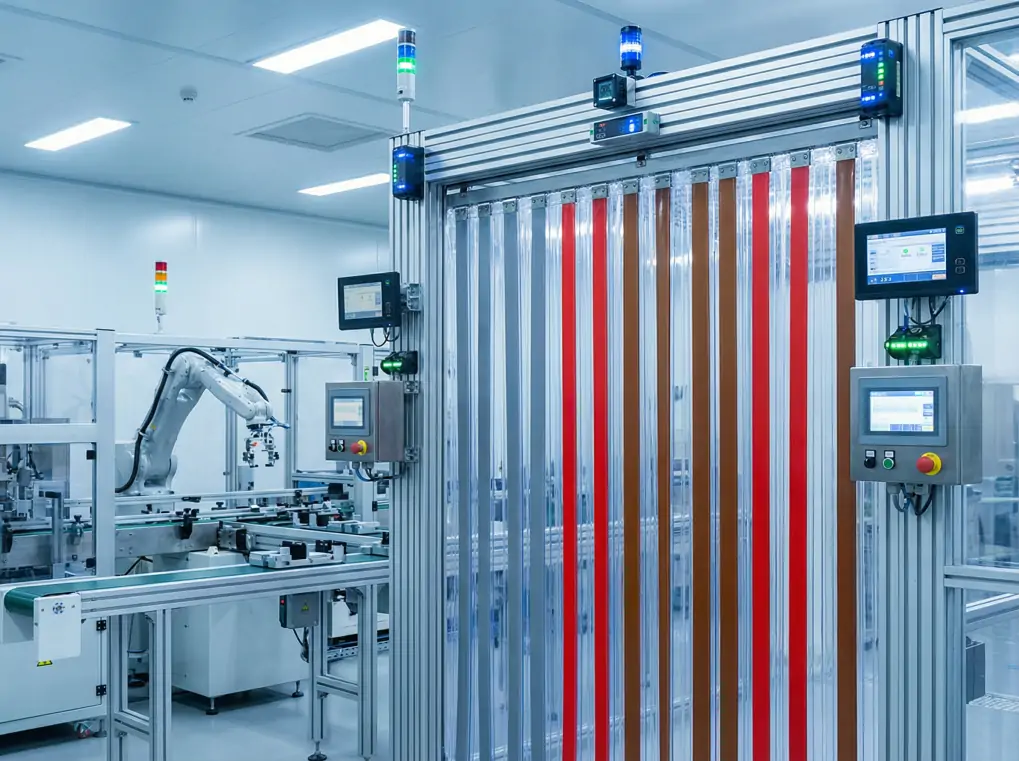
The industrial door is no longer a passive barrier; in the era of Industry 4.0, it is a data point. Magnetic PVC curtains are being integrated into broader Smart Warehouse ecosystems. While the curtains themselves are mechanical, their frames and mounting hardware are becoming intelligent. This shift is critical for large-scale logistics operations where analyzing traffic flow and thermal efficiency is key to optimization.
Embedded RFID and Asset Tracking: One of the most groundbreaking trends is the embedding of passive RFID chips within the PVC strips themselves or the magnetic edge. These chips allow Warehouse Management Systems (WMS) to track the lifecycle of each specific strip. Maintenance teams can scan a door to see exactly when it was installed, the specific grade of material used, and its warranty status. Furthermore, these smart strips can interact with forklift sensors. If a forklift approaches at unsafe speeds, the door frame (equipped with visual indicators) can flash warning lights, or the curtain system can log a "high-impact event" for safety audits.
Cycle Counting and Predictive Maintenance: Traditional maintenance of strip curtains is reactive—replace them when they break. IoT-enabled mounting hardware now includes cycle counters that track how many times the magnetic seal is broken (i.e., how many times the door is passed through). By analyzing this data, facility managers can predict wear patterns. For instance, if Door A has 5,000 cycles per month and Door B has 500, procurement can proactively schedule replacement strips for Door A before failure occurs, preventing energy loss and maintaining hygiene standards without unnecessary checks on Door B.
Smart Facility Solutions
Integrate your physical barriers with your digital infrastructure. Ask about our IoT-ready magnetic curtain mounting systems.
Contact Engineering Team
Traffic Flow Optimization: Data collected from smart magnetic doors provides invaluable insights into workflow. If a specific pedestrian door equipped with magnetic curtains shows an unusually high frequency of opening, it might indicate an inefficient workflow or a need for a permanent open passage during specific shifts. Conversely, if a large freight door is remaining open (magnetic seal broken) for extended periods, the system can alert supervisors to a potential propping violation, ensuring the facility's climate control integrity is maintained.
Integration with AGVs and AMRs: As Autonomous Mobile Robots (AMRs) become common in 2025 factories, magnetic curtains are adapting. Standard heavy-duty magnets can be difficult for lightweight AMRs to push through. The new generation of "Smart-Release" magnetic strips features variable magnetic strength or electro-magnetic assist at the header. When an AMR signals its approach via Wi-Fi or Bluetooth, the electro-magnets can temporarily reduce the holding force, allowing the robot to pass effortlessly, then re-engaging to full strength immediately after. This seamless handshake between soft barrier and robot is a defining feature of modern automated warehousing.
Energy Monitoring: Advanced installations pair magnetic curtains with local environmental sensors. By correlating the "door open" status with local temperature spikes, facility managers can calculate the exact cost of energy loss per door. This data allows for precise ROI calculations when justifying the upgrade from standard hanging strips to premium magnetic self-sealing systems, often proving that the investment pays for itself within 6-9 months through energy savings alone.
3. Enhanced Aesthetics, Branding, and Custom Design Solutions
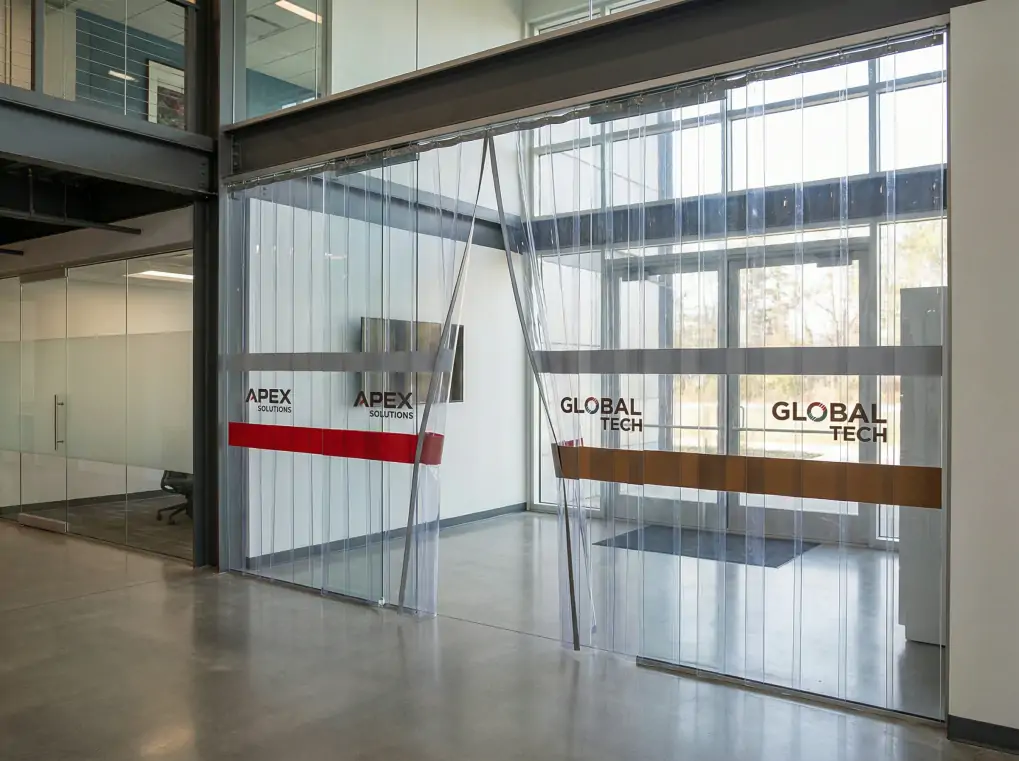
Gone are the days when industrial curtains were strictly utilitarian, grey, or cloudy sheets of plastic. In 2025, aesthetics and branding play a pivotal role in facility management. As manufacturing spaces become showpieces for clients and investors, the visual appeal of every element, including door barriers, is scrutinized. Magnetic PVC curtains have adapted to this demand through high-definition printing and custom color formulations.
Corporate Identity and Branding: Large logistics companies and automotive manufacturers are increasingly requesting "branded barriers." Using advanced UV-cured digital printing technologies, manufacturers can now print safety warnings, company logos, or zone identifiers directly onto the PVC strips without compromising transparency or flexibility. For example, a "Stop - Forklift Crossing" sign can be printed at eye level across three central strips. This not only reinforces safety protocols but also elevates the professional appearance of the facility. The ink used is formulated to bond with the PVC matrix, resisting abrasion from traffic and cleaning chemicals.
Zoning and Wayfinding: Color-coding is a major trend in 2025 lean manufacturing. Magnetic curtains are available in a spectrum of translucent and opaque colors.
- Red Transparent: Often used for welding bays or high-hazard zones, filtering harmful UV light while warning personnel of danger.
- Green/Blue Tint: Designates safe zones, pedestrian walkways, or clean room entries.
- Opaque Grey/Black: Used for security areas or conveyor belt openings to block line-of-sight while allowing product passage.
By using these colored magnetic strips, facility managers create an intuitive visual language that guides workflow and enhances safety without the need for additional signage.
Custom Branding Options
Enhance your facility's look with logo-printed or color-coded magnetic strips. Free design mockups available for bulk orders.
Request Design Catalog
Architectural Integration: In mixed-use spaces like "brewery-warehouses" or open-concept workshops, the industrial look is desired but must be refined. New "Matte Finish" or "Frosted" magnetic PVC options provide privacy and diffuse light, creating a sophisticated barrier that separates production from retail areas. The magnetic closure is particularly valued here, as it eliminates the flapping and gaps associated with standard strips, maintaining a sleek, solid wall appearance when not in use. The hardware, too, has evolved, with brushed stainless steel or powder-coated black mounting tracks replacing galvanized steel, fitting seamlessly into modern architectural designs.
4. Industrial Market Analysis and Growth Projections
The global market for industrial PVC strip curtains is projected to grow at a CAGR of 6.2% through 2030, but the magnetic segment is outpacing the general market with an estimated growth of over 12% annually. This surge is driven by a fundamental shift in procurement priorities: from "lowest initial cost" to "highest operational efficiency."
Shift from Rigid to Flexible: A key trend identified in 2025 is the replacement of high-speed roll-up doors with heavy-duty magnetic curtain systems in secondary zones. While high-speed doors are excellent, they are expensive ($5,000+) and prone to mechanical failure. A magnetic PVC system, costing a fraction of that (~$500-$1,000), offers 80% of the sealing efficiency with near-zero maintenance costs. For mid-traffic openings, procurement heads are increasingly realizing that magnetic curtains offer a superior ROI.
APAC and Emerging Markets: The Asia-Pacific region, led by manufacturing hubs in Vietnam, India, and China, is the fastest-growing consumer of magnetic PVC curtains. The modernization of cold chains in these regions is a primary driver. As food safety regulations tighten in developing economies, the self-sealing capability of magnetic curtains becomes a mandatory compliance tool rather than a luxury. North American and European markets remain the leaders in high-end, specification-driven innovation (like fire-retardant and anti-static grades), but the volume demand is shifting eastward.
ROI and Cost Analysis:
For a standard 3m x 3m warehouse door, the energy loss from a conventional strip curtain that hangs open (due to wind or stiff strips) can amount to $1,500 - $3,000 annually in HVAC costs.
Comparative Analysis:
| Feature |
Standard PVC Curtain |
Magnetic PVC Curtain |
| Seal Efficiency |
60-75% (Gaps common) |
95-99% (Snap-shut seal) |
| Wind Resistance |
Low (Blows open easily) |
High (Magnets hold against draft) |
| Payback Period |
Immediate (Low Cost) |
4-8 Months (Energy Savings) |
This data highlights why procurement departments are authorizing the higher upfront CAPEX for magnetic systems—the OPEX savings are undeniable.
Get the ROI Calculation for Your Facility
We provide a custom energy savings report based on your facility's size and climate zone.
Request ROI Analysis
5. Manufacturing Process Innovation and Quality Control
The quality of a magnetic PVC curtain is determined long before it reaches the warehouse door. In 2025, leading manufacturers have adopted state-of-the-art extrusion and fabrication technologies that ensure consistency and performance. Understanding these processes is vital for buyers to distinguish between premium industrial-grade products and inferior substitutes.
Co-Extrusion vs. Lamination: The gold standard in 2025 is co-extrusion. In this process, the flexible PVC curtain body and the rigid or semi-rigid magnetic edge pockets are extruded simultaneously. This creates a monolithic bond that is impossible to separate. Inferior products often use lamination or adhesive bonding, where the magnetic strip is glued to the PVC. Under the stress of daily forklift traffic and temperature fluctuations, laminated strips eventually delaminate, causing the magnets to fall out and the system to fail. Our manufacturing process utilizes quad-head extruders to fuse the magnetic housing directly to the crystal-clear curtain material.
Precision Calibration and Flatness: One of the biggest challenges with PVC extrusion is internal stress, which causes strips to curl or "cup" over time. 2025 manufacturing lines employ advanced annealing ovens and tension-controlled cooling baths. This "stress-relieving" process ensures that every strip hangs perfectly plumb and flat. Flatness is critical for magnetic curtains; if the strips curl, the magnets cannot align, and the seal fails. Laser micrometers monitor the thickness and width in real-time during production, rejecting any meter of material that deviates by more than 0.1mm.
Automated Fabrication: Customization is now scalable thanks to automated cutting and punching CNC machines. When a bulk order comes in for 500 doors of varying heights, the specifications are fed directly to the cutting floor. The machines cut the strips to exact lengths, punch the mounting holes with micron precision, and even heat-seal the bottom edges to prevent fraying. This automation reduces lead times for large projects from weeks to days, a crucial factor for construction and retrofit projects with tight deadlines.
6. Installation, Maintenance, and Lifecycle Management
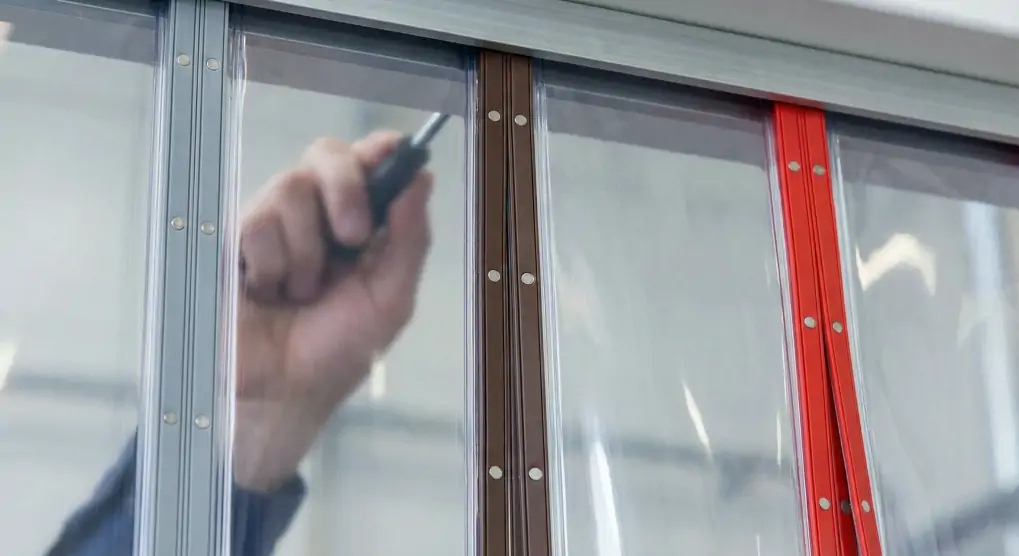
Even the best product fails if installed incorrectly. Recognizing this, the industry has shifted towards "Foolproof Installation Systems" in 2025. The focus is on reducing the labor cost of installation and making maintenance so simple that internal facility staff can handle it without external contractors.
Click-and-Play Mounting Hardware: The traditional nut-and-bolt mounting systems are being replaced by "Click-and-Play" stainless steel hook-on systems or quick-release clamps. For magnetic curtains, alignment is everything. New self-aligning tracks ensure that when a strip is hung, it naturally falls into the correct magnetic overlap position. This reduces installation time by 50%. A 3-meter wide door that used to take two technicians 4 hours to install can now be completed by one person in 90 minutes.
Maintenance Protocols for Hygiene: In food and pharmaceutical plants, hygiene is non-negotiable. Magnetic curtains, by design, have fewer gaps for bacteria to hide, but they still require cleaning. 2025 guidelines emphasize smooth-welded magnetic pockets that do not trap dirt. Maintenance protocols now often include "CIP" (Clean-In-Place) compatibility, meaning the curtains can be foamed and washed down with industrial sanitizers without degrading the magnetic power or PVC clarity.
Lifecycle Management Strategy: Smart procurement involves planning for the end of the product's life. We recommend a "10% Spares" strategy. When ordering for a facility, including 10% extra strips ensures that if a forklift tears a strip, it can be swapped instantly, maintaining the thermal seal. Because magnetic strips are modular, you only replace the damaged strip, not the whole door. This modularity is a key selling point for sustainability and cost control.
Technical Support & Installation Guides
Access our library of video installation guides and maintenance checklists to ensure your team is ready.
Get Support Docs
7. Energy Efficiency and Sustainability Innovations
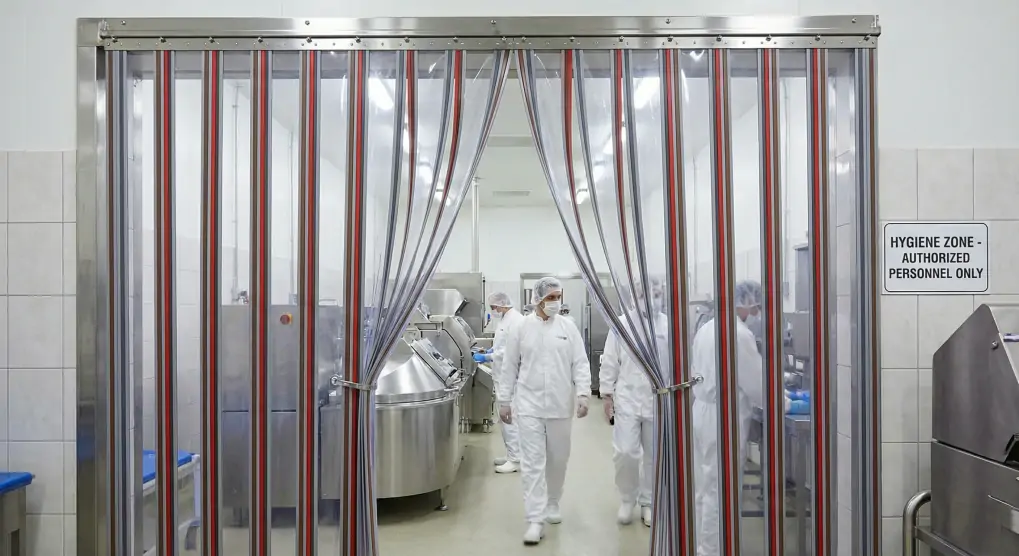
In 2025, corporate sustainability goals are as important as the bottom line. Industrial facilities are under pressure to reduce their carbon footprint, and the "open door" is the single largest source of energy waste in a warehouse. Magnetic PVC curtains are no longer just a draft blocker; they are a verified energy conservation tool eligible for green building credits.
The "Thermal Bridging" Solution: Standard strip curtains hang loosely, often creating a "chimney effect" where warm air escapes through the top gaps while cold air rushes in at the bottom. Magnetic curtains create a continuous vertical seal. Thermal imaging studies in 2024 revealed that this seal reduces air infiltration by 93% compared to an open door, and 35% compared to standard non-magnetic strips. This efficiency directly contributes to lower HVAC loads.
Recyclability and Circular Economy: The PVC industry has made strides in recycling. Premium magnetic curtains are now 100% recyclable. when your strips reach the end of their life, The magnetic edges are separated, and the PVC is reground to be used in secondary applications like industrial floor mats or pallet spacers. This diverts tons of plastic waste from landfills and helps our clients meet their ISO 14001 environmental management targets.
LEED and BREEAM Credits: Installing high-efficiency magnetic thermal barriers can contribute points towards LEED (Leadership in Energy and Environmental Design) certification, specifically under the "Energy and Atmosphere" and "Indoor Environmental Quality" categories. Procurement officers can leverage this certification potential to justify the investment to stakeholders focused on ESG (Environmental, Social, and Governance) criteria.
8. Safety and Regulatory Compliance Frameworks
Safety is paramount in heavy industry. The 2025 regulatory landscape demands that every piece of equipment, including door curtains, meets strict fire and operational safety standards. Magnetic PVC curtains have evolved to meet these rigorous global benchmarks.
Fire Retardancy Standards (DIN 4102 B1 / UL 94): In the event of a fire, a door curtain must not become a fuel source or a dripping hazard. Our magnetic curtains are formulated with advanced flame retardants that are self-extinguishing. They meet the German DIN 4102 B1 standard and the US UL 94 V-0 classification. This is critical for insurance compliance. Many insurance underwriters now require proof of fire-retardant certification for any flammable materials used in doorways, especially in chemical or textile storage facilities.
ATEX and Anti-Static Compliance: In environments with explosive dust or volatile vapors (like paint shops or flour mills), static electricity is a deadly risk. Standard PVC generates static charge when strips rub together. Our 2025 "Anti-Static" magnetic range incorporates conductive carbon networks within the PVC matrix, ensuring a surface resistance of less than 10^9 Ohms. This prevents static buildup and allows the curtains to be safely used in ATEX Zone 1 and 2 environments.
Visibility and Collision Prevention: The "Crystal Clear" formulation of our magnetic strips serves a safety function: visibility. Forklift drivers need to see obstacles on the other side of the door. Unlike old, cloudy strips, our high-grade PVC offers 88% light transmission. Additionally, we integrate "Safety Edge" orange strips on the outermost layers to clearly define the door width, helping drivers center their loads and reducing impact damage to the door frame.
Safety Compliance Audit
Are your current doors compliant with 2025 fire and safety codes? Let our experts assess your facility.
Schedule Free Audit
9. Supply Chain Optimization and Global Manufacturing Networks
For multinational corporations, supply chain reliability is as critical as product quality. The disruption of global logistics in the early 2020s taught the industry valuable lessons. In 2025, the supply chain for magnetic PVC curtains is built on resilience and regionalization.
Buffer Stock Strategies: To protect our clients from raw material volatility (PVC resin prices fluctuate with oil markets), we maintain strategic buffer stocks of standard magnetic rolls (200mm, 300mm, 400mm widths). This ensures that even during market spikes or resin shortages, our contract customers enjoy stable pricing and guaranteed availability.
Digital Tracking and Transparency: Our B2B portal allows procurement teams to track their order from extrusion to final delivery. You can download Mill Test Certificates (MTC) for every batch, ensuring that the chemical properties of the delivered goods match the specifications ordered. This transparency builds trust and streamlines the quality audit process for our partners.
10. Performance Testing and Quality Assurance Systems

How do we define "Quality"? In 2025, it's defined by data. Every batch of magnetic PVC curtain undergoes a battery of rigorous tests before it leaves the factory. Procurement heads should insist on seeing these test reports.
Shore A Hardness Consistency: The flexibility of a curtain is measured in Shore A hardness. Standard ambient strips should range between 75-80 Shore A. If it's too soft (below 70), it sticks and drags; too hard (above 85), it cracks. We use automated durometers to test every 100th meter of extrusion, ensuring consistent "drape" and flexibility across millions of meters of production.
Magnetic Pull Force Testing: The core function of a magnetic curtain is to seal. We test the "pull force" required to separate the magnetic strips. The 2025 standard is a minimum of 600 Gauss at the surface, providing a holding force that resists wind loads of up to 5 m/s (approx 18 km/h). Our "Storm Grade" options offer double-strength magnets for exterior doors in coastal or high-wind areas.
Low-Temperature Impact Test: For Polar Grade materials, we perform the "Cold Bend" test. Samples are frozen to -40°C and then bent 180 degrees. Inferior PVC snaps instantly. Our specialized formulations remain pliable, ensuring they won't shatter when a forklift hits them in a deep-freeze environment. This testing ensures that the "Polar" label on the box translates to real-world performance.
11. Customer Service and Technical Support Excellence
In the industrial B2B sector, the product is only as good as the support behind it. We recognize that downtime is expensive. Our service model in 2025 is built around "Proactive Partnership" rather than reactive sales.
Virtual Site Surveys: We utilize Augmented Reality (AR) tools for remote site assessments. Clients can walk through their facility with a smartphone, and our engineers can remotely measure openings, identify airflow issues, and recommend the specific magnetic grade needed—all without a physical site visit, speeding up the quotation process by 72 hours.
Installation Supervision: For large-scale projects (>50 doors), we deploy a Site Supervisor to oversee the installation team or train your internal maintenance staff. This ensures that the warranty is validated and the system is tuned for maximum efficiency from Day 1.
Technical Parameters & Specifications
| Parameter |
Standard Magnetic |
Polar Magnetic (Cold Store) |
Anti-Static Magnetic |
| Material Composition |
PVC + Nanocomposite |
Super Polar PVC + PCM |
Conductive PVC Matrix |
| Temperature Range |
-15°C to +50°C |
-45°C to +30°C |
-10°C to +45°C |
| Shore A Hardness |
77 +/- 3 |
68 +/- 3 |
78 +/- 3 |
| Tensile Strength |
> 18 MPa |
> 16 MPa |
> 17 MPa |
| Magnetic Force |
600 Gauss |
600 Gauss |
550 Gauss |
| UV Stability |
Yes (HALS Stabilized) |
Moderate |
Yes |
| Fire Rating |
DIN 4102 B1 |
DIN 4102 B1 |
DIN 4102 B1 |
Frequently Asked Questions
Q: Can magnetic curtains be installed on existing door frames?
A: Yes, our universal mounting track (stainless steel or aluminum) can be face-fixed or soffit-fixed to almost any opening. Retrofitting usually takes less than 2 hours per door.
Q: How do I clean the magnetic strips?
A: We recommend using a mild detergent or our proprietary PVC cleaner. Avoid abrasive pads that scratch the surface. For food plants, the strips are compatible with standard foaming sanitizers.
Q: What is the maximum height for a magnetic curtain?
A: We recommend a maximum height of 4.5 meters for standard magnetic strips. Above this height, the weight of the strip can overcome the magnetic seal at the bottom. For taller openings, we use a hybrid system or heavy-duty reinforced magnets.