
Use route
Activity and water conditions first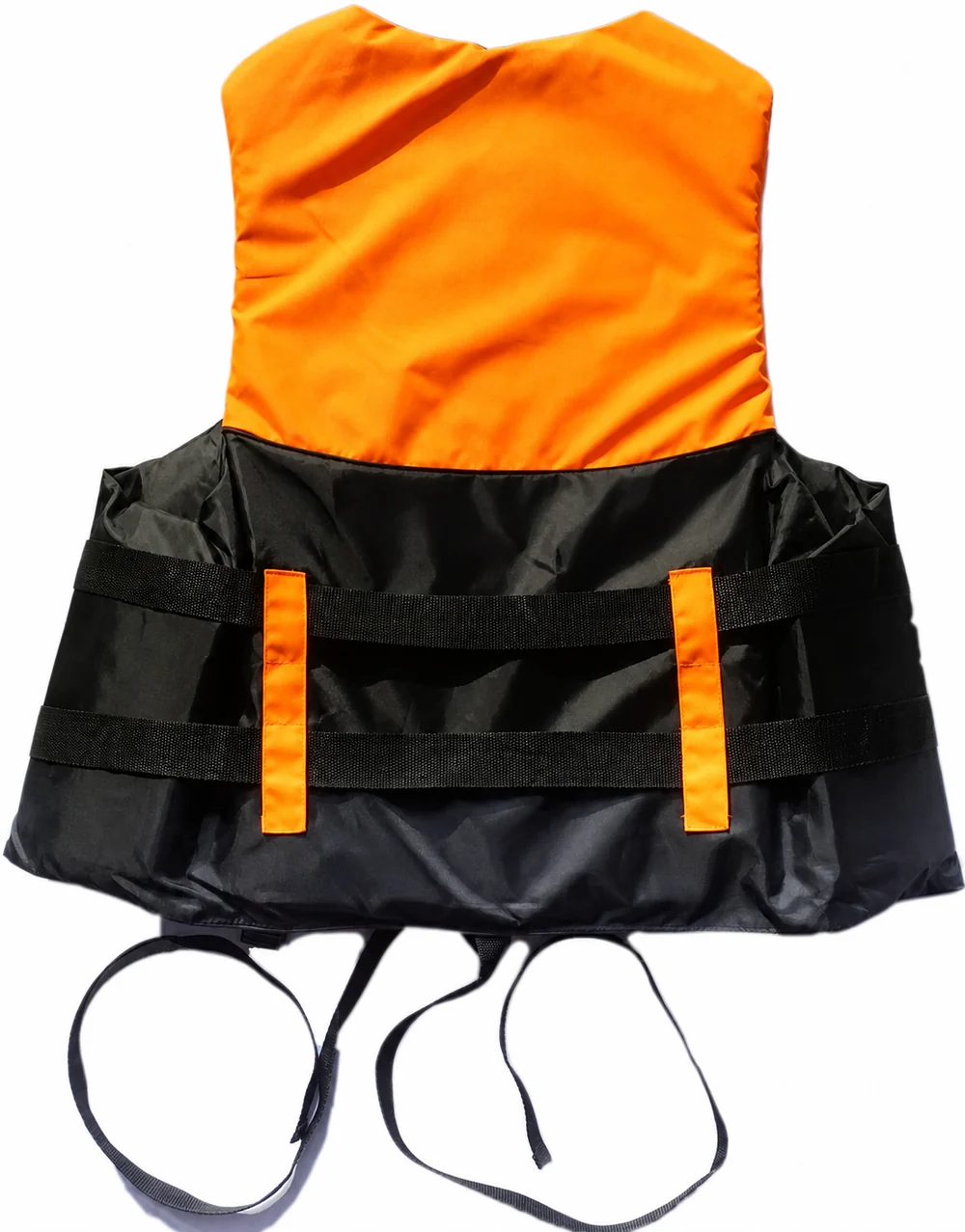
Boating, fishing and watersport sourcing
Adjustable Life Vests Built around Fit, Retention and Controlled Evidence
Start with the intended wearer, activity and destination requirement. Then lock the complete shell, flotation-panel, buckle, webbing, lower-retention, whistle, label and packing system for the exact model.
Wearer
Size and adjustment by SKUConstruction
Complete vest system controlledEvidence
Model and market scope recorded01 / product platform
Configure the vest as one connected wearer-retention system
The shown orange-and-charcoal platform combines broad front and rear body panels, three adjustable waist/chest webbing routes, side-release buckles, lower retention straps and a whistle attachment. Every production brief should identify the exact component set and the destination evidence route.
Shell and panel map
Define face fabric, lining, color blocking, panel geometry, edge binding, drainage and the relationship between textile covers and internal flotation elements.
Closure layout
Record buckle count, webbing width, usable adjustment travel, keeper position, stitch pattern and the closed configuration for each size.
Lower retention
Specify the crotch or leg-retention route, attachment point, adjuster, tail management and wearer-specific fitting sequence when required.
Accessories and labels
Control the whistle attachment, reflective option, user instructions, warnings, traceability and packing as exact model components.
Need a comparable sample brief? Send the activity, wearer range and destination requirement before choosing materials or labels.
02 / complete product views
Review closure, rear-panel and whistle details together
These complementary views keep the product visible while separating the inspection purpose of each image.
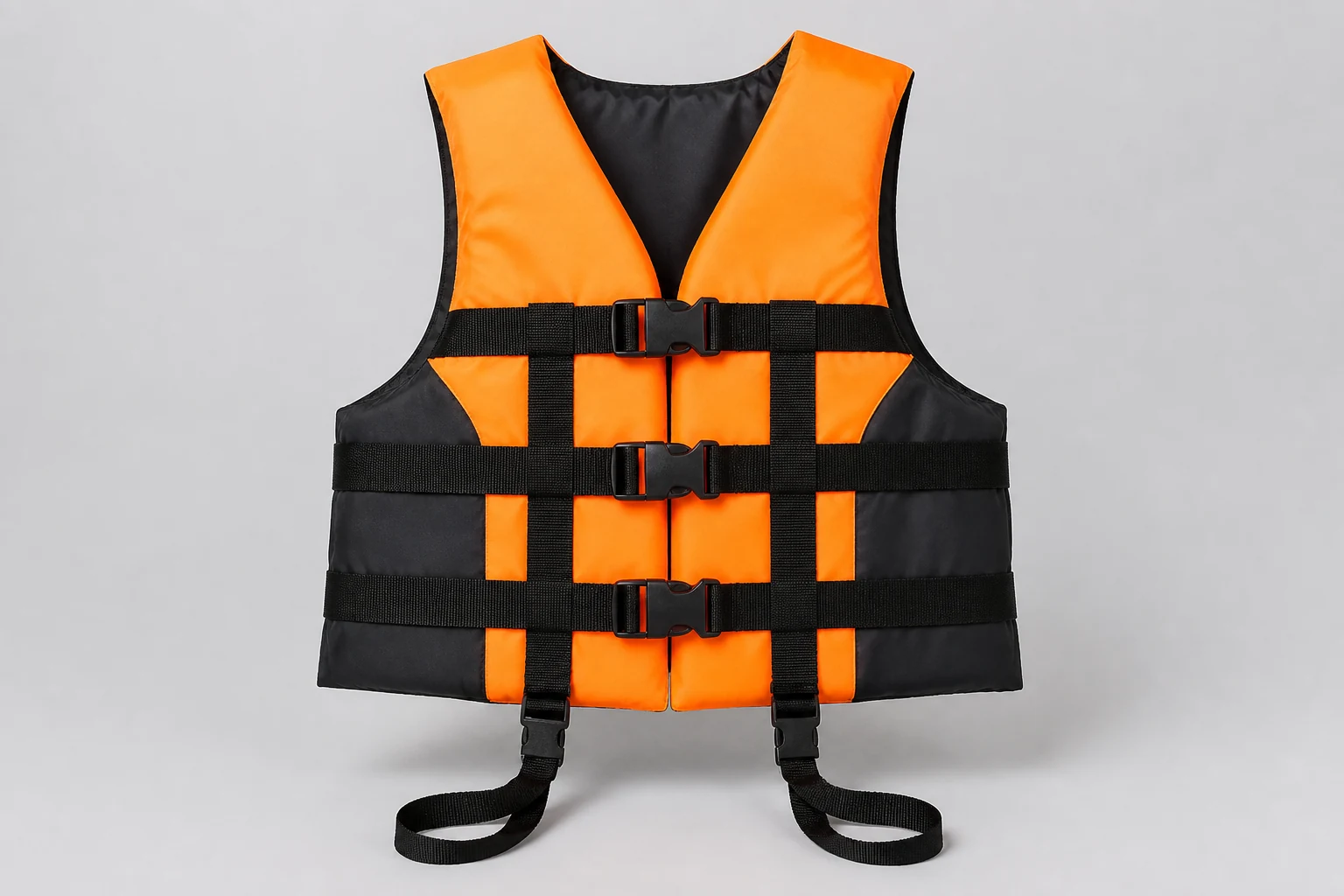
Front fit and strap route
The full front view shows panel coverage, buckle count, webbing travel and lower retention straps for size-specific sample comparison.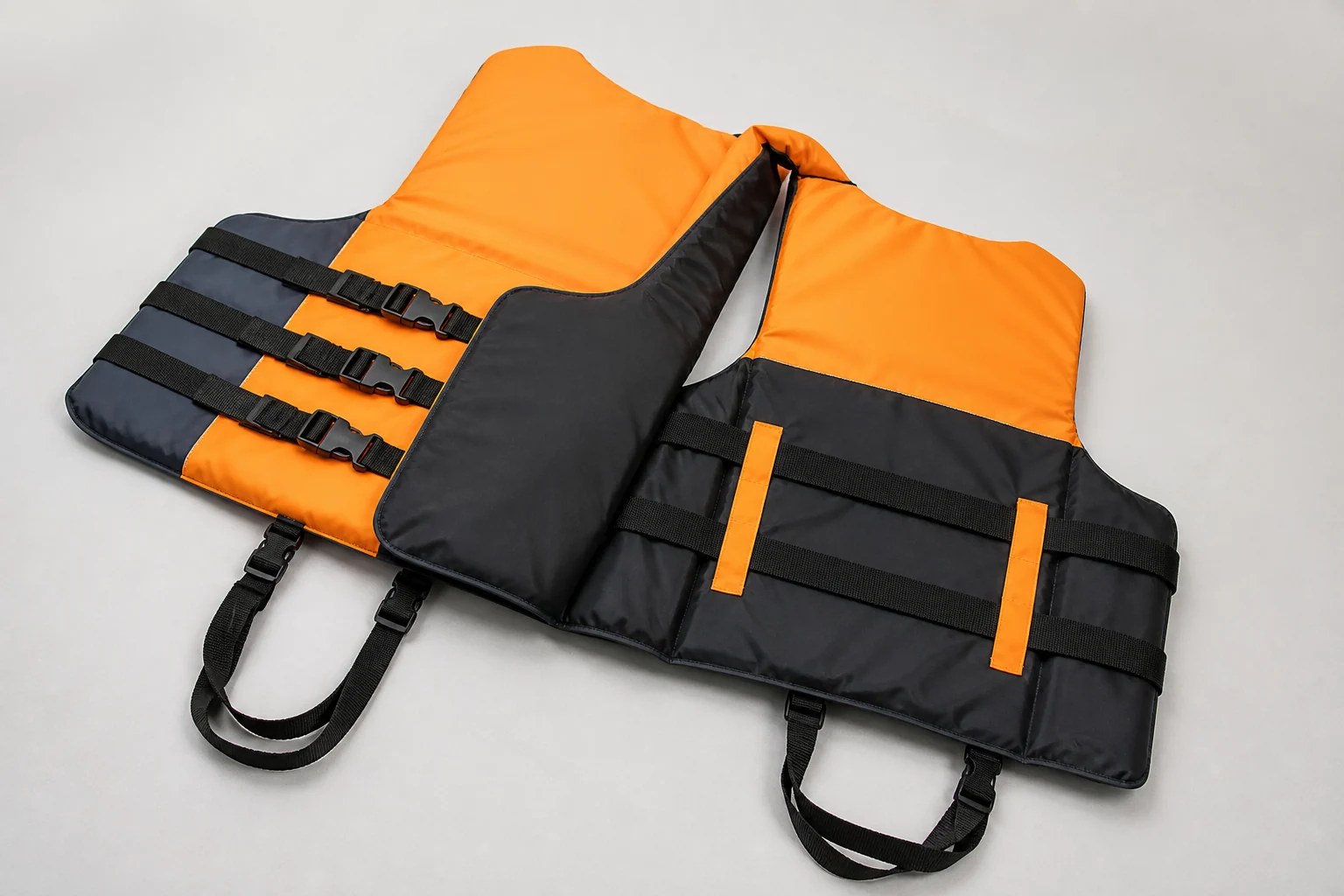
Interior construction map
The opened view exposes panel seams, bindings, closure placement and lower straps for construction review.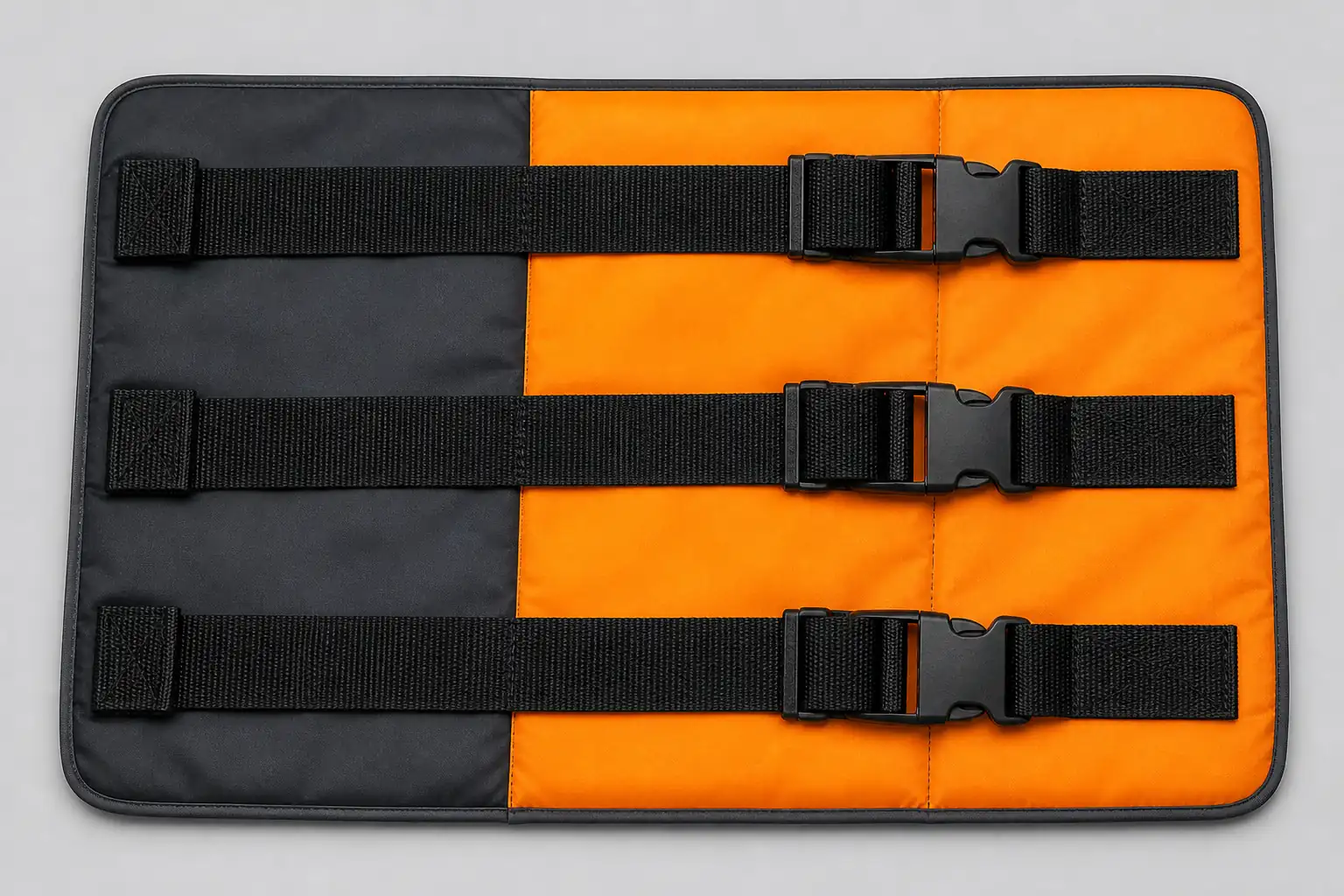
Hardware workmanship check
The complete hardware panel isolates buckle engagement, webbing routing, reinforcement stitching and strap retainers for workmanship inspection.03 / specification
Turn a generic vest name into measurable RFQ fields
The largest procurement-loss risks are an undefined wearer range, unverified flotation construction, incompatible buckle or webbing substitutions, and label claims that outrun the exact model evidence. Keep each value tied to a named approval record.
| Entity | Attribute | Value / Option | Buyer Impact | Evidence / Approval |
|---|---|---|---|---|
| Use route | Destination and activity | To be confirmed by project | Controls the applicable evidence route and allowed claim language | Buyer use brief and destination review |
| Wearer system | Size and fit basis | Chest, weight or other governing criteria; to be confirmed by project | Wrong basis can create unsafe looseness, restricted movement or non-comparable offers | Released size matrix and documented fitting method |
| Body assembly | Shell, lining and internal panel construction | To be confirmed by project | Changes bulk, flexibility, drying route, workmanship and model identity | Material codes, approved sample and exact-model evidence file |
| Adjustment system | Buckles, webbing and usable travel | Count, width and range to be confirmed by project | Substitution can change fit range, tail control and assembly strength | Component schedule, measured sample and stitch comparator |
| Retention route | Lower straps and anchor points | Required or omitted according to released model | Alters donning, wearer comfort and the secured configuration | Size drawing, fitting record and buyer approval |
| Information set | Warnings, instructions and traceability | Language and content to be confirmed by project | Incorrect text or revision can block release and create compliance exposure | Approved artwork revision and evidence owner sign-off |
| Packed unit | Accessories, bag, carton and assortment | To be confirmed by project | Missing whistle, leaflet or size assortment creates receiving disputes | Packed-unit comparator and carton checklist |
04 / size, fit and retention
Control the relationship between wearer, adjustment and complete vest geometry
Define wearer groups
Separate adult, youth and child routes only according to the governing system. Record the controlling wearer measurements and prohibited gaps for each SKU.
Measure usable adjustment
Check webbing travel after buckles are engaged, with tails retained and lower straps adjusted. A loose component length is not the usable fit range.
Record fitting observations
Document donning order, snugness, controlled ride-up observation, chin and ear clearance, arm movement and activity posture against the buyer-approved method.
Build a size matrix: connect wearer criteria, vest dimensions, adjustment range and fitting observations to every released size.
05 / quality and release
Inspect complete units, not isolated color and component samples
Incoming identity
Match shell, lining, flotation material, webbing, buckles, whistle and labels to released references before assembly.
In-process control
Check panel placement, seam and binding continuity, webbing routes, stitch pattern, strap security and component orientation.
Finished-unit review
Verify model, size, closure engagement, adjustment, retention features, accessory attachment, labels and visible workmanship.
Packed-unit release
Confirm instructions, warnings, size mark, accessory set, individual pack, carton count and traceability against one revision.
06 / material identity
Lock every material to the exact released model
Shell textile record
Name the face fabric, coating or finish, color reference, usable width and approved supplier code instead of accepting a generic orange fabric description.
Internal panel record
Identify the internal flotation material, panel count, placement and model-specific evidence route without inferring performance from thickness or appearance.
Binding and thread record
Release the edge binding, seam construction, thread and stitch comparator so substitutions remain visible during line inspection.
Accessory material record
List webbing, buckles, retainers, whistle attachment and any reflective option under the same revision as the body assembly.
07 / hardware validation
Validate adjustment hardware in its assembled route
Buckle identity check
Compare mold, size, mating halves, orientation and engagement against the released component schedule before sewing begins.
Webbing path check
Trace each strap through the buckle and keeper, then record usable adjustment with tails retained rather than measuring loose webbing alone.
Anchor construction check
Confirm stitch shape, position, margin and layer stack at every load-transfer junction shown on the approved sample.
Closed-configuration check
Photograph and record the fully secured size-specific arrangement so production and inspection use the same reference state.
08 / evidence control
Keep performance language inside the approved evidence boundary
Name the exact model
Connect every report, certificate or buyer approval to the precise construction, size route and component revision being quoted.
Name the intended use
Record activity, water conditions, wearer group and destination assumptions separately from visual product descriptions.
Name the evidence owner
Assign responsibility for obtaining, checking and releasing each required document before claims appear on labels or sales materials.
Name the change trigger
Treat changes to flotation panels, shell, closures, fit, labels or accessories as review events rather than silent substitutions.
When evidence ownership changes
Stop the affected approval lane, identify the current document holder and reconcile the model revision before production release.
Release note required after component substitution
The release note should identify the changed component, affected sizes, comparison evidence, approver and the date the updated reference becomes effective.
09 / packing and logistics
Release the packed unit as a controlled deliverable
Fold and closure state
Define whether buckles are engaged, straps are shortened and lower retention pieces are secured before the vest enters its individual pack.
Included item check
Verify whistle, instructions, warning sheet, spare item or other accessory against a SKU-level contents list.
Size and assortment mark
Match garment size, bag label, carton mark and assortment plan so receiving teams can reconcile units without opening every pack.
Carton release record
Record unit count, net and gross weight, carton dimensions, moisture protection and destination marks on the approved packing sheet.
10 / revision control
Prevent silent changes between sample and production
Freeze the sample revision
Assign the approved sample, drawings, material list, evidence index and artwork a shared release identifier.
Log supplier substitutions
Require written notice before any shell, panel, webbing, buckle, thread, label or packing source is replaced.
Assess affected controls
Identify which dimensions, workmanship checks, fitting observations, evidence files and labels require renewed approval.
Reopen only the necessary lane
Document the change, comparison result and approval decision while preserving unaffected records from the prior release.
11 / quotation input
Send the fields that make supplier offers comparable
Provide destination market, intended activity and water conditions; applicable category or standard route; intended wearer groups; size/chest/weight matrix where relevant; shell, lining and flotation construction; buckle, webbing and lower-retention layout; whistle and reflective options; label/evidence scope; colors and buyer artwork; inspection route; packing; quantity; destination and requested timing.
Commercial comparison record
Ask each supplier to state quantity basis, sampling route, tooling or evidence charges, production timing, packing basis and quote validity against the same released brief.
Technical clarification record
List every proposed deviation from materials, fit, components, labels or evidence scope before comparing price or approving a sample.
Continue with the decision guide: use the Guide to define evidence, wearer fit, activity limits and change control before approving a sample.
Open the Life Vest Buying GuideProduct FAQ
Questions to resolve before sampling
Can color or a product photograph prove a life-vest approval?
No. Approval, buoyancy and activity suitability require model-specific evidence, the intended wearer range and the applicable destination-market route.
What should a life-vest RFQ identify?
Identify destination, activity, wearer category, size range, shell and flotation construction, closures, retention straps, whistle or accessories, labels, evidence scope, packing and quantity.
Can one sample cover every size?
Do not assume so. Record size-specific geometry, adjustment travel, component placement and the evidence or fitting checks required for every released SKU.