
Use route
Walking context and supervision defined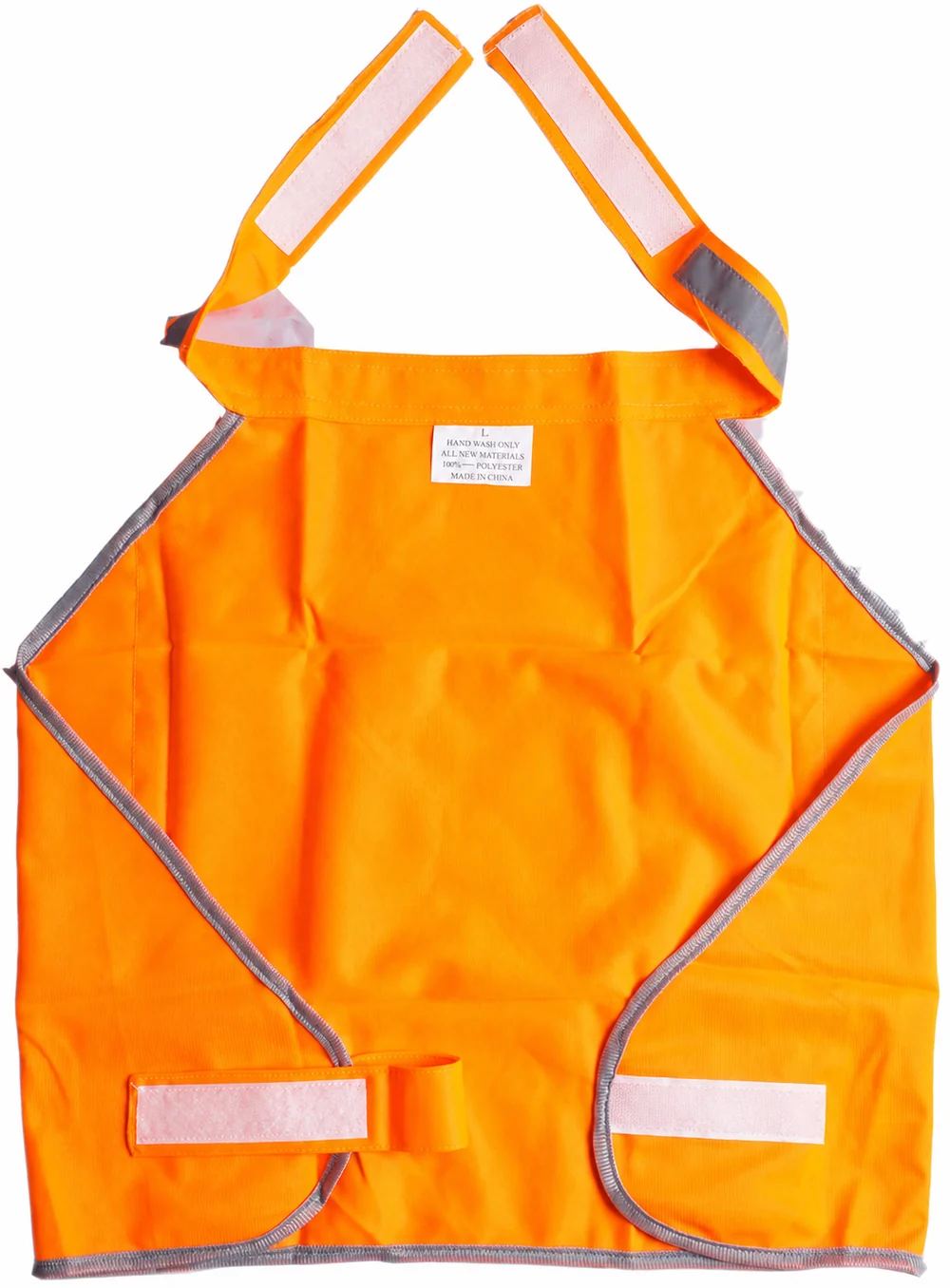
Dog walking, field identification and pet visibility sourcing
Reflective Pet Safety Vests Built around Fit, Coverage and Visibility
Start with the intended use, pet population and repeatable neck, chest and back measurements. Then lock the complete fabric, reflective layout, edge binding, closure, size, label and packing system for each released SKU.
Pet fit
Neck, chest and back by SKUConstruction
Complete garment system controlledClaims
Visibility language kept within evidence01 / product platform
Configure one connected pet visibility garment
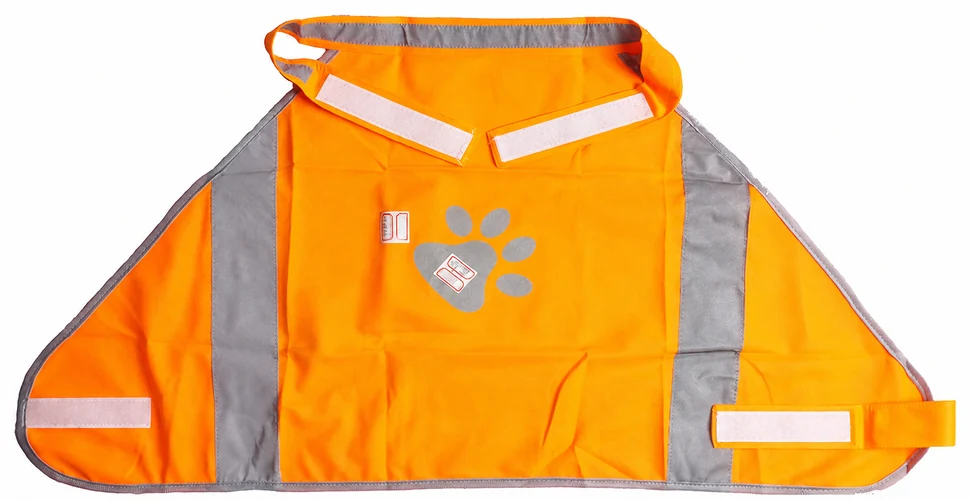
The shown orange-and-grey platform combines a bright body panel, reflective border and vertical bands, a bound neck opening and adjustable neck/body hook-and-loop closures. Every production brief should identify exact materials, garment dimensions, usable adjustment and approved visibility language.
Body and coverage
Define face fabric, color, panel shape, back length, belly coverage, foreleg clearance and tail-base clearance for each size route.
Reflective layout
Record reflective material identity, width, position, joining, edge distance and size-specific geometry on the complete garment.
Closure system
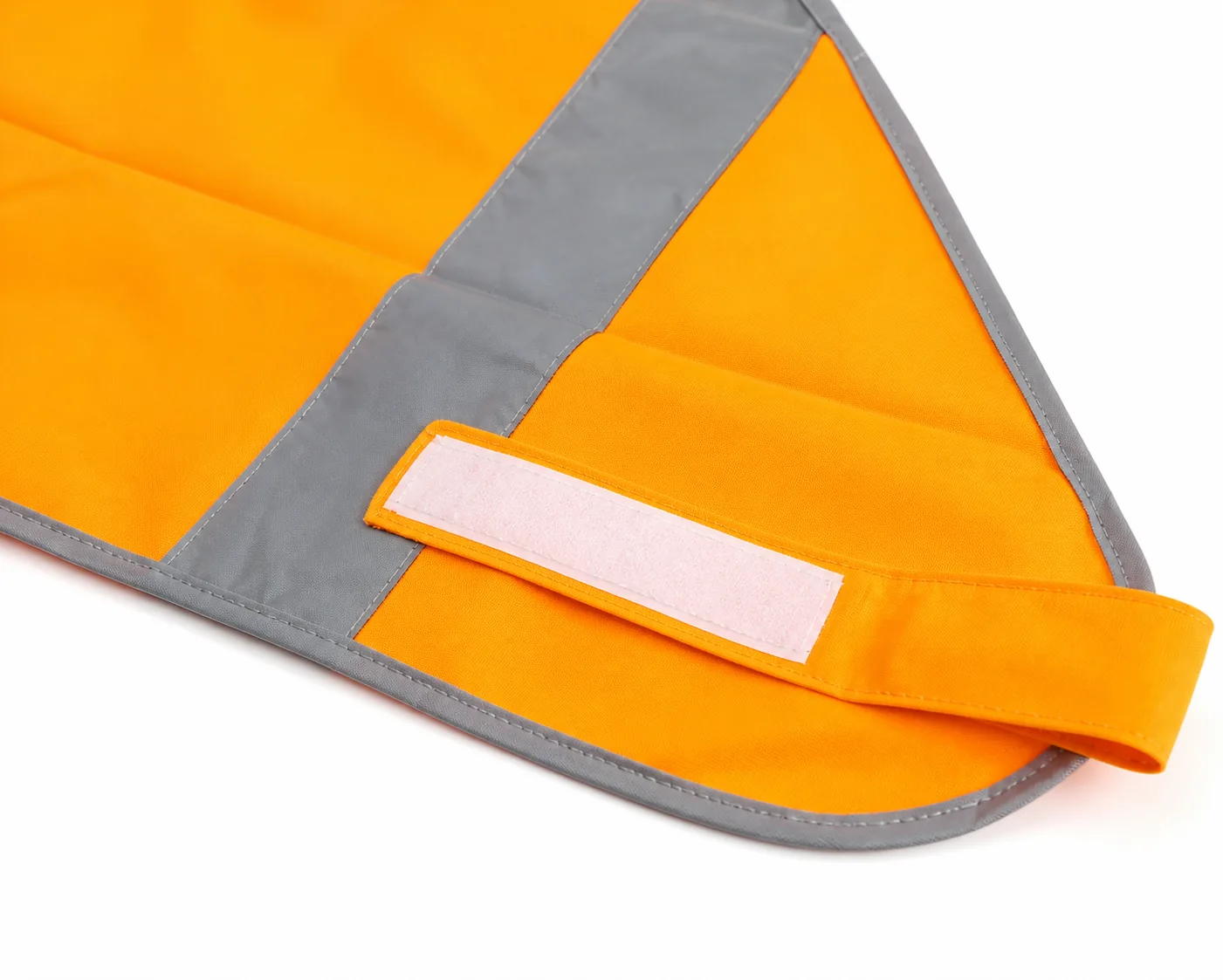
Specify hook-and-loop or buckle type, placement, usable overlap, tail management, anchor stitching and adjustment range.
Edges and openings
Control binding, neck opening, body edges, leash-access opening if used, seam finish and contact surfaces against an approved sample.
Need a comparable sample brief? Send the pet population, measurement method and intended use before choosing sizes or graphics.
02 / complementary product views
Review the full flat layout and closure construction together
The complete flat view and close construction view separate garment geometry from the details used for workmanship review.
03 / specification
Turn a generic pet vest name into measurable RFQ fields
| Control lane | Define in the RFQ | Confirm before production |
|---|---|---|
| Use and population | Walking or field context, season, supervision, pet type, body-shape distribution and coat conditions | Target population record and allowed claim language |
| Garment geometry | Neck opening, chest range, back length, belly coverage, leg clearance and finished tolerances | Size-specific pattern, sample and measurement method |
| Materials | Body textile, mesh if used, reflective material, binding, thread, webbing and closures | Released material codes and complete garment comparator |
| Adjustment | Closure type, placement, usable engagement, tail length and anchor construction | Usable range and fitted observation at size boundaries |
| Labels and pack | Size mark, care, artwork, SKU, bag, assortment and carton | Approved artwork revision and packed-unit comparator |
04 / size, fit and grading
Connect pet measurements to garment landmarks and usable adjustment
Use repeatable landmarks
Capture the lower-neck landmark, maximum chest girth and dorsal body length while controlling posture, tape tension and coat condition. Weight and breed name are supporting data, not complete size rules.
Grade by garment zone
Control neck depth, chest width, foreleg clearance, belly length, back coverage, closure position and reflective geometry instead of scaling every dimension uniformly.
Review boundary sizes
Inspect the smallest, largest and transition sizes through the buyer-approved movement route. Record closure engagement, rotation, rubbing and clearance as bounded observations.
Build a size matrix: connect pet measurements, finished dimensions, usable overlap and fit observations to each released SKU.
05 / quality and release
Inspect complete fitted and packed units by SKU
Incoming identity
Match body fabric, reflective material, binding, closure components, thread, labels and artwork to released references.
In-process control
Check cut geometry, reflective placement, seam and binding continuity, closure anchors and size-specific component position.
Finished-unit review
Verify SKU, dimensions, adjustment, closure engagement, edge finish, reflective continuity, cleanliness and approved visible details.
Packed-unit release
Confirm size mark, care label, fold, bag, assortment, carton count and traceability against one controlled revision.
06 / quotation input
Send the fields that make pet vest offers comparable
Provide intended use and supervision; target pet population and body-shape distribution; neck, chest and back measurement method; size architecture and finished dimensions; body fabric, reflective material, binding and closure route; usable adjustment; leash-access requirement; color and artwork; claim boundary; labels; inspection; packing; quantity; destination and requested timing.
Continue with the decision guide: use the Guide to define measurement, grading, fit observations, visibility limits and change control before approving a size set.
Open the Reflective Pet Vest Sizing GuideProduct FAQ
Questions to resolve before sampling
Can dog weight alone determine pet vest size?
No. Use documented neck-base, chest-girth and back-length measurements together with body shape, coat and usable closure overlap.
Does reflective material make a dog safe near traffic?
No. Reflective elements can support conspicuity under defined illumination and viewing conditions, but the garment does not replace a lead, supervision, barriers or traffic controls.
What should a reflective pet vest RFQ include?
Identify use, pet population, measurements, size range, materials, closures, reflective layout, leash-access requirement, artwork, labels, inspection, packing and quantity.