
Use route
Exposure and contents defined first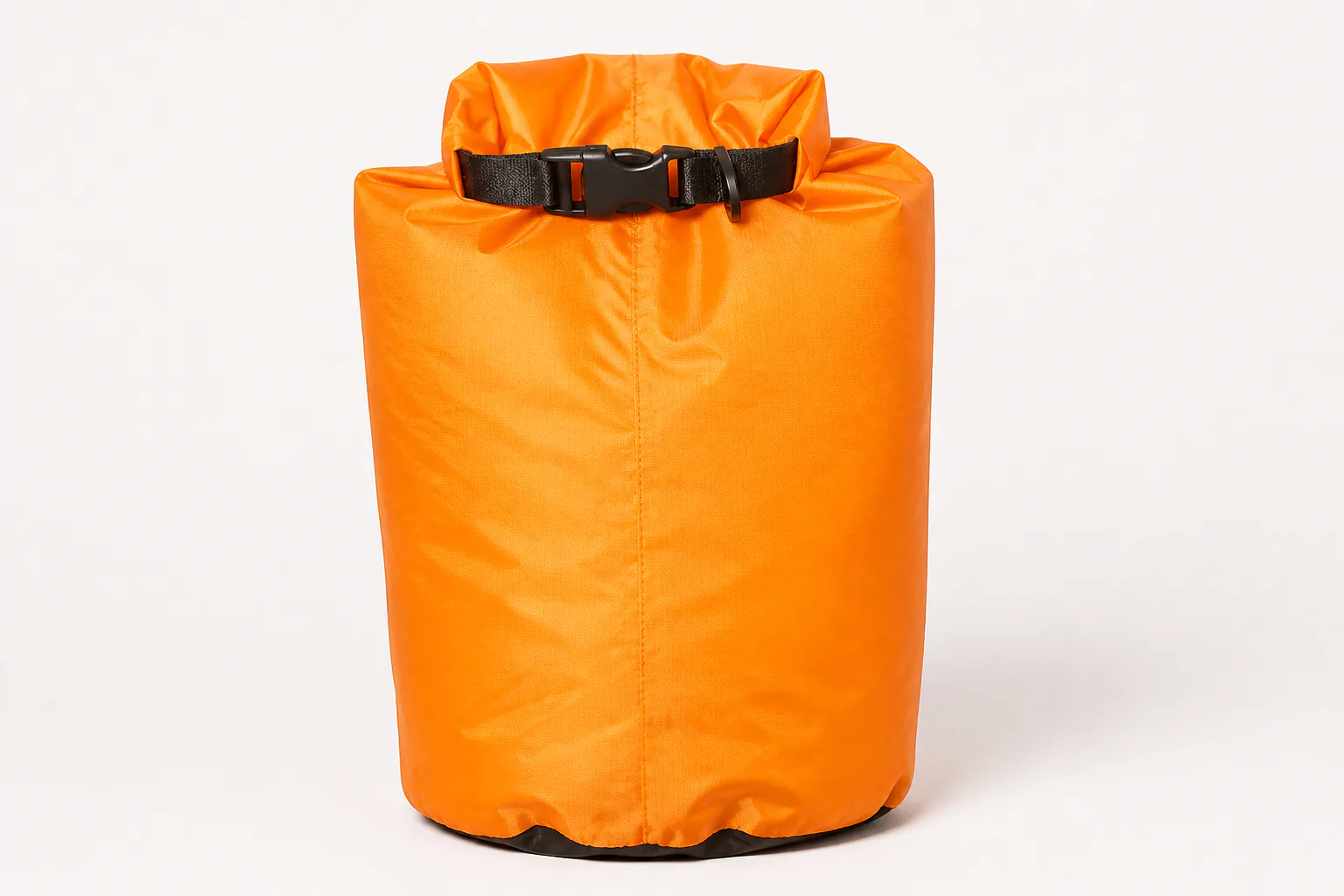
Outdoor storage, travel and equipment organization sourcing
Orange Gathered or Single-Fold Buckle Dry Bags Built around Material, Seams and Closure Geometry
Start with the intended exposure, contents, load and handling route. Then lock the complete textile, seam, base, reinforced mouth, fold or gather sequence, buckle, webbing, carrying, label and packing system for the exact model.
Geometry
Mouth, mouth allowance and base by SKUConstruction
Material, seams and hardware controlledClaims
Evidence bounded to exact model and use01 / product platform
Configure the bag as one connected contents-protection system
The shown orange platform combines a lightweight woven body, central stitched seam, rounded base, reinforced gathered or single-fold buckle closure mouth, dark webbing and one plain side-release buckle. Every brief should define the exact material, seam route, usable mouth width, closure method, load, hardware and evidence scope.
Body material
Define fiber, weave, coating or laminate if used, mass, thickness, color, hand, abrasion route and approved material identity.
Seam and base
Record panel count, stitch construction, seam treatment, base geometry, reinforcement and finished dimensional tolerances.
gathered or single-fold buckle closure mouth
Specify opening width, stiffener or reinforcement, fold depth, minimum fold or gather sequence, webbing position and closed geometry.
Hardware and carry
Control buckle identity, webbing width, anchor stitching, handle or strap route, component orientation and packed attachment set.
Need a comparable sample brief? Send the exposure, contents, load and opening requirement before choosing capacity or material.
02 / complementary product views
Review the complete closed bag and its upper closure detail together
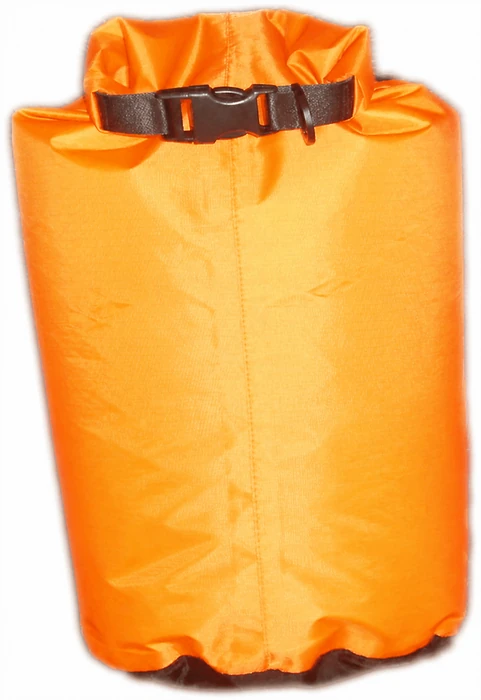
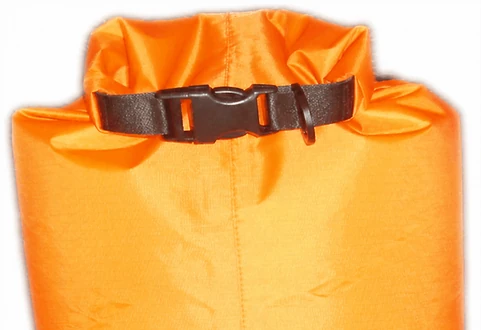
The full local view records the observed gathered closed mouth and bag silhouette; the bounded crop isolates the same buckle, webbing and center seam for workmanship comparison.
03 / specification
Turn a generic dry-bag name into measurable RFQ fields
| Control lane | Define in the RFQ | Confirm before production |
|---|---|---|
| Use and exposure | Contents, load, carrying route, rain/splash/contact conditions, cleaning and prohibited uses | Exact model requirement and claim boundary |
| Dimensions and capacity | Flat width, body height, base geometry, mouth width, mouth allowance and capacity method | Finished measurement method and size-specific comparator |
| Material and seams | Face material, coating/laminate if used, thread, seam construction and treatment | Released material identity and seam/process route |
| Closure and hardware | Fold depth, minimum fold or gather sequence, buckle, webbing, anchors, handle and strap set | Closed geometry, component identity and attachment workmanship |
| Graphics and pack | Print, label, warnings, fold, bag, accessory set, assortment and carton | Approved artwork and packed-unit comparator |
04 / mouth and gathered or single-fold buckle closure system
Control usable opening, fold depth, fold or gather sequence and loaded closure
Define the open state
Measure the usable mouth and the flat panel allowance above the fill line. Record reinforcement, webbing and buckle locations from one datum.
Define the loaded state
Specify maximum fill position for the intended closing sequence. Contents should not prevent even folding, aligned webbing or complete buckle engagement.
Define the closed state
Record fold or gather count, fold depth, buckle orientation, loop geometry and the observation or screening method used for the released sample.
Build the closure matrix: connect contents, fill line, mouth width, mouth allowance and closed geometry to each size.
05 / quality and release
Inspect complete empty, loaded and packed units by SKU
Incoming identity
Match body textile, coating/laminate, thread, webbing, buckle, strap, label and print system to released references.
In-process control
Check cut dimensions, seam route, base construction, mouth reinforcement, anchor stitching and hardware orientation.
Finished-unit review
Verify SKU, dimensions, mouth allowance, buckle engagement, webbing alignment, visible workmanship and agreed screening route.
Packed-unit release
Confirm labels, instructions, fold, accessory set, individual pack, assortment, carton count and traceability.
06 / quotation input
Send the fields that make dry-bag offers comparable
Provide intended use and exposure; contents and load; dimensions and nominal-capacity method; body material and coating/laminate route; seam and base construction; mouth width, fold depth and minimum fold or gather sequence; buckle, webbing and carrying system; print and labels; screening/evidence scope; packing; quantity; destination and requested timing.
Continue with the canonical decision guide: use the row-81 Guide to define material, seam, mouth, loaded closure and release controls before approving the sample.
Open the Independent Roll-Top Construction GuideCHANGE CONTROL / REORDER IDENTITY
Lock the Complete gathered or single-fold buckle closure System before Bulk and Reorders
A change to coated textile, coating face, seam tape or weld settings, mouth reinforcement, buckle, webbing, thread, base geometry or pack compression can alter closure behavior even when the orange bag looks unchanged.
Approved identity
Give the accepted complete sample a model and revision. Record material code and face orientation, usable opening, roll depth and minimum fold or gather count, buckle and webbing codes, seam route, base dimensions and declared load used during approval.
Notice before substitution
Require written notice before any component, source, process, color master, artwork, label or packing change. The supplier should state the reason, affected lots and proposed verification instead of silently treating an equivalent-looking item as interchangeable.
Reapproval trigger
Define which changes need a swatch, component sample, complete loaded bag or repeated exposure check. Keep the decision and retained reference with the purchase file so receiving teams can compare the next shipment to the correct baseline.
Claim boundary: A controlled gathered or single-fold buckle closure construction does not by itself establish immersion protection, flotation, rescue use or protection of sensitive contents. Use and evidence remain model- and project-specific.
Product FAQ
Questions to resolve before sampling
Does a gathered or single-fold buckle closure closure make every bag waterproof?
No. Water resistance depends on the complete material, seam, closure, loading, closing, condition and test scope. Define the required use and evidence for the exact model.
How should capacity be specified?
Use agreed internal dimensions and a documented measurement method. Nominal liters alone do not define usable packed volume or mouth allowance.
What should a dry-bag RFQ include?
Identify use, load, exposure, dimensions, capacity method, material, seam route, mouth and roll geometry, buckle, webbing, carrying system, graphics, labels, inspection, packing and quantity.