
IMPORTER REVIEW WORKFLOW
Dry Bag Sourcing Approval & Evidence Guide
Published by EverBen
Compare supplier proposals through a buyer-owned record that keeps closure, seams, dimensions, hardware and evidence attached to the exact sample.
Use the complete bag, represented construction and named approval evidence at every gate. Marketing terms remain unverified until the agreed finished-product method supports them.
Independent buyer method
Nine checkpoints for comparing, approving and receiving a dry-bag programme
Each checkpoint produces a decision record rather than repeating a catalog description or unscoped performance label.
Create the control file before visual comparison begins
The review file identifies the use story and assigns ownership to every unresolved interface.
First hierarchy check: identify the represented sample
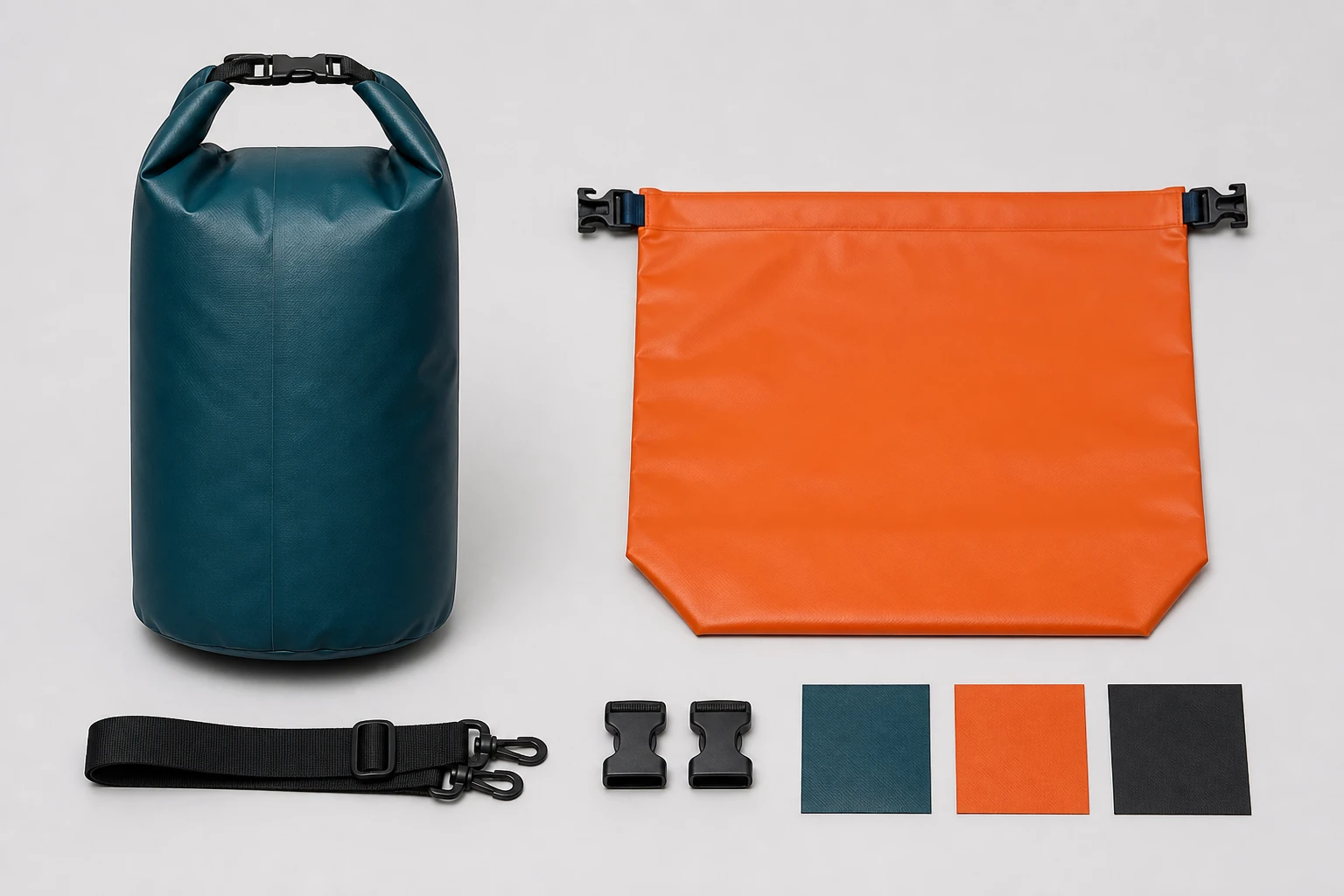
Give each full bag, material swatch, drawing, closure instruction, test record and pack sample a shared revision identity.
Child control: keep claim evidence attached to method and revision
A detached certificate or fabric data point cannot release a different finished bag.
Guide checkpoint 01
Classify the intended protection before comparing offers
A buyer cannot compare rain storage, wet-deck handling and a defined immersion target in one undifferentiated waterproof column.
Review control 01
Write the exposure story
Record water source, duration, handling, contents and failure consequence in plain operational language before reviewing supplier terminology.
Review control 02
Separate target from evidence
Mark each desired claim as unverified until a named finished bag, closure procedure and method support it.
Review control 03
List excluded uses
Clarify whether flotation, rescue, prolonged submersion or unprotected electronics are outside the product programme.
Guide checkpoint 02
Review the closure while the bag is realistically filled
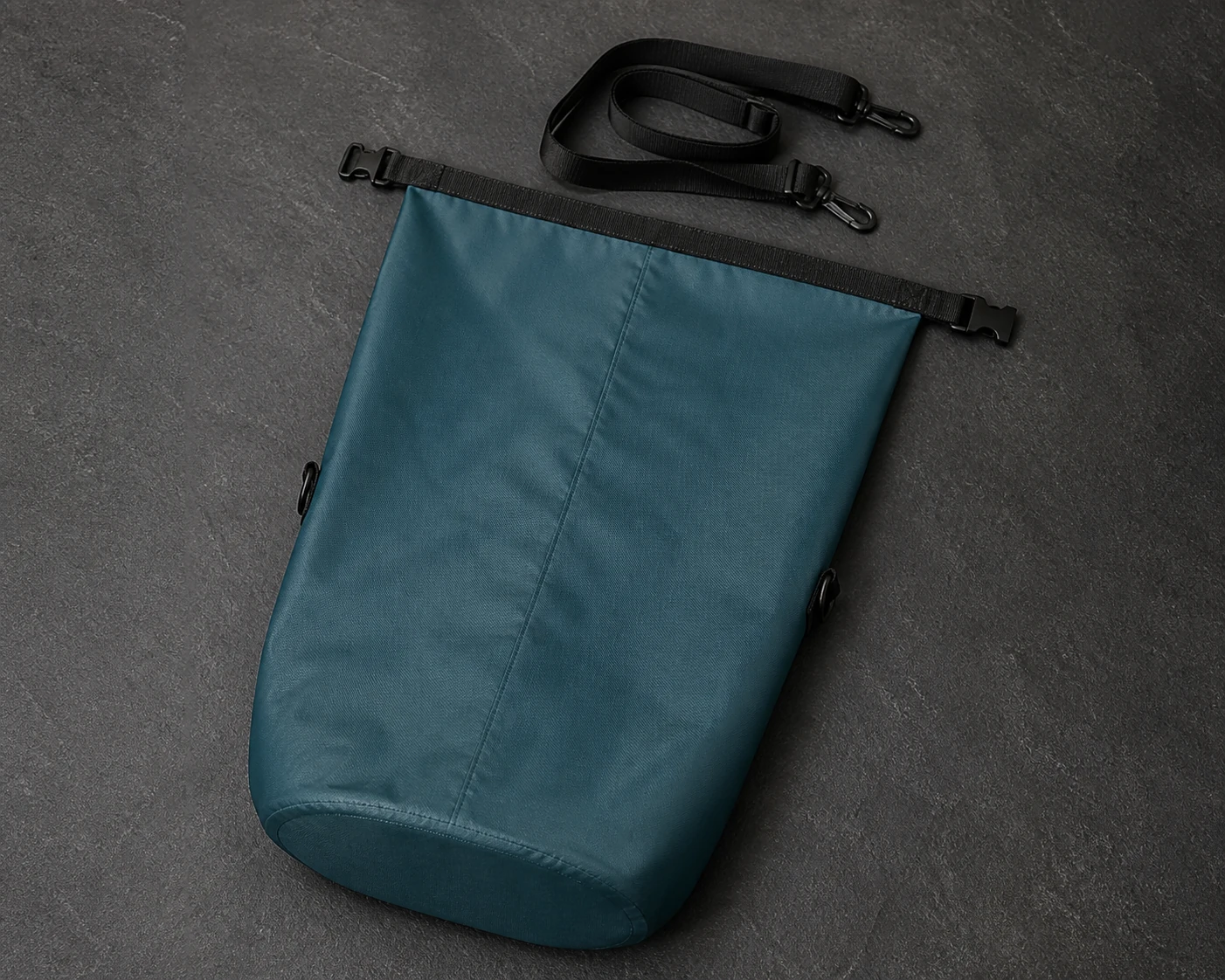
A flat empty sample can hide the loss of roll depth and alignment that appears after the intended contents are loaded.
Review control 04
Measure remaining closure height
Load representative objects below the planned fill boundary and record the usable mouth length before the first fold.
Review control 05
Repeat the approved sequence
Use one documented air-expulsion, rolling direction and buckle connection for samples, tests and instructions.
Review control 06
Inspect alignment after cycling
Check mouth stiffness, edge curl, webbing slip, buckle distortion and side mismatch after repeated operation.
Guide checkpoint 03
Map seams, bases and attachments as separate interfaces
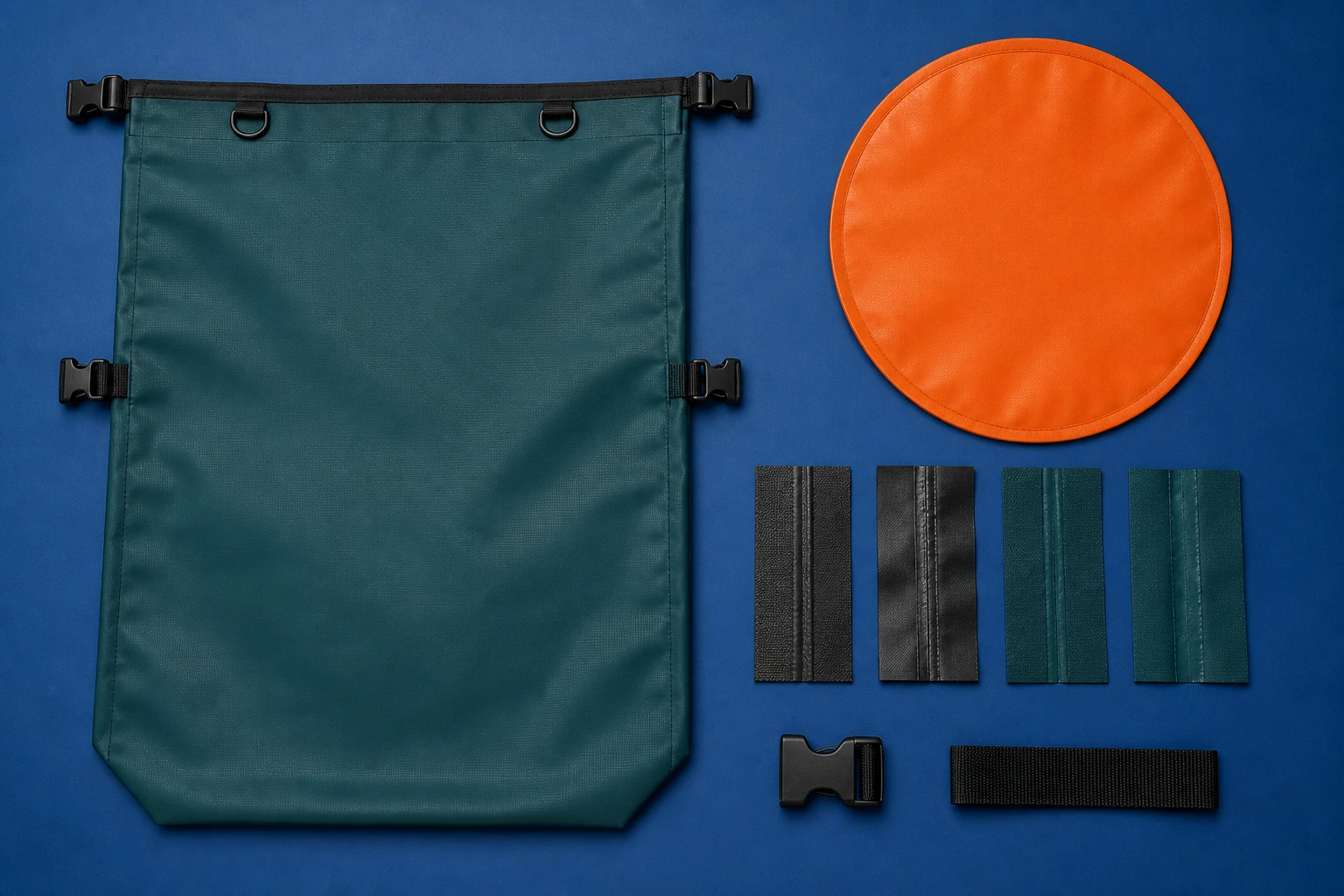
Leakage or peel risk concentrates where construction routes meet, so a single general seam statement is insufficient.
Review control 07
Create an interface diagram
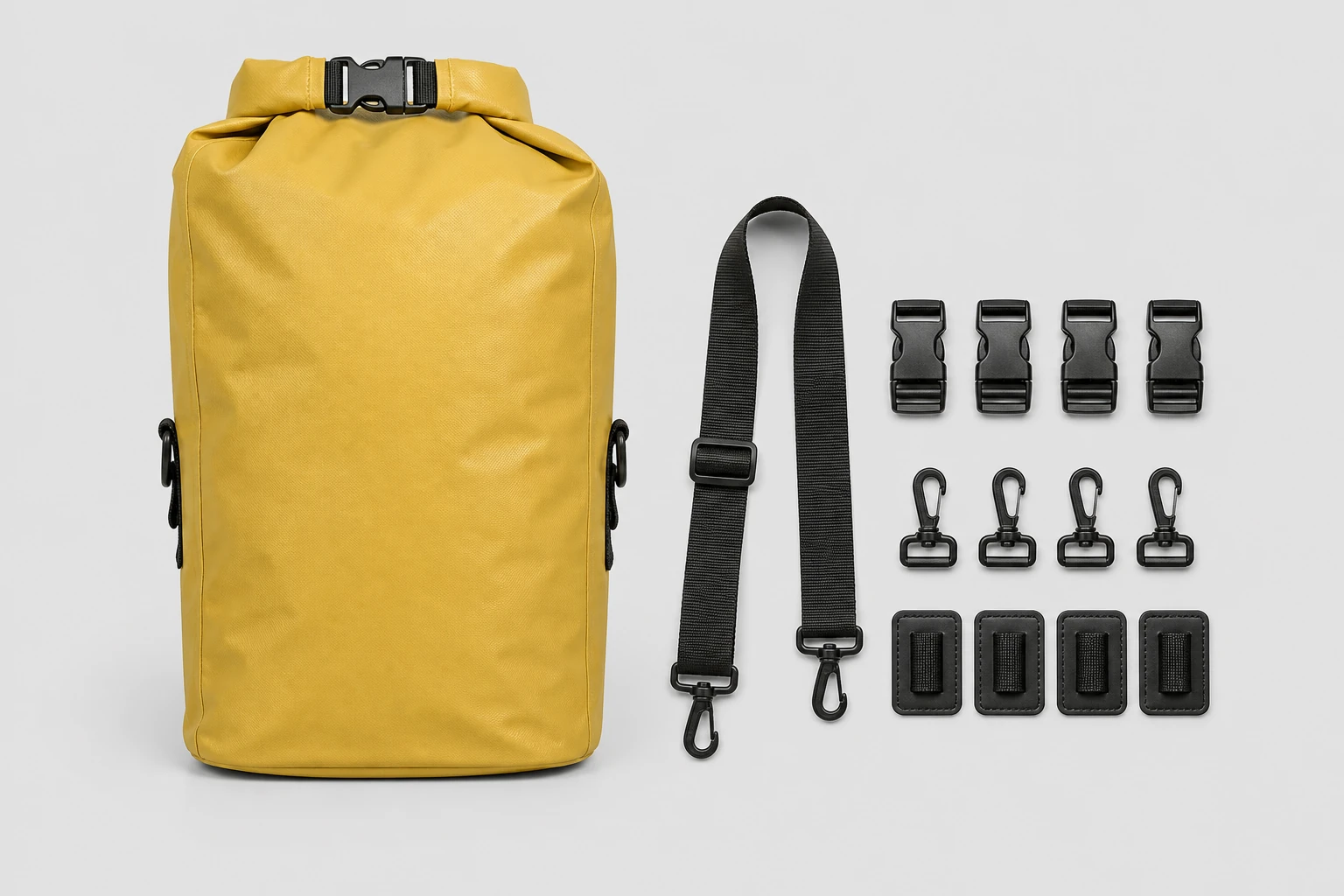
Identify the body seam, base perimeter, mouth, strap patches, handles, windows and pockets on one controlled drawing.
Review control 08
Record the process at each line
Distinguish welding, taping, sealed sewing and unprotected stitching, then link each route to the actual layer stack.
Review control 09
Choose local inspection methods
Set visual, dimensional, peel or leakage checks according to the represented interface and intended exposure.
Guide checkpoint 04
Normalize geometry instead of trusting liters alone
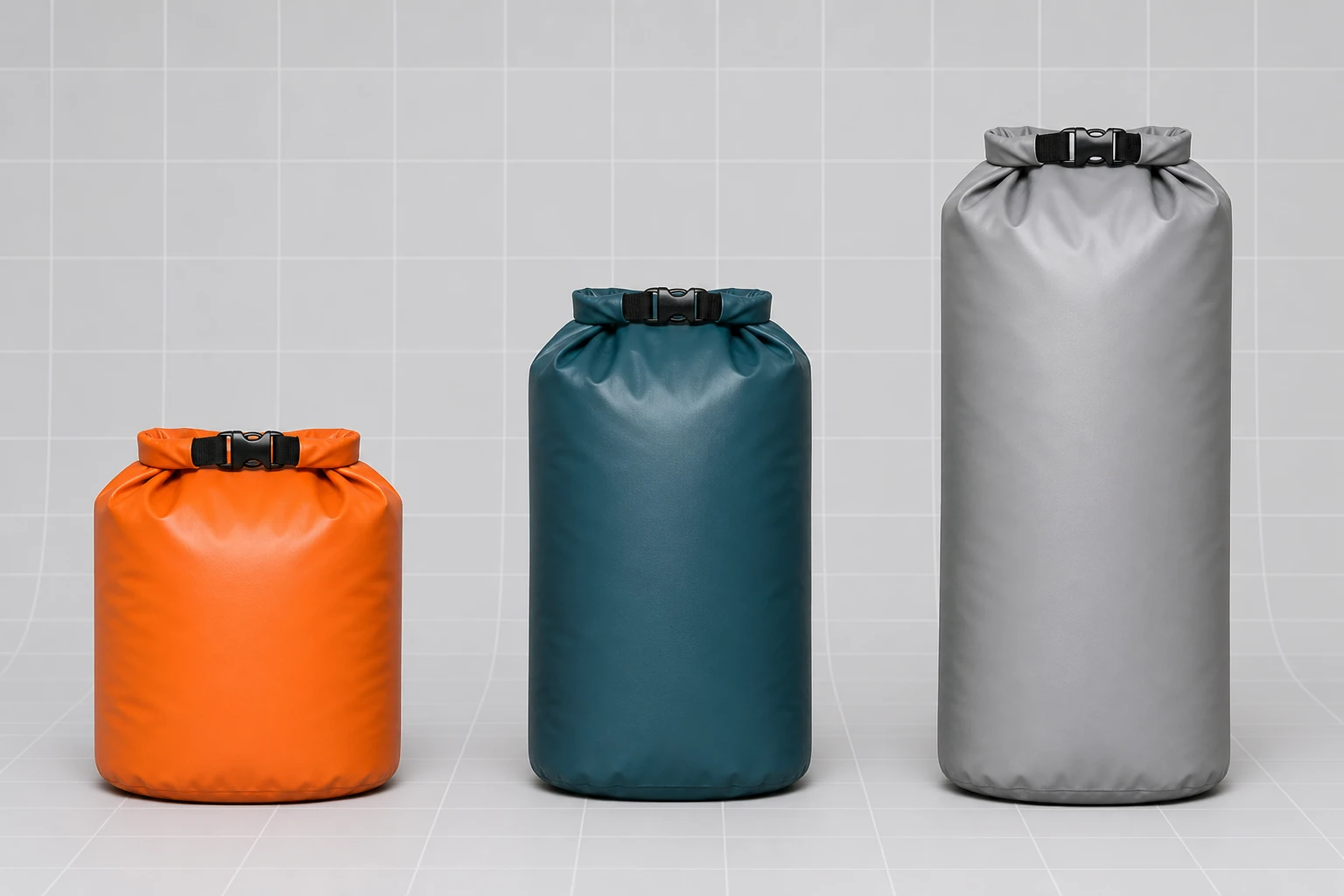
Two bags with the same nominal volume can differ in opening width, closed height, base footprint and useful shape.
Review control 10
Compare full dimension sets
Record flat width, open and closed heights, circumference or panel width, base geometry and tolerance condition.
Review control 11
Protect the closing zone
Keep the volume calculation below the required roll area and identify the maximum filling boundary on the specification.
Review control 12
Trial representative contents
Check access, corner pressure, balance and packability using the intended object mix without converting the trial into a load claim.
Guide checkpoint 05
Control shade and surface by lot and viewing condition
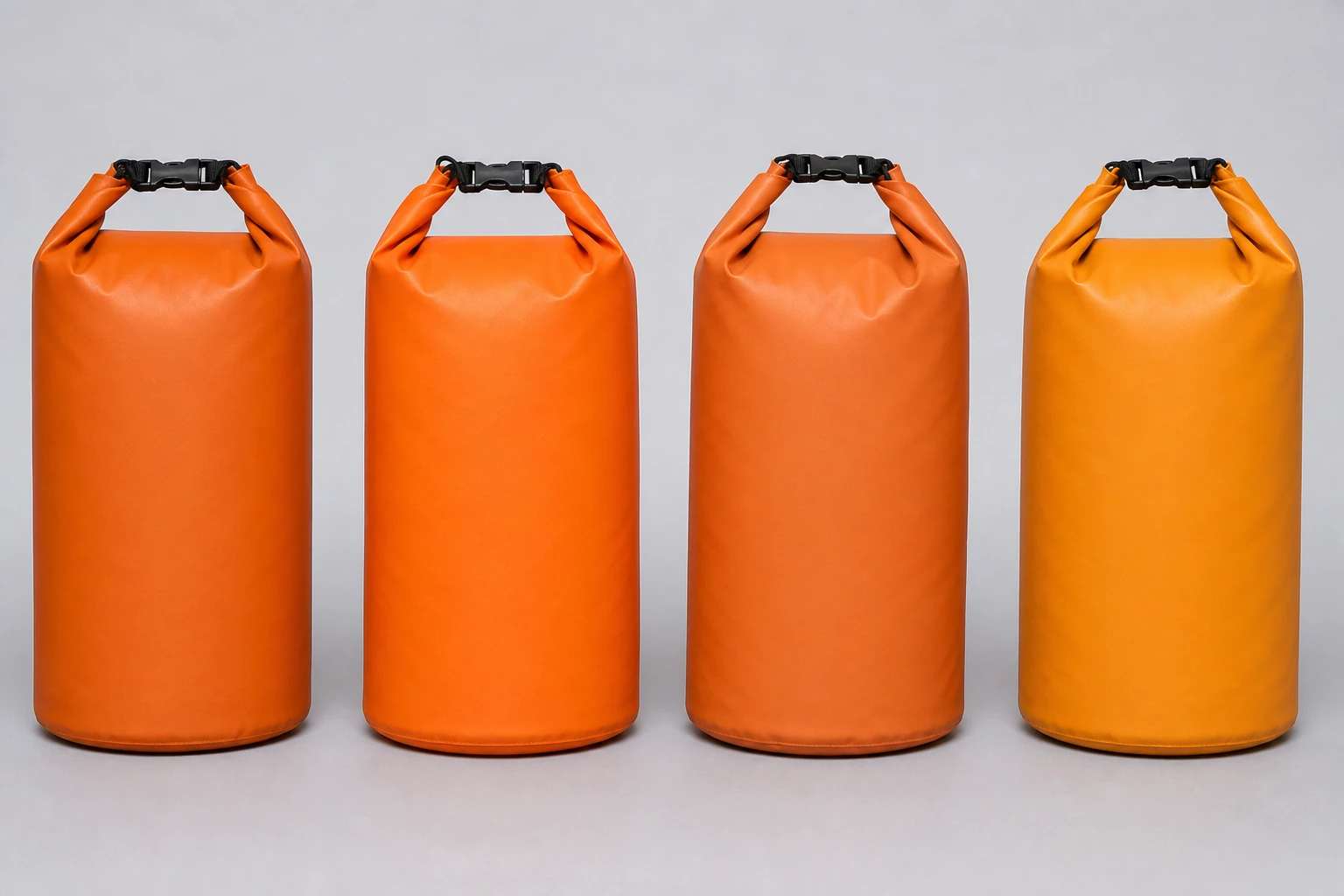
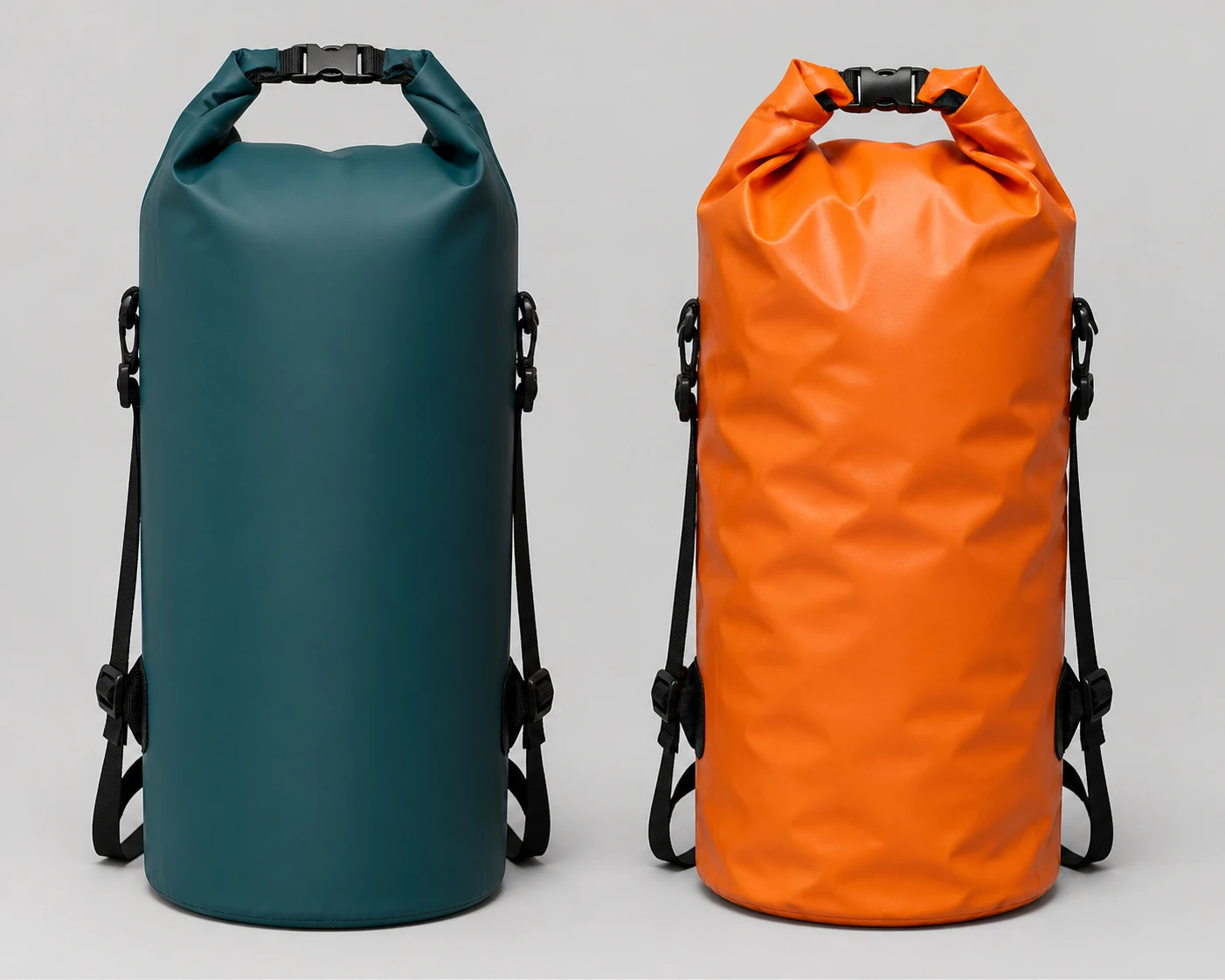
Gloss, texture and coated-fabric direction can make a shade look different across components or production runs.
Review control 13
Approve a retained shell standard
Name the material revision, lot, face and lighting used for color comparison.
Review control 14
Review formed-bag appearance
Inspect front, back, base and rolled closure so pressure lines, direction changes and curved artwork remain visible.
Review control 15
Define acceptable variation
Use an agreed visual or instrumental method and keep limits attached to the item instead of demanding an undefined perfect match.
Guide checkpoint 06
Examine hardware and the full carry load path
Buckles and straps must be evaluated as assembled interfaces, not isolated catalog components.
Review control 16
Trace forces to the bag body
Follow the webbing through patches, seams and reinforcements to locate transitions that deserve inspection.
Review control 17
Cycle mating components
Operate buckle pairs, adjusters and removable hooks through the intended sequence while observing slip, release and damage.
Review control 18
Scope environmental checks
Select salt, sand, temperature or cleaner exposure only when relevant to the programme and state the test boundaries.
Guide checkpoint 07
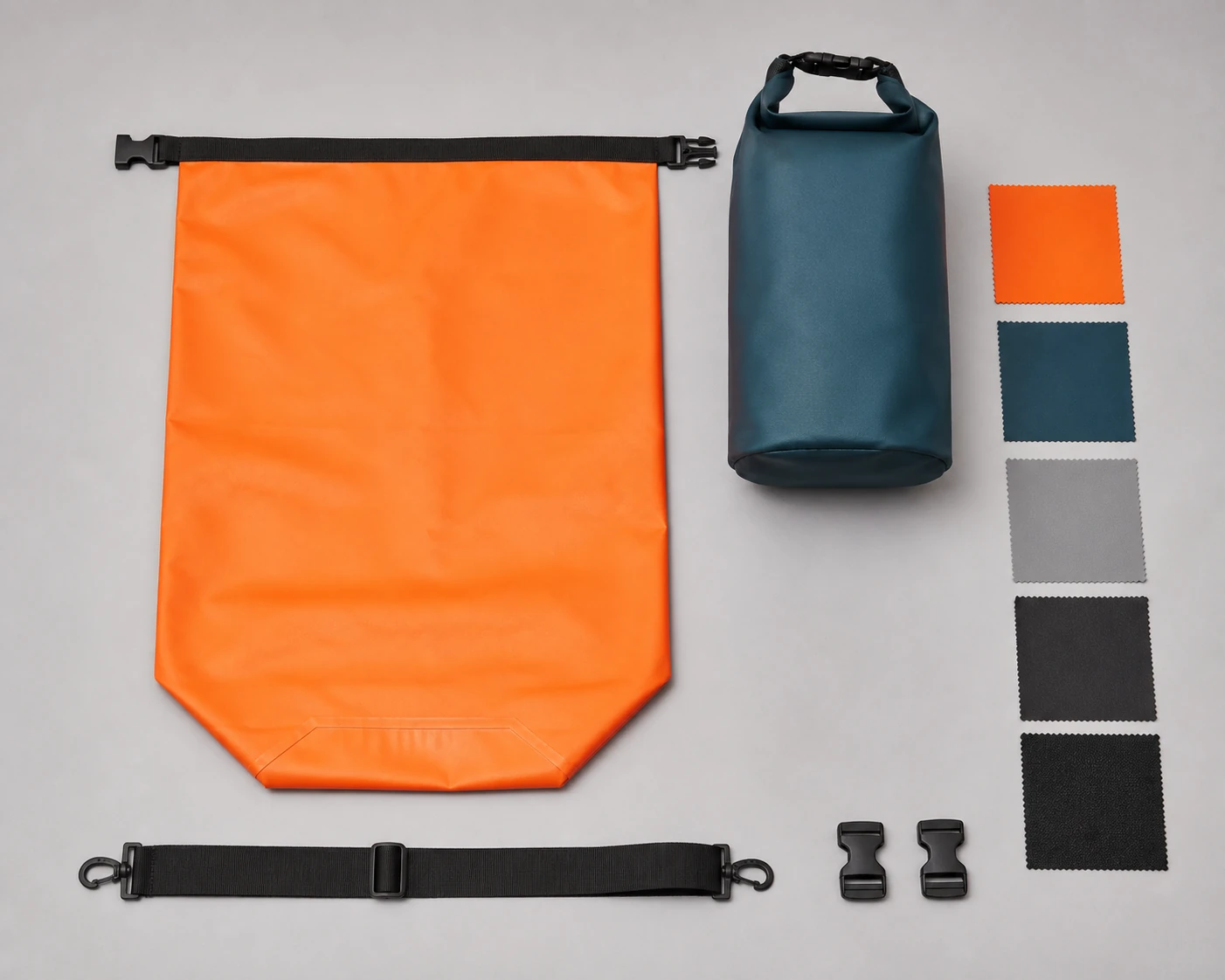
Build a named approval set before bulk production
A signed sample works only when its material, dimensions, components, artwork and test records share the same revision identity.
Review control 19
Assemble controlled references
Keep the material swatch, bill of materials, drawings, artwork, full bag, closure instruction and packing sample together.
Review control 20
Record conditional test results
Attach method, conditioning, sample identity, closure steps and observations; avoid detached pass certificates.
Review control 21
Define reapproval triggers
List changes to shell, seam, closure, attachment, hardware, decoration, packing or claim that reopen review.
Build a Dry Bag Approval and Evidence Record
| Decision | Controlled object | Buyer evidence |
|---|---|---|
| Closure proof | Mouth reinforcement, fold or gather route, buckle and strap geometry | Complete loaded closure sequence tied to the represented sample |
| Material or coating identity | Declared textile, coating face and supplier reference | Coded material linked to the finished bag |
| Seam or weld object | Body, base, mouth and attachment interfaces | Named interface inspection without an unsupported universal rating |
| Representative use condition | Buyer-defined load, handling, exposure and closure sequence | Recorded observation under declared conditions |
| Sample gate | Material, construction, complete bag and packed unit | Distinct approvals with version ownership |
| Lot and reorder evidence | Material lot, sample code, inspection, pack and change notice | Retained comparator and reopened gates after change |
Guide checkpoint 08
Test packing recovery before accepting carton density
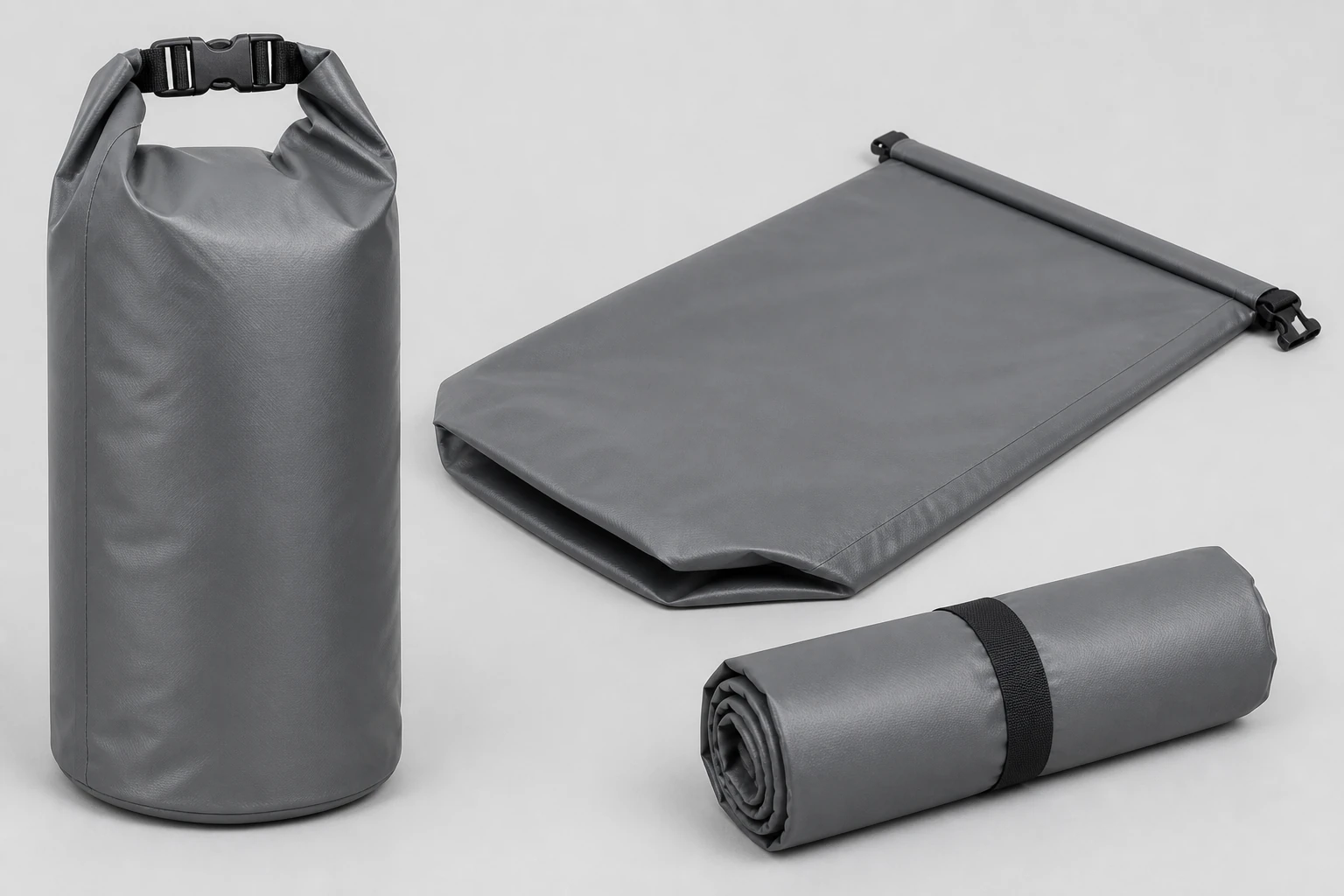
A compact carton can create coating transfer, hard folds or misaligned closures that are invisible at the factory packing station.
Review control 22
Mark the fold or roll map
Protect printed surfaces and hardware while avoiding a fixed crease through the functional mouth.
Review control 23
Condition a packed sample
Use a documented time and environment relevant to the logistics route rather than an unspecified warm test.
Review control 24
Review timed recovery
Observe blocking, odor, marks, hardware shape, seam appearance and closing function after unpacking.
Guide checkpoint 09
Convert approval records into receiving and change control
Inspection should answer whether the delivered lot matches the represented release, not merely whether a carton looks acceptable.
Review control 25
Sample against the frozen revision
Verify item identity, geometry, closure, interfaces, components, shade, artwork, packing and scoped performance evidence.
Review control 26
Quarantine unexplained differences
Separate affected units and request a documented deviation instead of accepting a visually similar substitution.
Review control 27
Close the learning loop
Feed recurring defects and field observations into the next specification revision without rewriting historical approval evidence.
Dry-bag questions
Frequently asked questions for sourcing review
Does coated nylon prove a complete bag is waterproof?
No. The finished result also depends on closure, every seam and attachment interface, construction consistency, user procedure and the scope of a completed-product test.
How should roll-top samples be compared?
Use the same contents, fill boundary, closing sequence, dimensions and conditioning, then record the represented sample revision and observations.
What belongs in an approval set?
Keep the shell reference, bill of materials, drawings, artwork, complete bag, closure instruction, scoped test record and packing sample under one revision.
When is reapproval required?
Reopen affected checks after changes to material, joining process, closure, dimensions, base, attachments, hardware, decoration, packing or intended claim.
Controlled next step
Request a review of the buyer-owned approval brief
Send the exposure story, sample identity, open interfaces and planned evidence gates so unresolved points remain visible.