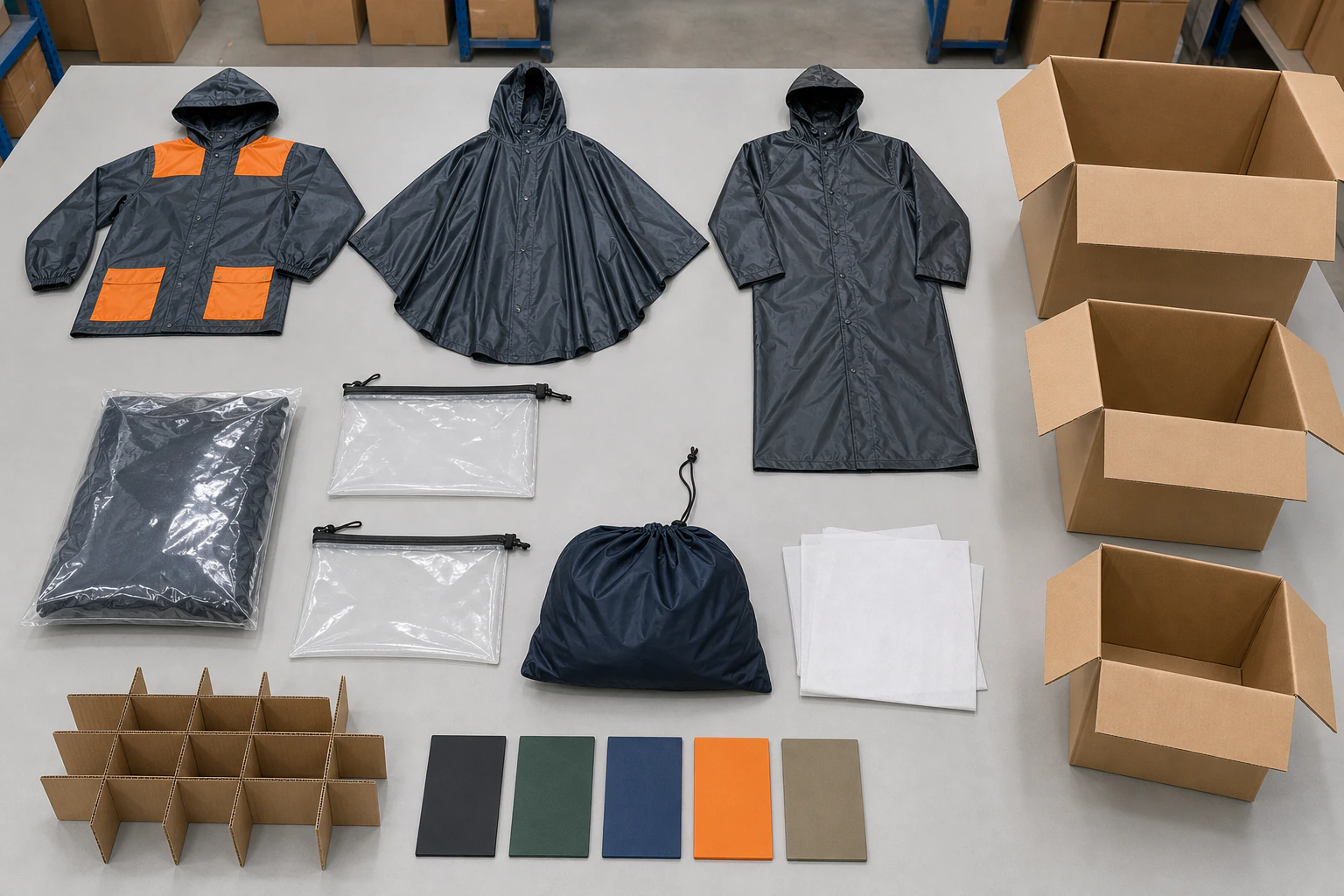
B2B rainwear programs: material, construction, evidence and pack-out controlled together

Rainwear manufacturer and waterproof clothing supplier

Choose a Rainwear System That Survives the Buyer’s Real Use Case

A material name is not a complete specification. EverBen helps B2B buyers connect user exposure, garment construction, mobility, branding, pack-out and approval evidence before bulk pricing is compared. Use this category page to select one of eight focused rainwear routes or submit a mixed-program brief.

Compare All 8 Routes
20+ years of export experience ISO 9001 ISO 14001 BSCI
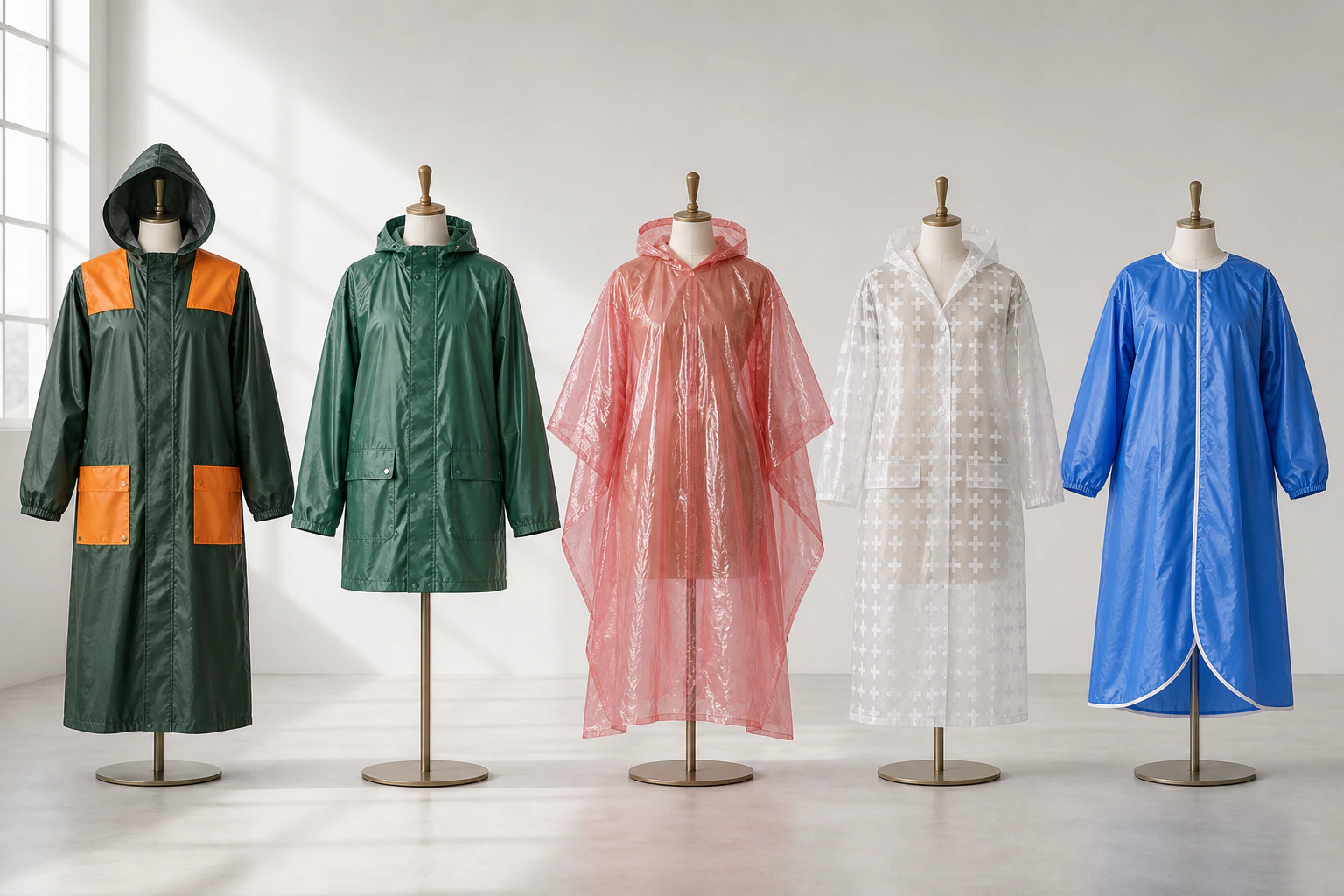
Selection of waterproof clothing for bulk rainwear programs
Manufacturer + sourcing integration partner One rainwear brief can keep different material routes, samples and evidence clearly separated.
Application first Start with the wearer and exposure.
Construction visible Separate fabric, seams and closures.
Evidence scoped Ask what each document proves.
RFQ controlled Freeze open choices before bulk.

Decision 01 · Use before material

Define the Buying Scenario Before Naming the Fabric

A procurement request becomes comparable only when suppliers are quoting the same user, exposure and release basis. These four questions prevent a familiar material label from hiding an unsuitable finished garment.

01

Who wears the product?

A road crew, festival visitor, cyclist, child, tour guest and food-processing worker move differently and accept different heat, fit and closure trade-offs. Record clothing layers, task movement, visibility needs and whether one-size distribution is realistic.

02

What kind of water exposure occurs?

Brief showers, wind-driven rain, spray, repeated wash-down and surface contact are different conditions. Describe direction, duration, pressure, frequency and vulnerable entry points instead of relying on “waterproof” as an unbounded adjective.

03

How long must the item remain useful?

A one-day contingency poncho, reusable promotional coat and industrial duty garment carry different expectations for tear resistance, closure life, cleaning, storage and replacement. The reuse target affects material, workmanship and program economics.

04

How will the buyer release and distribute it?

Size ratios, individual bags, sponsor artwork, barcodes, carton marks, venue allocation and destination splits can create more errors than the garment itself. Put distribution data into the technical brief before packaging is priced.

Decision 02 · Reusable coated and woven routes

Compare Four Rainwear Routes for Repeated Wear and Structured Garments

These families can support jackets, suits, capes and work garments, but the base fabric, coating, weight, seam method, ventilation and pattern determine the finished result. Follow the product link when one route matches your program.

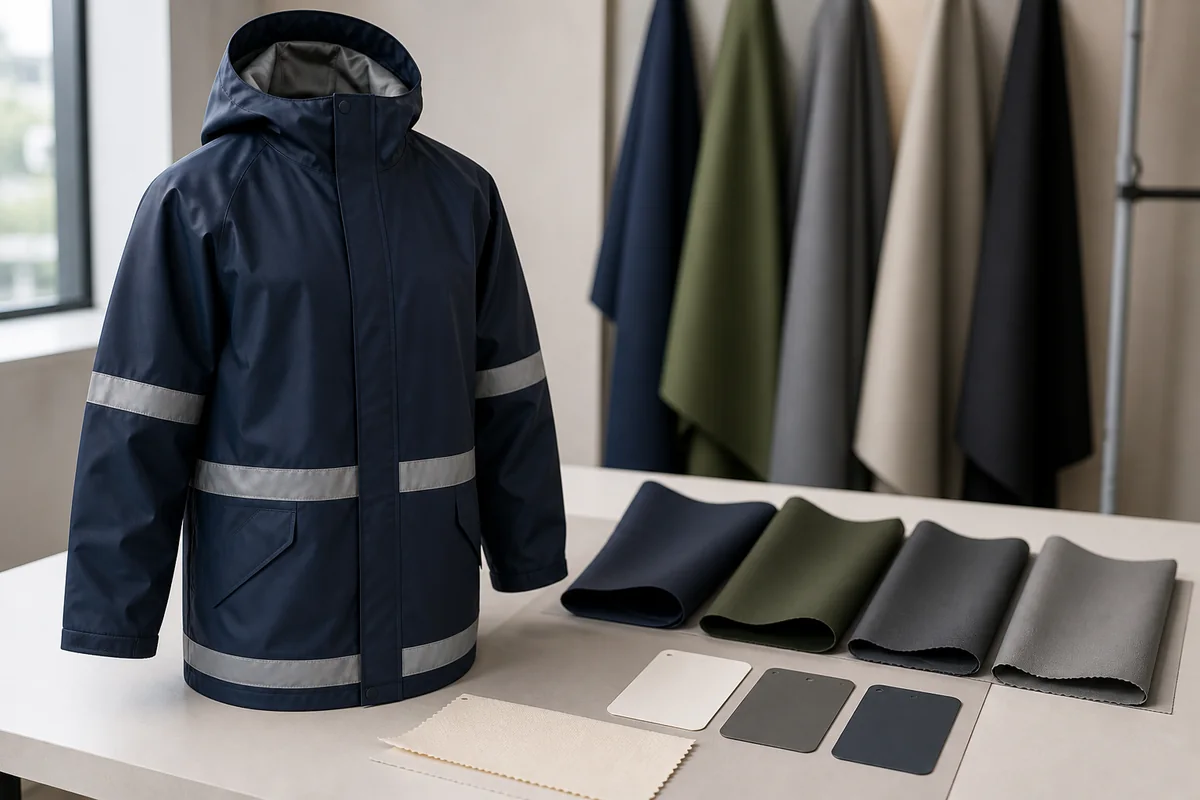
Unbranded hooded rain jacket and unlabeled flexible swatches prepared for material-route comparison
Appearance can identify a garment route, but substrate, coating, seam method and intended exposure still need separate approval evidence.
Flexible coated route

PU Rainwear

Useful when a buyer values a softer hand, lighter construction or garment-like mobility. Specify substrate, coating side, seam treatment, lining, vents and use conditions rather than treating “PU” as one universal grade.

  • Outdoor and commuter programs
  • Private-label jackets
  • Workwear where movement matters
Evaluate PU rainwear construction →
Film and coated route

PVC Rainwear

Often considered for visible film products, robust wet-duty protection or cost-controlled programs. Clarify formulation, reinforcement, weld or seam route, temperature behavior, odor expectations and destination requirements.

  • Industrial wet tasks
  • Reusable coats and suits
  • Transparent or colored programs
Review PVC rainwear trade-offs →
Light woven route

Nylon Rainwear

Nylon-based constructions can support packability and mobility when coating, seam control and garment design match the exposure. Buyers should define abrasion points, hydrostatic evidence request, lining or mesh and packed size.

  • Travel and compact carry
  • Outdoor mobility
  • Reusable branded shells
Build a nylon rainwear brief →
Versatile woven route

Polyester Rainwear

Polyester substrates accommodate many weights, coatings, colors and decoration systems. The word alone does not establish comfort or weather protection, so freeze coating, seam, closure, venting and finished-garment checkpoints.

  • Uniform and work programs
  • Promotional outerwear
  • Multi-color assortments
Specify polyester waterproof clothing →
Concerned that two “similar” coated fabrics will behave differently after cutting and sewing?

Send both references and the end use. We will separate substrate, coating, construction and evidence variables before a price comparison creates a false equivalence.

Decision 03 · Film, disposable and task-specific routes

Use Four Lightweight Rainwear Paths Without Treating Them as Interchangeable

Low bulk, fast distribution or simplified sizing can be valuable, yet lightweight products still need a defined user, closure, edge, pack and disposal or reuse expectation. These routes serve different purchasing jobs.

Soft film route

EVA and PEVA Rainwear

Commonly considered for reusable promotional coats and ponchos where hand feel, transparency, color and welded construction matter. Define thickness basis, film feel, print compatibility, odor expectation and fold recovery.

  • Events and visitor kits
  • Branded reusable ponchos
  • Travel and leisure supply
Compare EVA and PEVA options →
Contingency route

PE Disposable Rainwear

Appropriate when compact emergency distribution and low unit complexity matter more than repeated wear. Confirm dimensions, edge and hood geometry, closure, individual pack, opening ease and quantity by destination.

  • Emergency stock
  • One-day outdoor events
  • Travel contingency packs
Plan disposable PE rainwear →
Composite sheet route

Nonwoven Rain Ponchos

A nonwoven or laminated sheet can provide a different hand, print surface and structure from thin film. Buyers should define sheet construction, water-barrier expectation, edge method, drape and packed presentation.

  • Promotional distributions
  • Guest and venue programs
  • Distinctive surface needs
Assess nonwoven poncho construction →
Task-zone route

Waterproof Aprons and Work Capes

When only part of the body or work zone needs a barrier, a focused apron or cape may reduce bulk and improve task access. Define coverage, ties or closures, surface contact, cleaning and compatibility with other PPE.

  • Wash-down and wet handling
  • Visitor or task protection
  • Partial-body coverage
Define apron and work-cape coverage →
Buying for a large event where opening speed matters as much as weather coverage?

Describe the distribution point, participant count, pack format and disposal plan so the item is designed for the real queue—not just the product photo.

Decision 04 · EAV comparison

Compare Rainwear as a Finished System, Not a Material Nickname

The EAV table turns vague category language into entities, attributes and project values that a buyer can place in an RFQ. Values below are decision prompts, not fixed EverBen product promises.

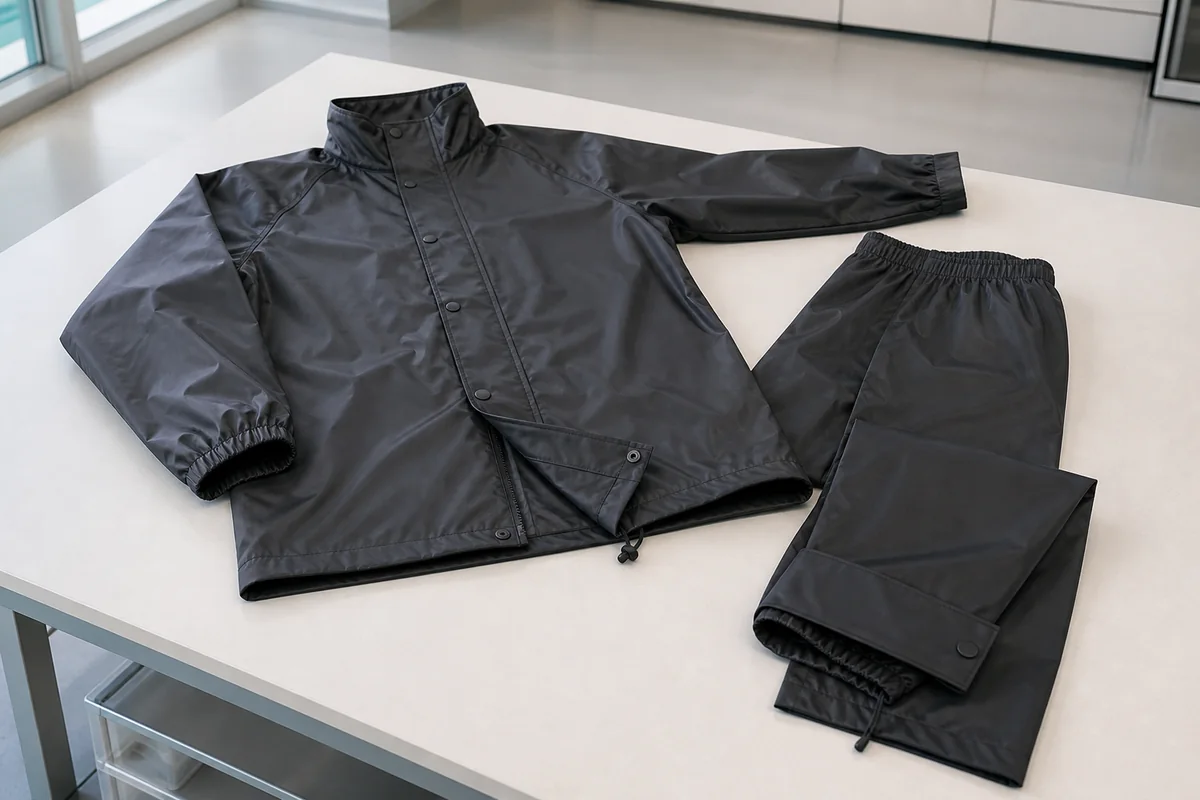
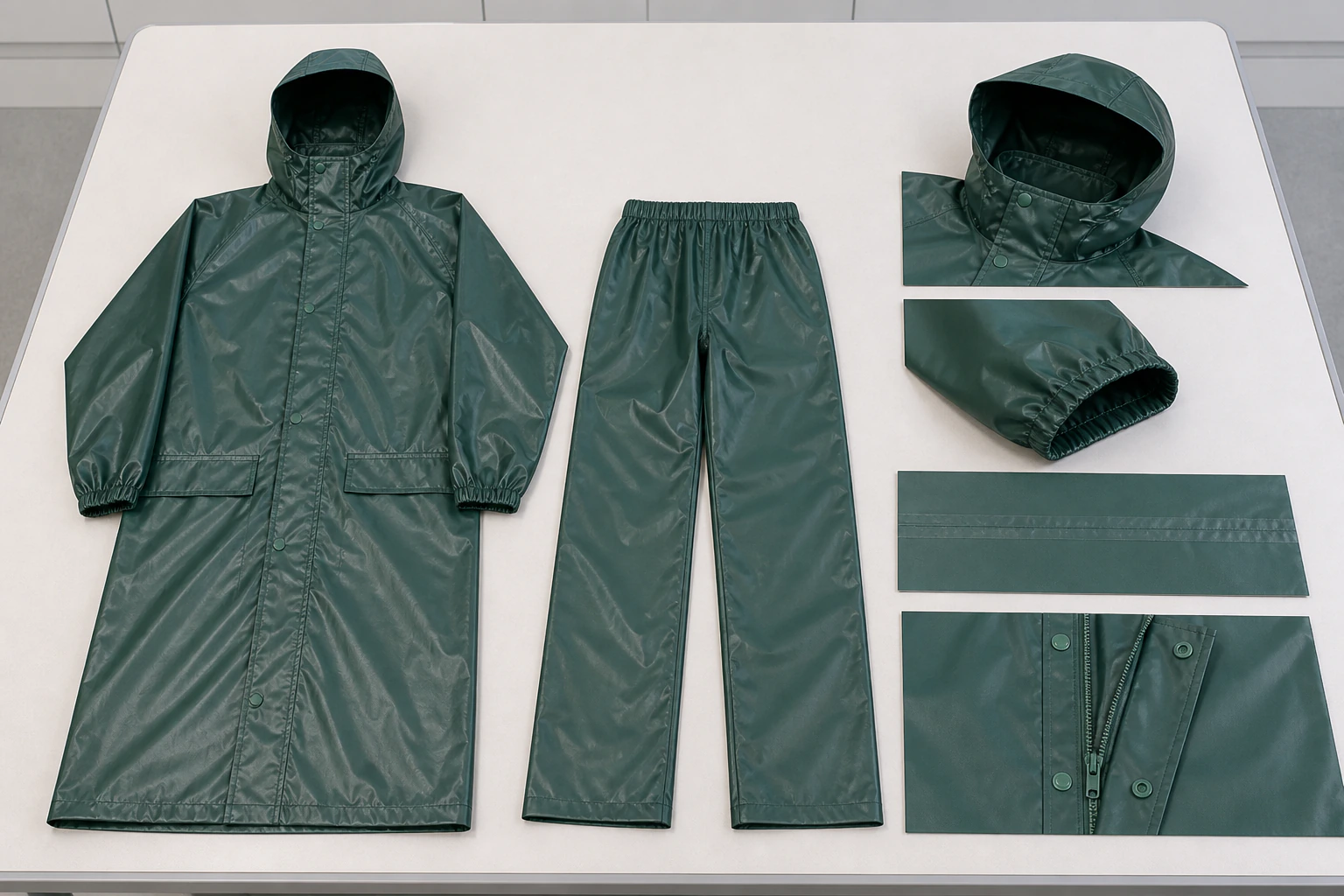
Plain coated rain jacket and trousers arranged to review cuffs, hems, waist overlap and closure interfaces
A complete wearing-system review prevents one approved component from hiding a weak closure, overlap or movement interface elsewhere.
Entity Attribute to define Example project values Why procurement should care
Barrier material Film, coated woven or composite sheet PU-coated polyester, PVC film/coating, EVA/PEVA film, PE film, coated nylon, nonwoven composite Changes hand, weight, construction options, evidence requests and end-of-use planning.
Garment construction Joining and edge method Welded, heat sealed, stitched and taped, bound, reinforced at stress points Water can enter through joins and openings even when the base material resists water.
Coverage geometry Body length, hood, sleeve, overlap and opening Jacket, coat, suit, poncho, cape, apron; with or without backpack allowance Coverage must match motion, clothing layers and wind direction.
Comfort system Venting, lining, weight and mobility Back vent, underarm vent, mesh lining, adjustable cuff, articulated sleeve A barrier that causes heat stress or restricts work may be rejected by users.
Closure system Front, hood, cuff and waist control Zipper, snap, storm flap, drawcord, hook-and-loop or tie Closures are frequent leakage, snag and durability points.
Brand system Decoration and identity controls Screen print, transfer, label, carton mark, color reference and artwork position Method compatibility and approval order affect appearance and production risk.
Release evidence What is checked and recorded Material identity, dimensions, seam or weld, closure, appearance, pack-out and requested tests Evidence must match the claim and the buyer’s acceptance decision.

Exposure

Water source, duration, wind, temperature and task.

System

Material, construction, coverage, comfort and closure.

Evidence

Sample basis, requested tests and measurable checks.

Release

Approved revision, packing, quantity and destination.

Decision 05 · Wearer acceptance

Protect Against the Complaints That a Material Data Sheet Cannot Predict

Bulk buyers often receive a technically recognizable fabric but still face field rejection. Wearer acceptance depends on how the entire garment moves, vents, opens, covers and survives repeated handling.

Heat and moisture buildup

Barrier layers can trap heat. Define activity, wear duration, climate, vent placement and lining so comfort is reviewed alongside rain protection rather than after complaints begin.

Restricted reach and task movement

Shoulder shape, sleeve length, cuff control, coat sweep and poncho width influence cycling, lifting, climbing and tool use. A size label alone cannot validate mobility.

Water entry at openings

Hood fit, neckline, zipper, flap, cuff, pocket and hem behavior require finished-garment inspection. Map the likely entry points for the intended wind and body position.

Tear, snag and closure failure

Thin films may fail during opening; heavier garments may fail at stress points or hardware. Simulate distribution, dressing and the highest-stress work motions during sample review.

Afraid the sample will look acceptable on a hanger but fail during real movement?

Tell us the task sequence and clothing layers. We will help turn them into a practical wear-trial checklist for the size set or approval sample.

Decision 06 · Brand and distribution control

Freeze Artwork, Sizes and Pack-Out in the Right Order

Customization is not a list of optional logos and colors. Each choice touches a material, process, approval owner and deadline. Keep the commercial presentation connected to the production sequence.

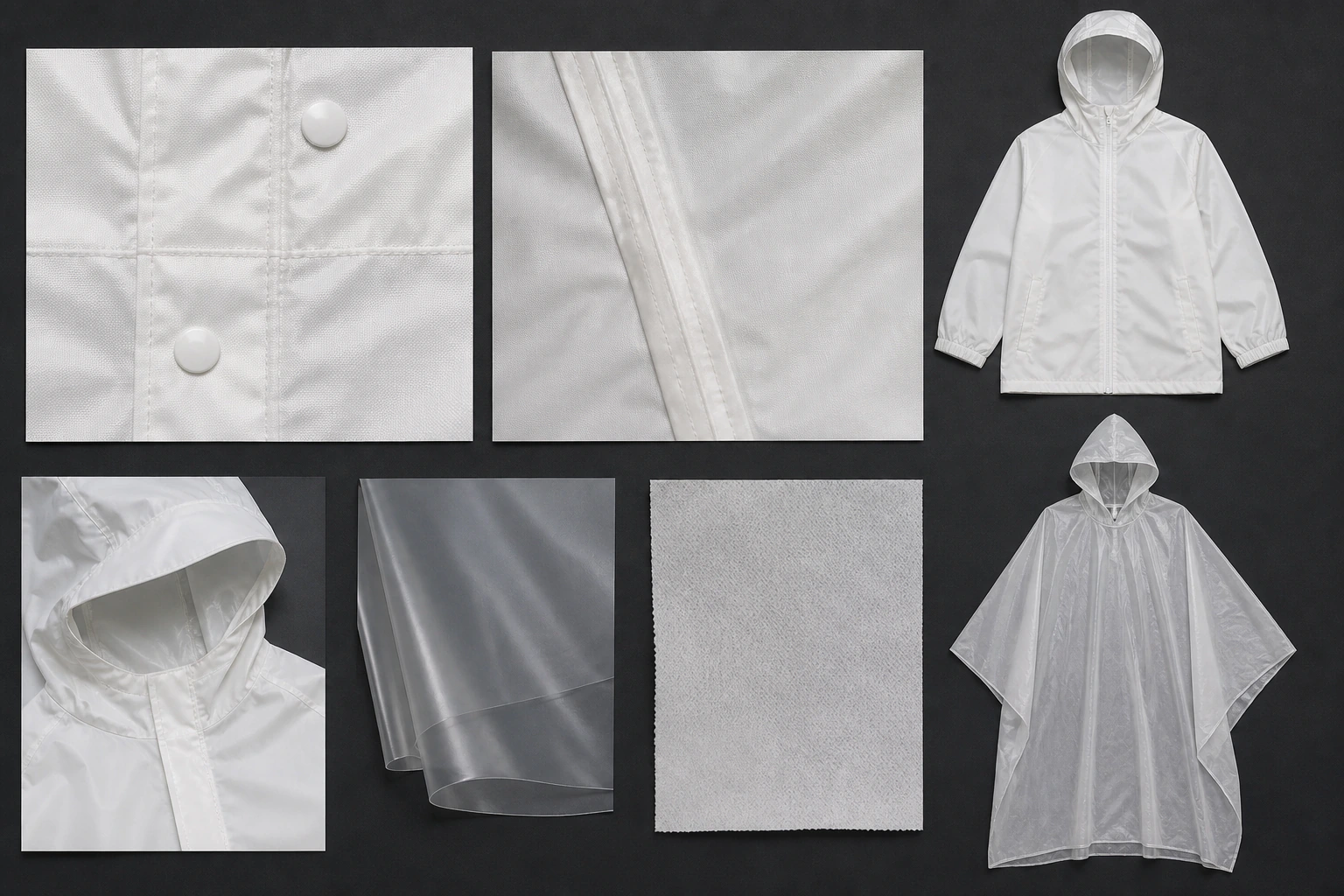
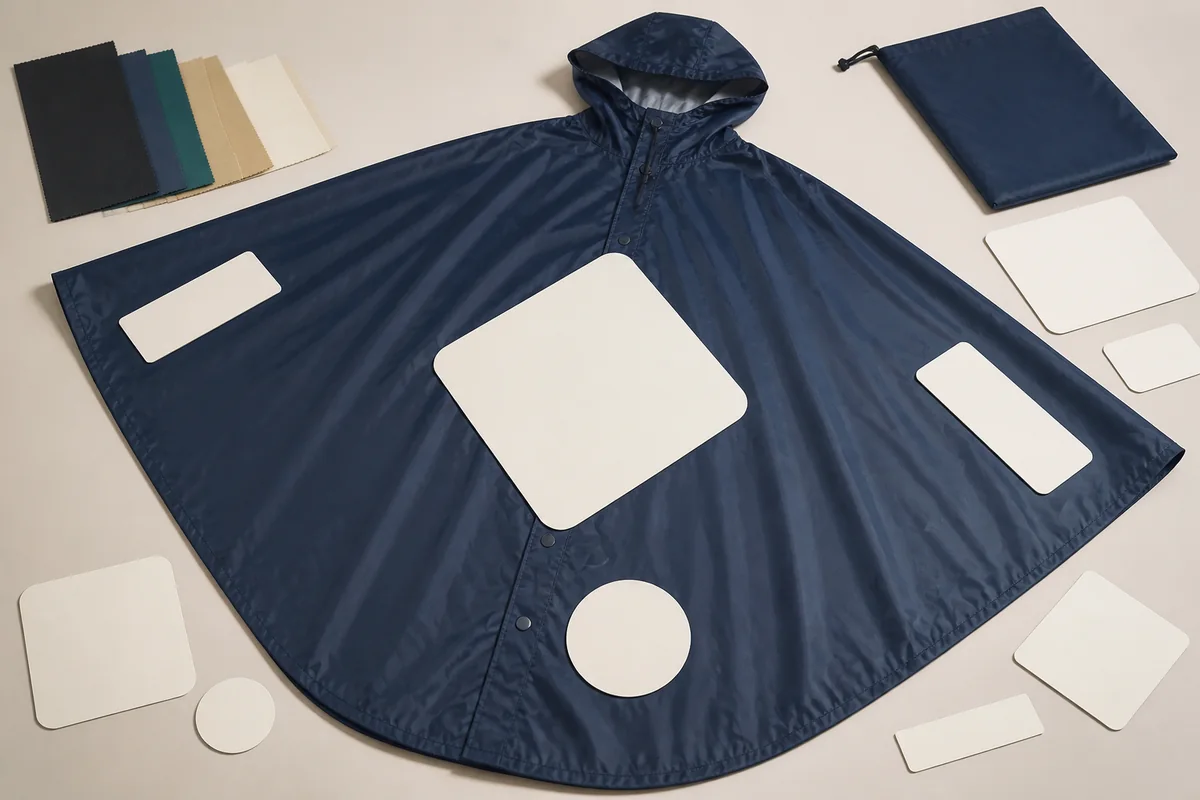
Unbranded hooded rain cape with blank placement templates and packaging reference for branding planning
Logo placement should be released only after the wearing shape, closures, fold line and finished pack format are understood together.

Artwork compatibility

Provide vector artwork, colors, dimensions, placement and viewing distance. Confirm the decoration process against the selected surface, folds and heat exposure before artwork approval.

Color and appearance control

Name the color reference, acceptable viewing conditions and parts that must match. Transparent, coated and woven surfaces can show color differently under the same light.

Size and identification logic

Define body measurements, clothing allowance, size ratio and label language. One-size products still need a coverage range and an agreed user limitation.

Pack-out and allocation

Freeze individual bag, insert, barcode, carton quantity, mark and destination split. Test whether a user can identify, open and distribute the item without slowing the operation.

Running a sponsor campaign where a late artwork change could delay every carton?

Send the artwork status, item matrix and event date. We will identify which approvals must close before material and packing decisions become irreversible.

Decision 07 · Evidence boundaries

Ask for Proof That Matches the Claim and the Finished Garment

For supplier-level due diligence, EverBen can present BSCI plus ISO 14001 and ISO 9001 records. Rainwear waterproofing, seam and destination claims still require evidence tied to the released garment.

Material identity

Confirm what the product is made from

Record substrate, coating or film family, relevant weight or thickness basis, color and agreed source reference. If restricted substances or destination-market documents matter, define the requested scope before quotation.

Construction evidence

Inspect the joins, openings and stress points

Review weld or seam continuity, tape placement, reinforcement, closure attachment and garment geometry. A material certificate cannot reveal assembly defects.

Performance evidence

Match the method to the buyer’s statement

State whether the buyer needs material data, a requested laboratory method, a finished-garment challenge or a project-specific wear trial. Avoid turning one result into an unlimited marketing claim.

Release evidence

Connect approval to the shipment

Use the approved revision, measurements, appearance, workmanship, labels, packing and quantity as a release basis. Define sampling and acceptance rules appropriate to the project.

Decision 08 · Sample to bulk

Turn the Approval Sample Into a Usable Bulk-Release Record

A sample is valuable only when the team knows what it approves, what remains open and which attributes must be preserved in production. Use a short control path that purchasing, product development and inspection can all follow.

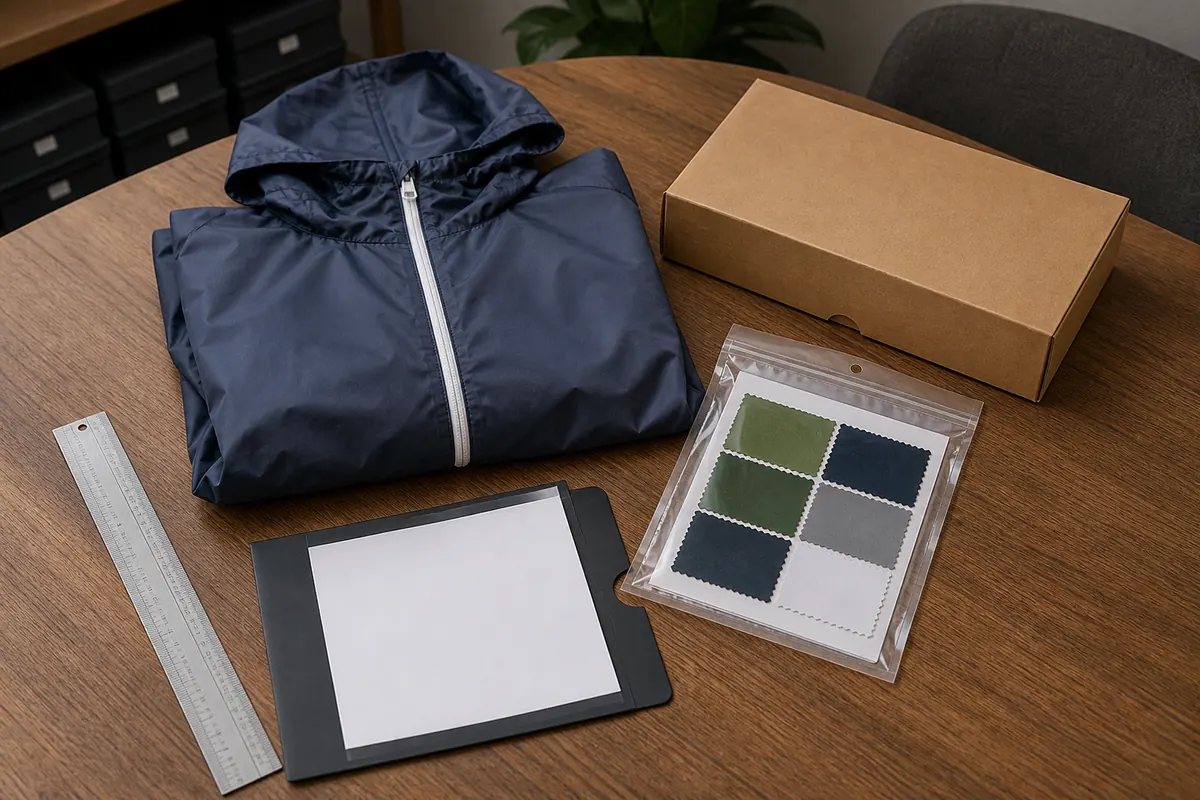
Unbranded rainwear approval sample with sealed swatch reference, measuring tool and plain carton mock-up
Bulk release becomes reproducible when the approved garment is tied to controlled material, measurement, artwork and packing references.

Close the brief

Resolve conflicts among application, material, construction, dimensions, branding, pack-out and required date.

Approve with comments

Record approved attributes, deviations, pending tests and the exact revision of artwork and specification.

Control production

Focus checkpoints on operations where later correction is difficult: joins, decoration, size identity and packing setup.

Release the shipment

Review agreed workmanship, evidence, quantities, labels, cartons and destination allocation before dispatch.

Specification owner

Name who can approve a change. Uncontrolled chat instructions should not silently replace the signed project basis.

Golden reference

Identify the physical sample, digital file and color or packing references that define the released version.

Change log

Record what changed, why, who approved it and which samples, materials, artwork or cartons are affected.

Reorder basis

Keep usable records so a repeat program starts from controlled facts rather than memory or an old photograph.

Have an approved sample but no written record of what the approval actually covers?

Send the sample comments and current files. We will help expose open decisions before bulk production turns ambiguity into rework.

Decision 09 · Supply responsibility

Use One Program View Without Hiding Product-Level Responsibility

EverBen works as a manufacturer and sourcing integration partner. That model is useful when a program combines different rainwear processes, but every item still needs a named route, specification, sample and evidence owner.

Route by process fit

Select production resources by material, joining, garment complexity, decoration and evidence needs instead of forcing every item through one unsuitable line.

Keep one revision trail

Use a program matrix to show each SKU, owner, version, approval status, packing route and destination without blending technical requirements.

Separate item and program risk

A delayed artwork file, unavailable component or failed sample may affect one SKU or the whole shipment. Map dependencies before consolidation is promised.

Make escalation visible

Define who answers material, quality, artwork, packing and logistics questions so issues move to the correct decision owner quickly.

Managing several rainwear SKUs across different factories or destinations?

Share the item matrix and shipping plan. We will separate product-level controls from the dependencies that can hold the entire program.

Decision 10 · Buyer questions

Rainwear Procurement FAQ for Bulk and OEM Programs

Each answer identifies the next rainwear decision without publishing a false universal MOQ, price, lead time or performance promise.

Which rainwear material is best for a bulk program?

The right route depends on the wearer, exposure, reuse cycle, mobility, construction, branding, pack-out and evidence requirements. Compare the finished-garment system rather than selecting by material name alone. PU, PVC, EVA/PEVA, PE, nylon, polyester and nonwoven routes each solve different program problems.

Can one supplier coordinate reusable and disposable rainwear in the same project?

A mixed program can be coordinated when each item keeps its own specification, sample, artwork, inspection and packing controls. The consolidation plan should not erase product-specific responsibilities. One program view is useful, but it must show which route and approval record belongs to every SKU.

What should a rainwear RFQ include?

State the user and application, expected weather exposure, reuse target, material or performance goal, construction, size range, colors, artwork, packing, quantity, destination and required date. Attach any reference sample, drawing or buyer protocol. If details are missing, describe the intended use instead of guessing a technical value.

How should a buyer verify a waterproof clothing claim?

Define the claim scope and request evidence that matches the material, seams, closures and finished garment. A fabric result alone does not automatically establish the performance of the complete product. Separate supplier credentials, material documents, product checks and approval records.

Rainwear inquiries: chinarainwear@rainwear-manufacturers.com
Main inquiry buttons submit directly through the website; they do not open your local email application.
Call WhatsApp