1
Awareness and event traffic
Define whether the item attracts visitors, helps booth workflow, carries a message after the event or supports staff identification. Record venue, crowd, issue speed and what recipients already carry.

B2B campaign merchandise
The cheapest giveaway is expensive when recipients ignore it, artwork fails, cartons miss the venue or surplus has no next use. Strong programs connect campaign outcome, audience, product utility, branding, evidence, schedule, distribution and measurement before purchase.
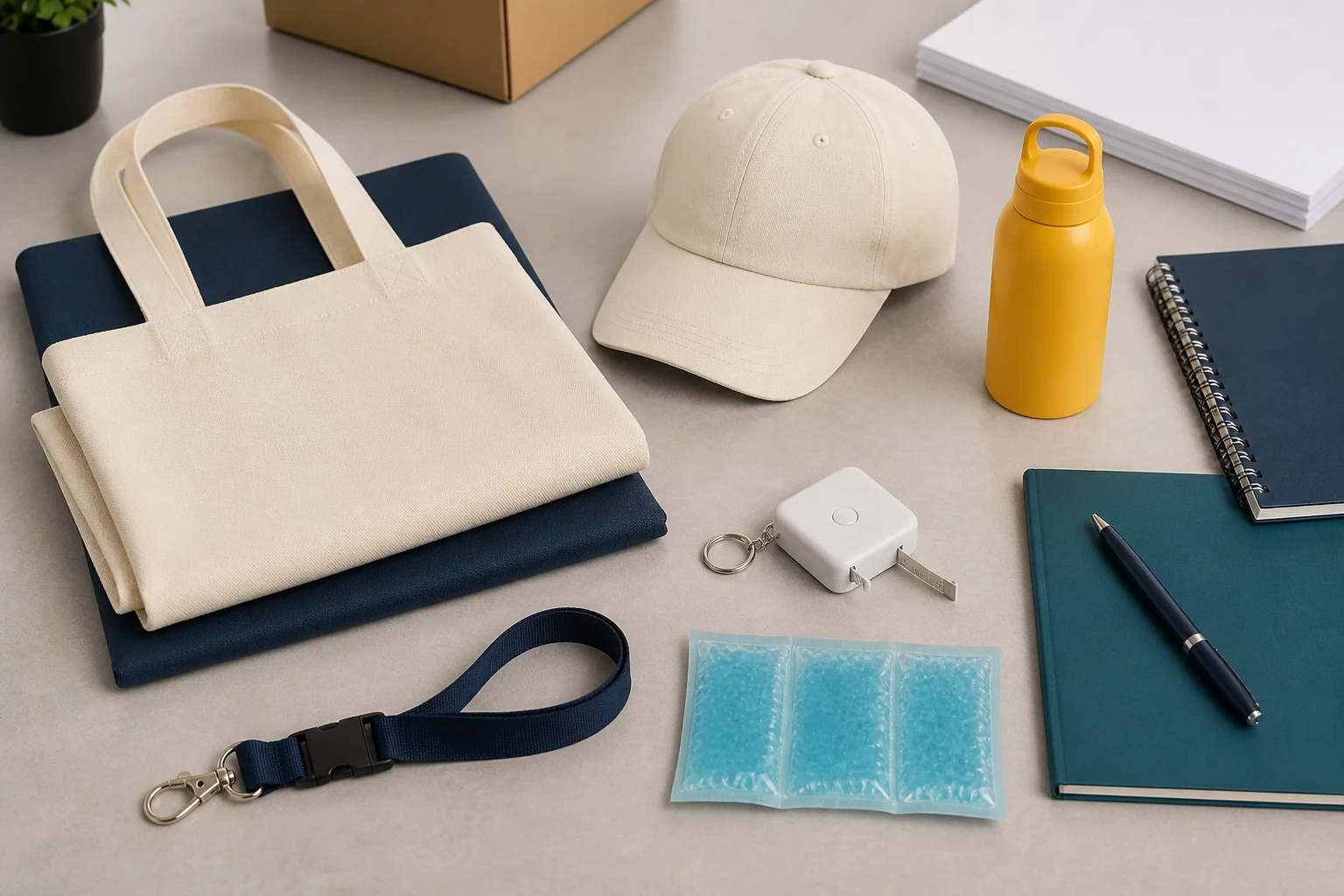
Decision 01 · Campaign purpose
A product directory encourages buyers to compare objects without knowing what success means. Define the desired action, recipient relationship, measurement and time horizon first. The same budget may require one premium client gift, a high-volume event tool or a reusable staff item.

Define whether the item attracts visitors, helps booth workflow, carries a message after the event or supports staff identification. Record venue, crowd, issue speed and what recipients already carry.
State onboarding, recognition, safety, seasonal gifting, loyalty or executive purpose. Recipient value, personalization, presentation and gift-policy limits may matter more than maximum logo size.
Define target selling price, perceived value, collection story, licensing or artwork rights, size/color assortment and replenishment. Retail goods need a stable SKU identity beyond one campaign date.
When the product serves a real task, identify performance, user and replacement cycle. Promotional branding should not create unsupported safety, health or environmental claims on a functional item.
Send the campaign objective and audience. We will convert them into product-selection and distribution criteria.
Decision 02 · Product route
EverBen coordinates multiple product families, but a textile, bag, molded cover, measuring tool and temperature-use product have different specifications and evidence. Keep one program dashboard while preserving SKU-specific controls.
Define wearer, fit/size ratio, fabric, construction, color, print or embroidery, labels and pack. Clothing decisions belong in a garment approval file, not a generic gift proof.
Explore promotional apparel → Read the T-shirt fabric, fit and printing guide →For bags, define load, dimensions, handles, seams, print and reuse; for protective covers, define item fit, closure and material. Visit shopping bags or luggage and bag covers.
Read the shopping bag material, handle and printing guide → Read the luggage cover material, size and opening guide →Measurement tools require product-specific scale/function evidence; rulers, cutters, badge holders, clappers and whistles have their own use and destination risks. Visit tape measures, review the range, blade and housing guide, or compare office and event gifts with the audience, budget and kit design guide.
Define user, activation, temperature exposure, fill/material, package, instructions and evidence. Do not use wellness language as an unverified medical or safety claim.
Explore hot and cooling products → Read the hot and cold pack material, seal and leak-evidence guide →Share the shortlist. We will separate technical files while keeping quantities, artwork and destination under one program.
| Business outcome or distribution moment | Product family | Brand surface | Evidence need | Landed handling | Principal risk | Buyer inputs |
|---|---|---|---|---|---|---|
| Wearable campaign | Apparel or headwear | Garment, panel, crown or brim | Fit, construction and decorated complete sample | Size assortment, folding and carton allocation | Fit or decoration transferred across unlike SKUs | Audience, size route, artwork, quantity and destination |
| Event distribution | Bags, office gifts, small tools or thermal accessories | Defined printable face by item | Complete item, use boundary and pack approval | Kit count, labels, issue sequence and replenishment | Mixed items treated as one safety or use class | Audience, moment, item family, brand brief and pack map |
| Outdoor or travel support | Luggage covers, roadway/safety accessories or dry storage | Surface compatible with the accepted construction | Fit, interfaces, visible object identity and bounded use evidence | Protection of geometry and components in transit | Unsupported protection or performance inference | Task, geometry, environment, evidence owner and destination |
Decision 03 · Recipient journey
A useful item can fail when it is difficult to carry, slow to hand out, incorrectly sized, separated from instructions or shipped to the wrong venue. Map what staff and recipients do before, during and after issue.
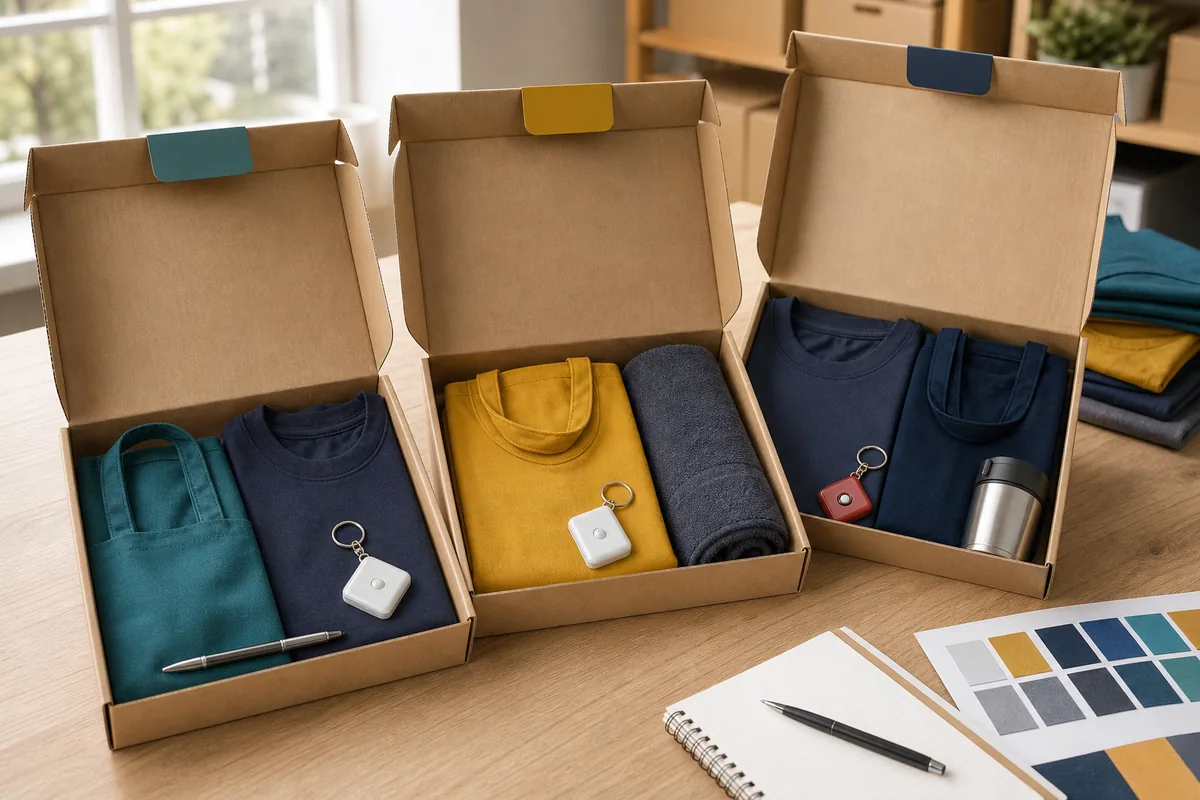
Define role, age range where relevant, region, existing equipment, work or leisure context and likely product ownership. Avoid stereotypes; use campaign data or a justified hypothesis.
Record booth space, queues, staffing, storage, assembly, personalization, transport/security restrictions and waste. Packaging that looks premium may be operationally impossible at a crowded event.
Consider product dimensions, weight, airport or venue restrictions, weather and whether recipients need a bag. The item should fit the journey between issue and home.
Decide what ongoing use, message, QR/action or replacement opportunity is expected. Measure retained usefulness or response instead of counting distributed units as campaign success.
Tell us the venue and recipient journey. We will identify carry, issue, package and after-use constraints before selection.
Decision 04 · Product scoring
Unit price is only one dimension. Score candidate products against audience relevance, useful life, brand visibility, execution risk, evidence burden, freight, deadline and surplus options. A simple record makes internal decisions explainable.
Ask what task the item solves, frequency of use and whether the recipient already owns a better alternative. Estimate retained exposure, not only initial excitement.
Check imprint area, viewing angle, material/color, tone and whether branding reduces utility. High logo coverage can lower perceived value on premium gifts.
Count tooling, artwork complexity, components, sizes, colorways, testing, manuals, destination rules and supplier handoffs. Complexity consumes schedule and creates failure points.
Model product, setup, sample, pack, freight, duty, receiving, assembly, distribution and leftover storage or reuse. The lowest unit price can create the highest program cost.
Send product options and constraints. We will create a comparable scorecard instead of choosing on unit price alone.
Decision 05 · Artwork release
A digital proof shows intended placement, not production behavior. Screen print, transfer, embroidery, molded mark, engraving and other methods respond differently to textiles, curves, textures, colors and product assembly.
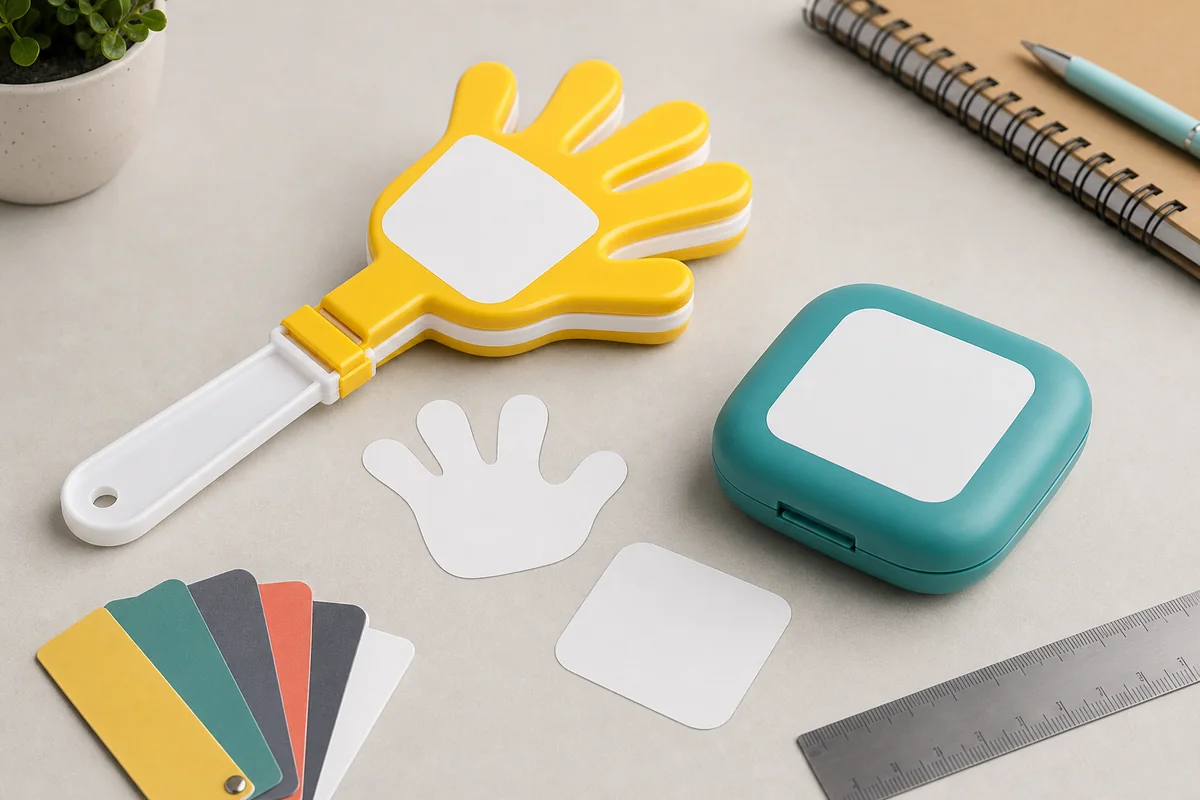
Use suitable vector/raster files, fonts, color references and authorized logos. Record version and approval owner. Reference imagery does not grant trademark, event or licensed-character rights.
Measure area from seams, edges, curves, hardware and functional zones. Check whether decoration occurs before or after assembly and whether the process changes product performance.
Approve method, ink/thread/material, underbase or backing, adhesion, detail and appearance on the exact substrate. Pantone intent may render differently across fabric, plastic, metal and packaging.
Define which decisions a digital proof, print strike, component sample or complete sample can approve. High-risk products or kits need a physical reference before bulk release.
Send artwork and item references. We will qualify process, area, substrate, color and the right sample gate.
Decision 06 · Evidence boundary
BSCI, ISO 9001 and ISO 14001 describe confirmed EverBen company-level evidence. A mixed merchandise programme cannot reuse those records as automatic proof of product safety, performance, recycled content, food contact or destination compliance.
Record which legal entity, factory or sourcing partner performs each responsibility. Company certificates must remain within current scope and status.
Map requested fiber, polymer, metal, fill, ink, battery or component documents to the exact item and revision. A material report may not prove the assembled gift.
Define functional or safety claim, destination, method, sample and report. Apparel, bags, measuring tools, cutters, whistles and thermal products require different questions.
Avoid “eco-friendly,” recyclable or reusable claims without defined material, system, evidence and permitted wording. Record buyer approval of environmental messaging.
Send the SKU and claim list. We will map company, material, finished-product and destination evidence item by item.
Decision 07 · Critical path
An event date is fixed even when artwork, samples, components, customs or weather are not. Build a backward schedule with decision owners and buffers. “Ship date” is not “ready at the venue.”
Set the date goods must be checked, allocated, assembled or delivered to venues. Include local holidays, appointments and correction time.
Plan mode, route, documentation, duties, delivery appointments and multi-address allocation. Do not assume all products or batteries/liquids share one freight path.
Reserve time for components, decoration, assembly, final inspection, rework, labeling and carton verification. Mixed kits follow the slowest critical item.
Assign owners for files, proof, colors, physical sample and specification approval. Late buyer decisions consume buffer; record the impact before proceeding.
Share the venue, countries and products. We will build a backward critical path with decision and delivery buffers.
Decision 08 · Sample and BOM
A gift kit or event program is a system of SKUs, artwork files, quantities, destinations and packs. It needs a bill of materials and release record so last-minute substitutions cannot silently change brand, evidence or count.
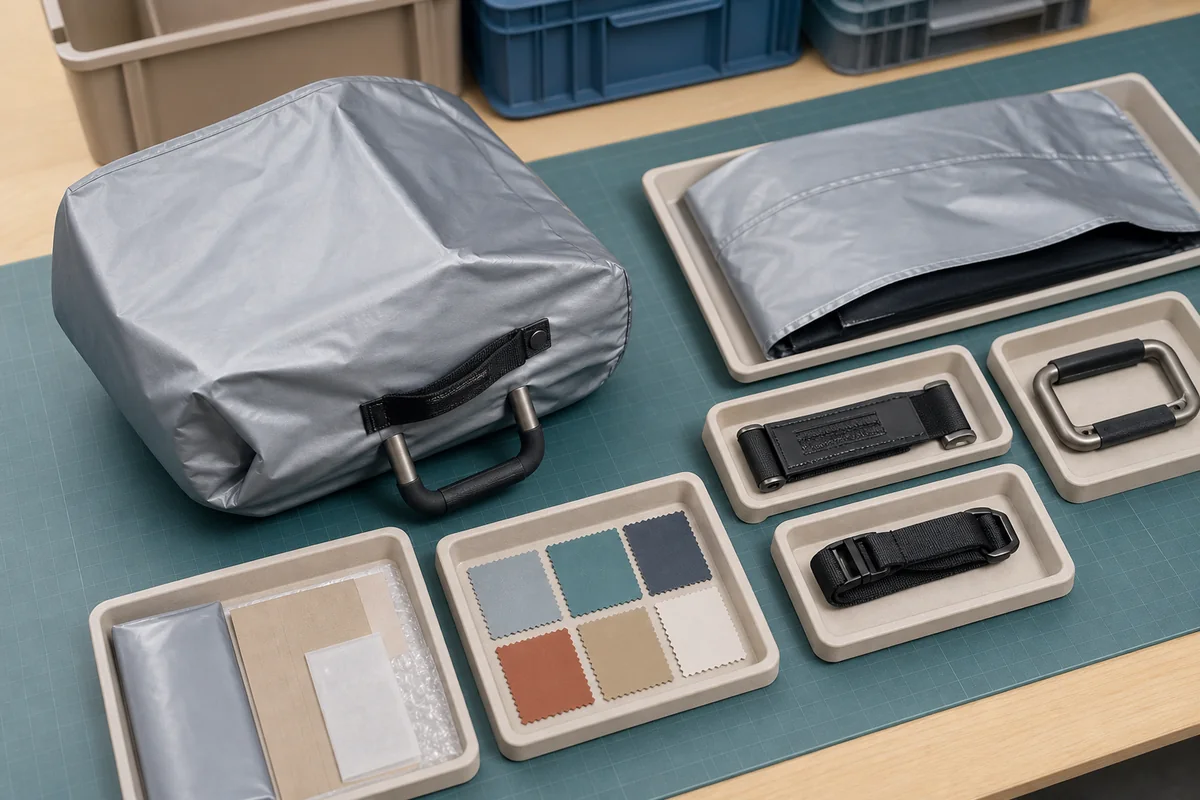
Record material, dimensions, color, construction/function, decoration, labels, pack, evidence and approved sample. Separate optional alternatives from the released version.
Use unique file names and approval dates by SKU, position and colorway. Prevent an old logo or wrong destination language entering one component.
List item code, quantity, position, insert, box/bag, protective materials, barcode and count check. Trial appearance, closure, weight and shipping resilience.
Evaluate availability-driven changes against function, brand, schedule, evidence and pack. Obtain buyer disposition before production or assembly.
We will build a versioned SKU and kit BOM so alternatives are reviewed rather than hidden.
Decision 09 · Distribution and repeat
Production completion does not mean program completion. Goods must reach the right location, recipient and issue moment. Remaining stock and campaign feedback should improve the next product choice instead of repeating habit.
Freeze quantities by venue, office, country or distributor. Mark SKU, kit, count, campaign and destination so receiving teams can act without opening every carton.
Define delivery contact, appointment, count/condition check, discrepancy evidence and escalation. Leave time to correct shortages before the event.
Plan generic/date-specific artwork, storage life, future events, donation or recycling route where applicable. Avoid creating avoidable waste through one-date branding.
Capture distribution rate, recipient response, useful-life signals, staff feedback, defects, leftover quantity and destination performance. Preserve successful specs and change what evidence supports.
Share distribution and measurement plans. We will connect carton allocation, surplus options and reorder learning.
Decision 10 · Buyer FAQ
MOQ, price and timing vary by item, material, tooling, decoration, quantity and destination. A multi-category program receives product-specific answers after the full campaign brief is reviewed.
Start with the audience action, venue, distribution moment, carrying limits, useful life, brand message, quantity, destination and in-hand date. Score products against those constraints before comparing unit price.
No. Each product needs its own specification, artwork-to-substrate proof, evidence and inspection points. The kit also needs a controlled bill of materials, assembly layout, count and destination record.
Work backward from receiving and event buffer through destination delivery, freight, final inspection, packing, production, approved sample or proof, artwork feasibility and material or component readiness.
Share the campaign, audience, product mix, quantity, artwork, timing and destination details so the sourcing team can organize one coordinated program review.
Send the campaign facts. We will identify product, artwork, evidence, schedule and distribution decisions still open.