
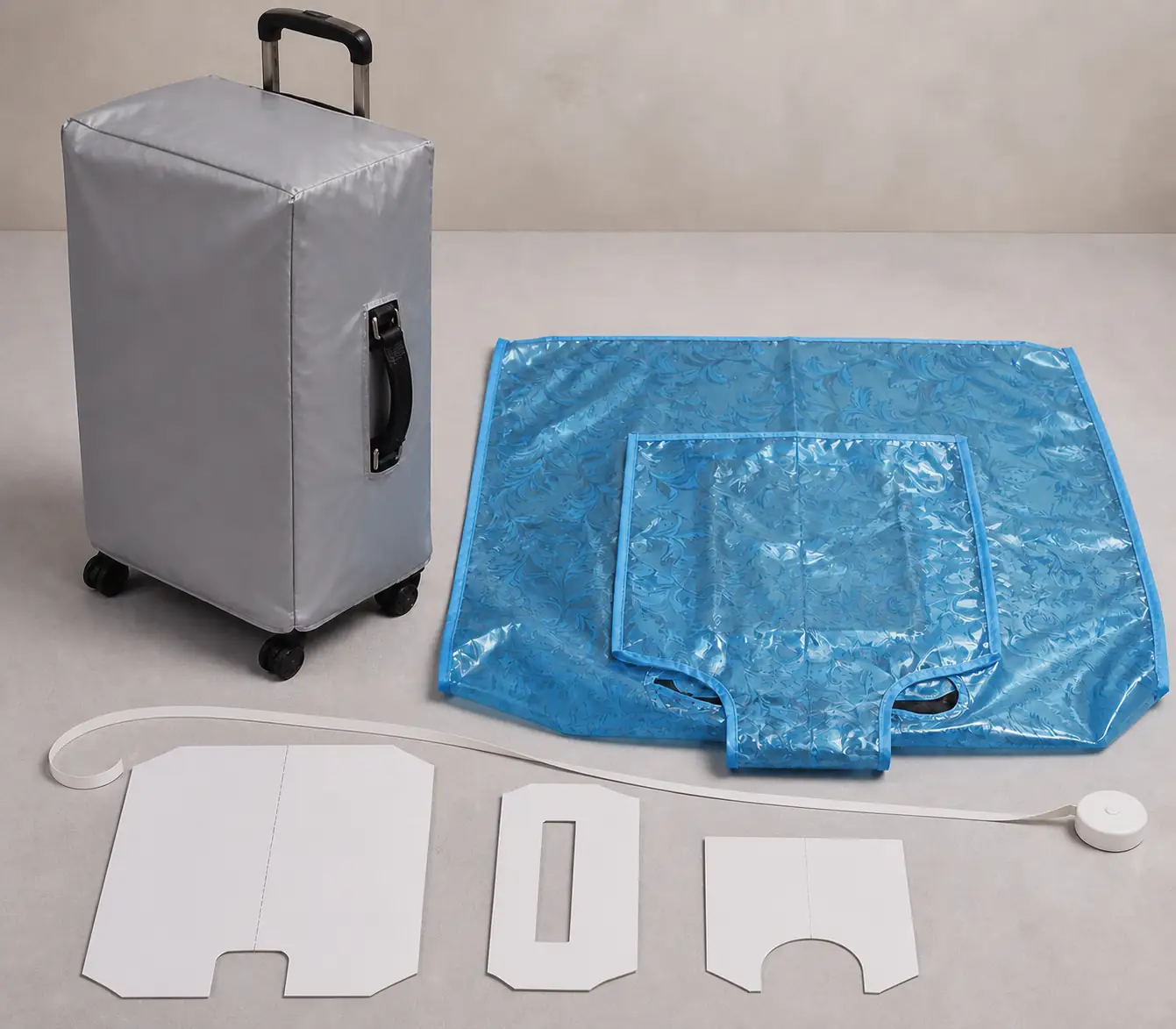
BUYING GUIDE / LUGGAGE COVER MATERIAL, SIZE AND OPENINGS
How to Specify Luggage Covers by Material, Size and Opening Structure
Published by EverBen
A cabin, medium or large label does not define the shell profile, handle positions, wheel clearance or stretch needed by a complete suitcase cover. Buyers need a controlled case family, measurable cover geometry and a fit trial on every represented size.
This guide separates clear, frosted and textile cover routes; complete-case landmarks; openings; closures; seams; decoration; packing and reorder controls. It helps sourcing teams compare supplier offers without treating EVA, PVC, polyester or a size name as a finished specification.
01 / case boundary
Define the suitcase family and travel event before selecting a cover
A hard-shell cabin spinner, expanded soft case and large checked case create different edges, protrusions and handling. Freeze the represented case set before discussing universal size names.
- 01List target cases
- 02Measure fixed landmarks
- 03Map travel handling
- 04Freeze represented use
01
List every represented case
Record model or reference, body height, width, depth, expansion state, corner radius, shell or textile surface and any front pockets. Keep measured case data separate from nominal retail size labels.
02
Map travel handling
Describe storage, fitting, pulling, lifting, conveyor contact, removal and reuse. Record where abrasion, snagging, moisture or identification matters without converting expectations into unsupported performance claims.
03
Set the claim boundary
State whether the project is for dust protection, visible identification, light splash exposure, surface protection or another buyer-defined purpose. Publish no waterproof, impact or durability result without exact evidence.
02 / material route
Compare clear, frosted and stretch-textile routes as different systems
Transparency, drape, stretch, seam behavior, printing, care and pack volume change with material construction. Require an exact material file for every offered route.
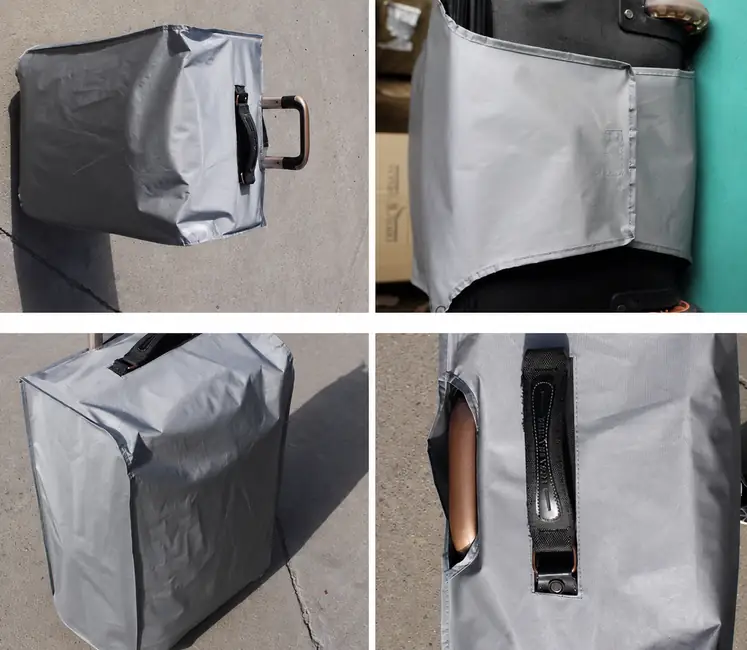
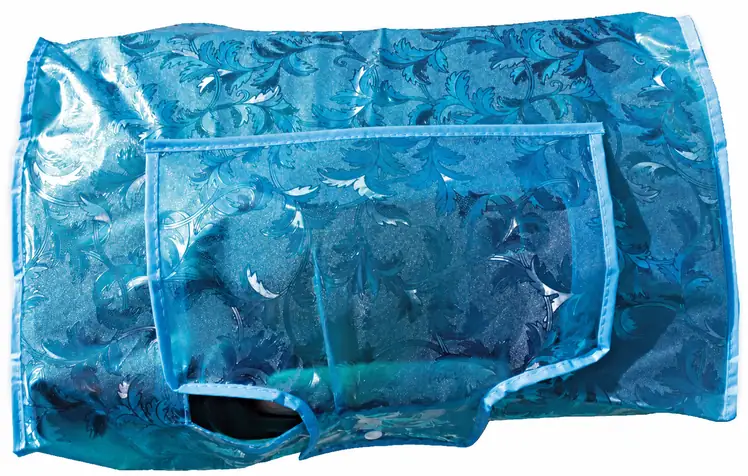
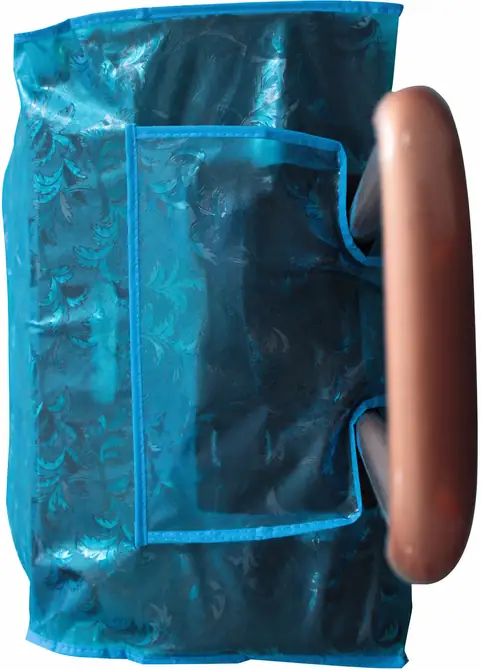
Work backward from the delivered fitted and packed cover
Resolve luggage-cover shorthand to case family, material code, thickness or weight, pattern, complete geometry, openings, wheel clearance, seams, closure, artwork, packed reference and approval owner.
Keep swatch, blank cover and fitted-cover approval distinct
A swatch cannot prove fitted geometry, a flat cover cannot prove handle or wheel access, and a mockup cannot prove decoration interaction, fold, packing or delivered presentation.
01
Control clear-film identity
Record declared polymer wording, construction, thickness basis, finish, supplier code, color and transparency reference. Avoid using EVA, PEVA, PVC or vinyl as interchangeable shorthand.
02
Control frosted-film route
Define haze or surface appearance through an approved physical comparator, together with film identity, thickness, edge treatment and cold-fold or storage conditions relevant to the project.
03
Control textile route
Record fiber wording, knit or woven structure, weight basis, stretch direction, recovery, finish, color and supplier code. Similar-looking fabrics can fit differently after construction changes.
03 / complete geometry
Convert suitcase landmarks into complete cover dimensions and allowances
Finished cover height, width and depth must resolve to case shape, material behavior, seams and closure. Flat pattern dimensions alone cannot demonstrate fitted geometry.
- 01Measure case landmarks
- 02Draft complete pattern
- 03Assemble sample
- 04Record fitted geometry
01
Name measurement landmarks
Measure from defined top, side, base and corner references with the telescopic handle retracted and case expansion state recorded. Preserve photos or diagrams showing every landmark.
02
Define ease or stretch
For film routes, specify intended clearance and seam allowances. For stretch textiles, control pattern dimensions, stretch direction and represented fit range without promising one-size-fits-all coverage.
03
Check corner and edge profile
Fit the complete sample over top corners, side edges, pockets and molded feet. Record wrinkles, bridging, excessive tension and loose zones as observations tied to the exact case.
04 / access structure
Engineer top, side and telescopic-handle openings from fixed landmarks
An opening that looks centered on a flat cover may miss the suitcase handle after fitting. Position, size, edge structure and access must be approved on every represented case.
| Case feature | Cover alignment evidence | Reject signal |
|---|---|---|
| Top access | Carry and telescopic-handle openings resolve to fixed case landmarks | Opening positioned by eye |
| Side access | Side-handle opening, reinforcement and fitted reach share one revision | Flat pattern only |
| Lower structure | Wheel clearance, hem and closure are reviewed on the complete case | Wheel route omitted |
| Fit trial | Case identity, expansion state, sequence and observations are recorded | Generic size-name claim |
| Continuity | Material, pattern, opening and closure changes trigger review | Silent pattern substitution |
01
Position the top openings
Dimension openings for the carry handle and telescopic-handle rails from named centerlines or edges. State orientation, tolerance and whether one combined or separate opening is required.
02
Position the side-handle opening
Record side, vertical location, length, width, corner shape and reinforcement. Verify that the hand can reach the handle without pulling the cover out of position.
03
Control opening edges
Define binding, turned edge, welding, reinforcement patch or another approved finish with material and workmanship references. Inspect complete-cover distortion around the opening.
05 / lower structure
Resolve wheel clearance, hem and bottom closure as one lower structure
The cover must stay controlled while wheels rotate and the case stands, tips and rolls. Lower pattern, cutouts, closure and seam bulk therefore need one fitted trial.
- 01Map wheels and feet
- 02Set lower pattern
- 03Fit and close cover
- 04Roll and inspect
01
Map wheel and foot clearance
Record wheel count, wheel envelopes, molded feet and lower-shell protrusions. Inspect every corner through standing, tipping and rolling positions on a clean trial surface.
02
Select the closure route
Define zipper, hook-and-loop, snap, elastic, strap or another approved route with position, overlap, hardware and accessible direction. Keep proposal separate from verified usability.
03
Inspect lower retention
Observe riding up, twisting, contact with wheels, closure opening and seam stress during the agreed sequence. Retain photographs and sample identity for the represented case and cover pair.
06 / assembly and artwork
Control seams, reinforcement and decoration on the exact material
Film welding or sewing, textile stitching, binding and print routes interact with stretch and fold. Approve construction and artwork at production scale on the same cover revision.
01
Map assembly seams
Record seam position, route, allowance, welding or stitch method, thread where applicable and appearance reference. Review intersections at corners, openings and the lower closure.
02
Preflight artwork
Control file owner, dimensions, placement landmarks, colors, coverage and permitted simplification. Protect critical artwork from openings, seam allowances, corner wrap and high-distortion zones.
03
Trial decoration on exact material
Review color, detail, edge, opacity, hand, stretch or fold interaction and reverse effect on the complete cover. A paper proof or screen view does not represent the assembled substrate.
07 / release evidence
Connect fit approval, workmanship, folding and packing to one SKU revision
A delivered luggage-cover SKU includes its material, fitted construction, artwork, fold, inner pack, assortment and carton. Release evidence must preserve that complete relationship.
| Recorded object | Luggage-cover evidence | Fit question closed | Current disposition |
|---|---|---|---|
| Case family | Case reference, dimensions, profile, handles, wheels and expansion state | Defines represented fit | Clear / open |
| Material | Identity, supplier code, construction, thickness or weight, finish and color | Defines the controlled cover route | Matched / unmatched |
| Complete cover | Pattern, dimensions, openings, seams, closure and fitted case | Bounds fit approval | Approved / conditional |
| Decoration | Artwork, process, placement, fitted view and packed comparator | Defines delivered-merchandise approval | Current / gap |
| Reorder fit chain | Case sample, material lot, pattern code, opening map and lower fastening history | Shows whether a later cover still fits the governed suitcase family | Repeat route / fit trial reopened |
01
Separate approval gates
Control material swatch, blank assembled cover, fitted sample, decorated sample and packed unit as distinct objects. Assign a revision, owner and decision to each gate.
02
Inspect critical characteristics
Check material code, dimensions, openings, seams, binding, closure, artwork, count and packing against written references. Fit checks use the named suitcase comparator rather than visual estimation.
03
Retain the packed comparator
Seal an approved cover with fold, insert, sleeve or bag, label, assortment and carton allocation. Preserve untouched views and archive custody for repeat orders.
08 / commercial continuity
Carry case, material, opening and fit controls into RFQ and reorder
Comparable quotations require identical target cases, complete specifications and visible open fields. Reorders remain comparable only while every governed relationship stays current.
- 01Send measured case families
- 02Install each pattern on its named case
- 03Seal the fitted cover and opening map
- 04Retest the changed fit lane
01
Issue one cover matrix
List case references, measurements, material, construction, thickness or weight, pattern, finished dimensions, openings, reinforcement, seams, closure, artwork, fit evidence, packing, quantity and destination.
02
Price alternatives separately
Separate material, size set, opening, reinforcement, closure, decoration, trial and packing options. Evaluate savings with fit, sample and reapproval consequences visible.
03
Control every change
Require notice before material, supplier, thickness, finish, pattern, stretch, component, seam, closure, artwork process, site or pack changes. Reapprove affected lanes on the represented case set.
Limits of luggage-cover shorthand
Labels such as EVA, PVC, clear, stretch, cabin, medium, large or universal fit are only sorting aids. They cannot prove that an EverBen cover fits a named suitcase or meets any waterproof, impact, abrasion or life claim. Release depends on the actual case family, measured body, material identity, gauge or textile build, cut pattern, full geometry, handle and wheel clearances, lower closure, installed trial, decoration, pack route, receiving market and named approver.
Route-specific FAQ
Checks before luggage cover material, construction and print approval
Does cabin, medium or large define a luggage-cover size?
No. Those names vary by case brand and market. Record actual case height, width, depth, corner profile, handles, wheels and telescopic-handle landmarks.
Is EVA the same as clear PVC?
No. Suppliers may use material names inconsistently, so require exact composition wording, construction, thickness basis, finish, supplier code and an approved sample.
Can one stretch cover fit every suitcase?
No universal fit should be assumed. Stretch range, pattern geometry, seams, openings and case protrusions must be checked on the represented case family.
How should handle openings be specified?
Dimension opening position and size from fixed cover landmarks, identify edge reinforcement and verify access on the complete fitted cover.
What prevents wheel interference?
The lower pattern, hem, closure route and wheel cutouts must be evaluated together on each case. A flat pattern alone cannot prove clearance.
Which bottom closure is best?
No universal closure is selected. Zipper, hook-and-loop, snaps or elastic routes depend on case geometry, use, packing, care and buyer acceptance.
Can artwork be approved on a digital mockup?
A mockup controls position intent, but production-scale decoration must be reviewed on the exact material, color, pattern and assembled cover.
What changes reopen approval?
Material, thickness, finish, stretch, pattern, dimensions, opening, seam, binding, closure, artwork, process, case family, packing or production site changes can reopen affected decisions.
Construction decision
Turn a suitcase-cover idea into a controlled material, size and opening brief
Provide the named suitcase set with body and corner measurements, handle and wheel landmarks, selected material build, stretch allowance, opening shapes, lower closure, seam route, artwork, trial quantity and carton plan. EverBen will turn that case data into fitted-sample checkpoints and a repeat-order change map.