Manufacturer and sourcing integration partner · 20 years of export experience
Home / Cargo Control and Tie-Down Products

B2B cargo restraint sourcing

Tie Down Straps Manufacturer for Controlled Cargo Securement Programs

A strap can look heavy-duty while the stitch, buckle, hook, anchor, edge contact or operating method is the real weak point. Build the purchase around the complete restraint system, its route and its evidence rather than one attractive strength number.

Explore product routes
Assembly-level decisions Anchor compatibility Evidence boundaries Server-routed inquiry
tie down straps manufacturer for cargo control products
Restraint decision chain Cargo → vehicle → motion → anchor → assembly → evidence → inspection → replacement

Decision 01 · Operating case

Define the Cargo Movement Before Selecting Tie Down Straps

The purchase starts with what can move, in which direction and under which operating conditions. A motorcycle, pallet, boat, machine, furniture load and enclosed-van cart do not create the same restraint problem. Record the operating case before discussing buckle size or strap colour.

1

Describe the cargo as a physical object

Record weight range, dimensions, centre of gravity, contact surface, rigidity, valuable finishes, wheels or rolling tendency, stacked configuration and whether units can settle. A product name alone does not describe the force path.

2

Identify the vehicle and restraint structure

Define flatbed, box truck, enclosed trailer, pickup, boat trailer, vehicle transporter or warehouse cart. Include rub rail, E-track, floor ring, winch, stake pocket or other attachment geometry and its known rating.

3

Map motion and restraint direction

Separate forward, rearward, lateral, vertical and rolling risks. Decide whether the system uses direct attachment, an over-the-top route, blocking, bracing, chocks or a combination qualified by the buyer's securement specialist.

4

Set the route and user context

Document road type, commercial or private use, trip duration, climate, loading frequency, operator gloves, nighttime use and destination jurisdiction. These facts change hardware access, inspection and evidence requirements.

Is your RFQ naming a strap but not the load it must control?

Send the cargo, vehicle, anchor and route. We will expose the decisions missing before product selection.

Decision 02 · Product architecture

Route Each Cargo-Control Job to the Correct Assembly Family

Ratchet, cam buckle, winch, soft loop, E-track strap, webbing and cargo net products solve different operating tasks. A broad supply program still needs a separate specification and release record for every assembly.

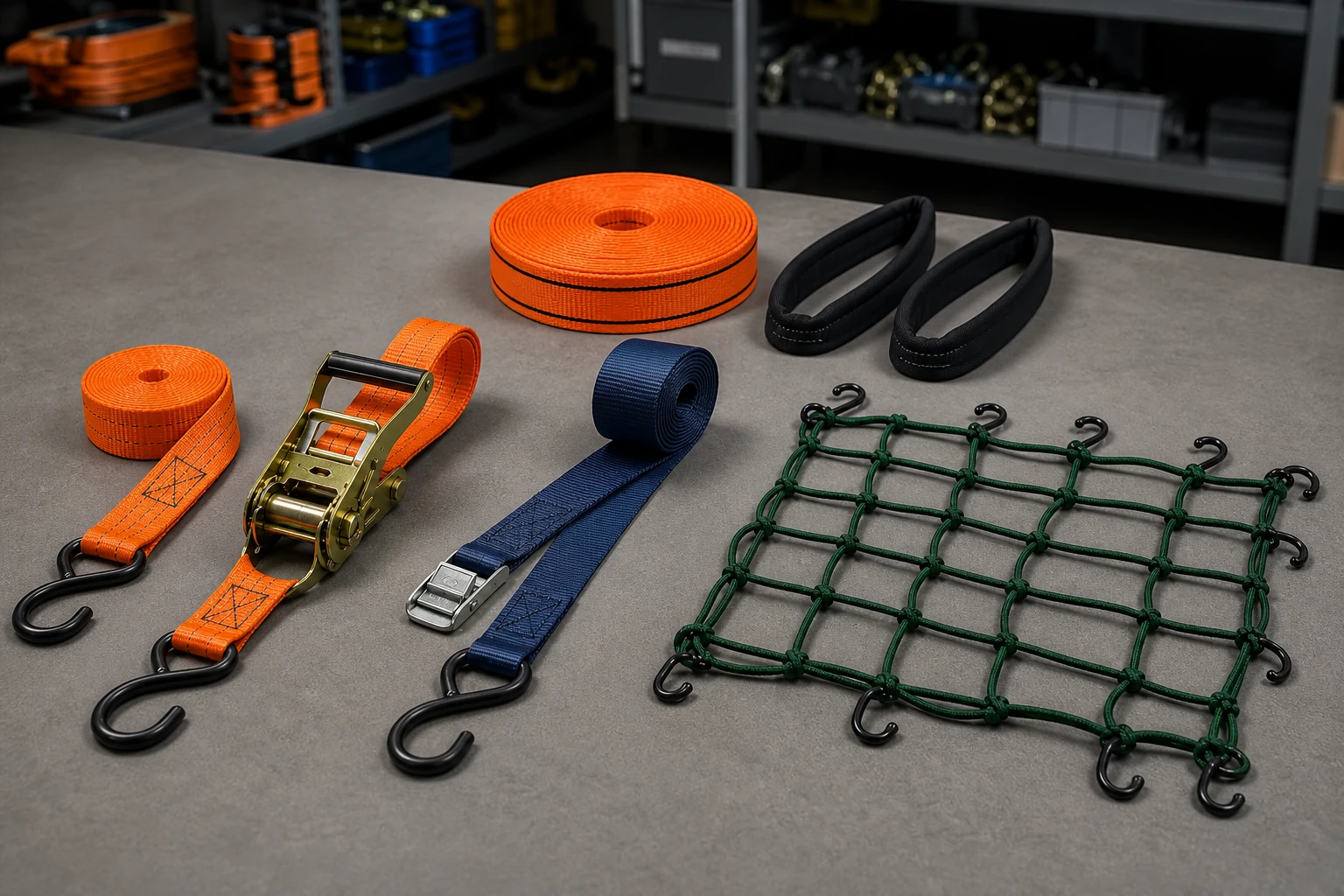
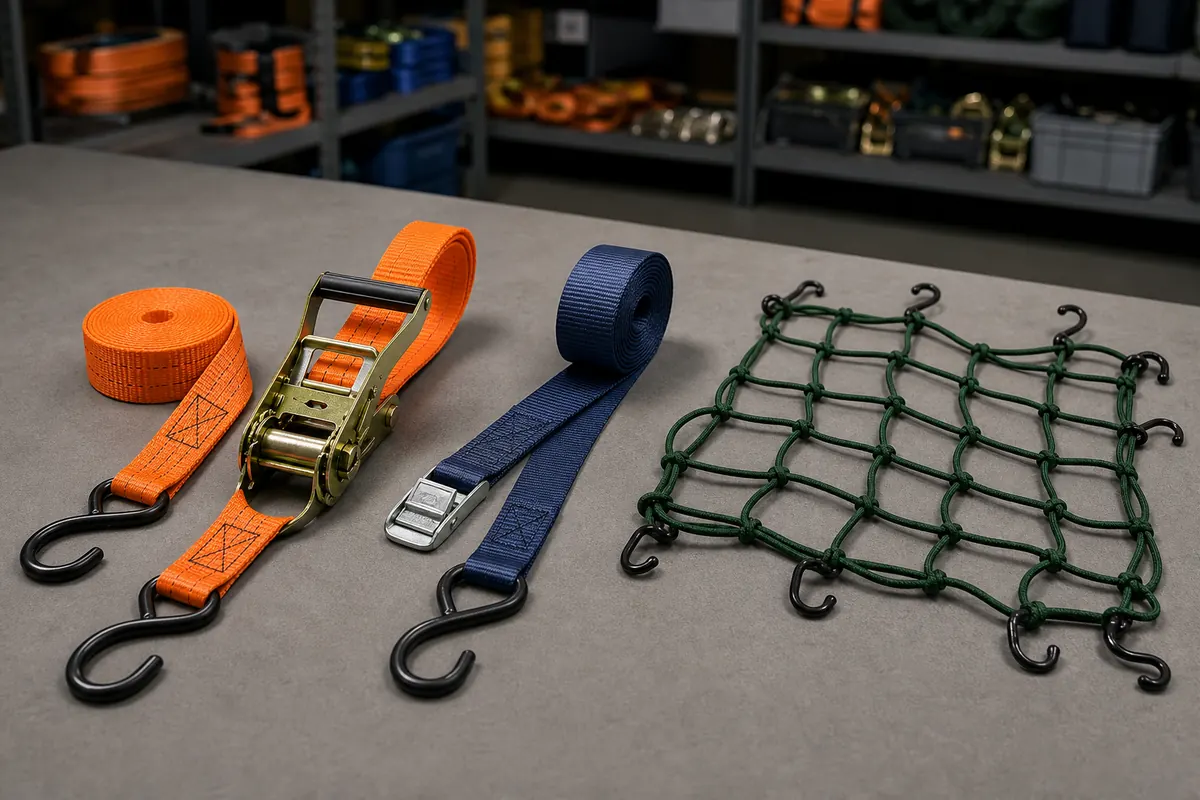
Unbranded ratchet strap, cam-buckle strap and elastic cargo net displayed as separate assembly routes
The restraint task should select the complete assembly family before webbing color, hardware appearance or price is compared.
Tensioned assemblies

Ratchet tie-down straps for controlled tension

Use when the approved operating method requires mechanical tensioning and compatible end fittings. Define fixed end, adjustable end, handle, spindle take-up, length, hooks, sleeves, labels and complete-assembly evidence.

Explore ratchet straps →
Hand-tension routes

Cam buckle straps for lighter restraint tasks

Cam buckle assemblies depend on webbing-to-cam grip, tooth geometry, spring action, threading and user pull. They are not a smaller ratchet by default; qualify slip, damage and use separately.

Explore cam buckle straps →
Trailer systems

Winch straps and E-track cargo routes

A winch strap must match winch, vehicle rail and end connection. Interior track systems depend on track condition, fitting engagement and restraint layout. Visit winch straps or E-track straps.

Contact and containment

Soft loops, webbing and cargo nets

Soft loops can protect contact zones and create interfaces; webbing feeds qualified assemblies; nets restrain multiple or irregular items. Explore polyester webbing or cargo nets.

Does your catalogue group unlike restraint products under one rating story?

We will separate product mechanisms, interfaces and evidence while keeping the range commercially coordinated.

Decision 03 · Rating boundary

Rate the Complete Tie-Down Assembly, Not Its Strongest Component

Webbing yarn, finished web, stitching, buckle, hook, ring and anchor form one load path. A component test can support that component, but it cannot automatically prove the complete assembly or its performance in a different direction.

Separate break strength, WLL and proof terms

Define every term, units, method and intended use in the purchase specification. Do not compare one supplier's break value with another supplier's working limit or treat a catalogue factor as universal across destinations.

Find the weakest verified link

Review webbing, stitch pattern, thread, buckle frame, teeth or pawl, spindle, end fitting, coating and attachment interface. The assembly claim must not exceed the evidence available for the released configuration.

Control loading direction and geometry

Ratings are commonly established under stated test alignment. Side loading, bending over a small radius, twisted hooks, off-axis rings or crushed webbing can create a different condition that requires engineering review.

Keep cargo restraint separate from lifting

Tie-down, towing, recovery and lifting are distinct product uses. Labels, instructions and sales language must prevent an operator from assuming a restraint strap is approved for lifting or dynamic recovery.

Is one impressive webbing number disguising an unverified hook or stitch?

Provide the proposed assembly and claim. We will build a weakest-link evidence map before release.

Decision 04 · Interface geometry

Match Hooks, Loops and Track Fittings to Real Anchor Points

End hardware is an interface, not a decoration choice. A hook that fits a drawing may seat poorly on the actual rail, concentrate force at the tip, release under slack or damage the cargo. Qualification needs the receiving geometry and operating sequence.

Unbranded hooks, loops and cam-buckle fittings beside inert anchor mock-ups with different clearances
End fittings must match the actual anchor opening, direction, clearance and contact surface before any assembly is approved.

Record anchor dimensions and condition

Measure opening, bar or rail diameter, plate thickness, access, orientation and surrounding clearance. Identify corrosion, deformation, sharp edges or unknown rating that the buyer must resolve before use.

Choose fitting shape by engagement

Compare flat hook, wire hook, S-hook, snap hook, ring, chain extension, track fitting, sewn loop or endless configuration against the actual anchor. Evaluate seating, keeper action and likely load direction.

Prevent release when tension changes

Road vibration, cargo settlement and stop-start handling can reduce tension. Determine whether a keeper, closed fitting, alternate route or operational recheck is required by the buyer's risk assessment.

Trial operator access and ergonomics

Check gloved hand clearance, ratchet handle movement, winch-bar space, buckle threading, tail management and unloading. A theoretically strong assembly still fails the programme if operators cannot use it consistently.

Will the selected hook seat on the real anchor—or only on a clean drawing?

Send anchor photos and dimensions so the interface can be qualified before tooling, stitching or bulk order.

Decision 05 · Component engineering

Specify Webbing, Stitching and Tensioning Hardware as One System

Colour and width are visible, but yarn, weave, finish, thickness, elongation, edge construction, stitch geometry and metal treatment govern how a strap behaves. Freeze the bill of materials behind the approved sample.

Define webbing by measurable properties

State fibre, width, thickness or mass where useful, weave, colour, elongation target, surface finish, edge behaviour and relevant test method. Avoid unqualified labels such as premium or industrial grade.

Engineer the sewn termination

Document overlap, folds, stitch pattern, row count, thread, needle, start/stop control and acceptance. Sewing evidence belongs to the exact webbing, hardware and configuration rather than a generic factory capability.

Qualify ratchets, cams and winches

Review material, dimensions, teeth or pawl engagement, spindle capacity, handle, release action, coating and corrosion plan. Test functional cycling and failure mode under the approved assembly conditions.

Lock end fittings and protective parts

Specify hook or ring material, shape, coating, keeper, sleeve, corner protector and tail keeper. A small substitution can alter fit, wear, corrosion or the complete assembly claim.

Could a quiet hardware substitution change the rating you approved?

We will turn the sample into a controlled component and process bill rather than a photo reference.

Decision 06 · Exposure control

Design for Edges, Abrasion, Weather and Cargo Contact

Many field failures begin where a strap rubs, bends, becomes contaminated or stays wet. The RFQ should describe exposure and protection instead of assuming a heavier web cures every operating problem.

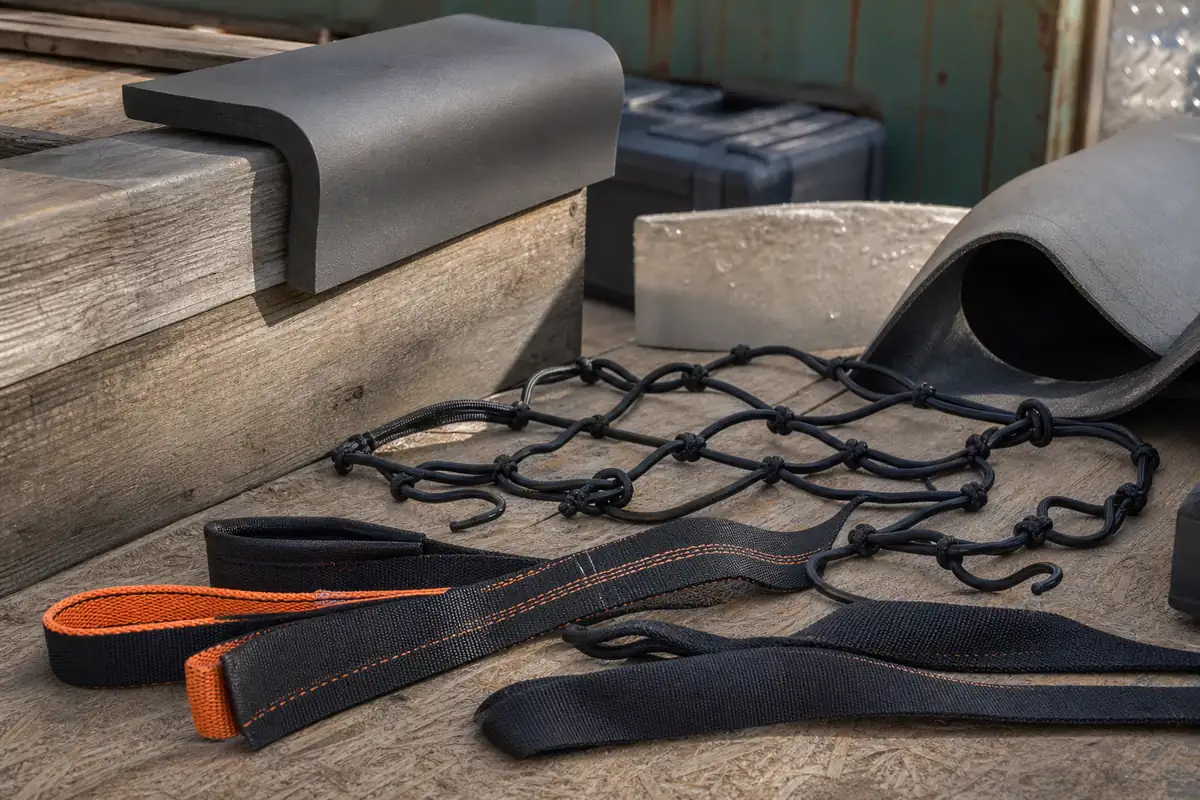
Relaxed webbing and cargo-net samples beside edge protector and surface mock-ups for environment planning
Edges, abrasion, weather and cargo contact should be defined before protection, inspection and replacement rules are written.

Map every edge and bend radius

Identify metal corners, timber, masonry, machinery frames, trailer rails and cargo edges. Define protector placement and resistance to abrasion, cutting and crushing where applicable to the operating rule.

Separate cargo protection from strap protection

A sleeve may protect paint while a harder corner protector shields webbing, but either can slip or concentrate pressure. Trial the full contact stack on representative cargo and restraint tension.

Define climate and chemical exposure

Record sunlight, moisture, freezing, heat, road salt, oil, fuel, cleaners and storage ventilation. Material selection, coating and retirement rules need evidence relevant to the actual exposure.

Control loose tails and moving hardware

Specify tail length, keeper, stowage and buckle position so loose webbing and metal cannot flap, abrade, foul wheels or strike the cargo. Confirm the procedure with users during the sample trial.

Are sharp edges spending your replacement budget before mileage does?

Share contact points, weather and storage. We will define protection and inspection questions around the real exposure.

Decision 07 · Standards and evidence

Map Cargo-Control Claims to Product, Route and Current Evidence

EverBen company review can include BSCI together with ISO 14001 and ISO 9001. None of those records assigns a working load limit, certifies a tie-down assembly or decides compliance for a transport route.

Define the governing scope before testing

Record country, transport mode, commercial use, product type and current buyer-specified standard. WSTDA describes voluntary standards; FMCSA rules apply within stated U.S. commercial-motor-carrier scope. Other destinations need their own review.

Link test data to the exact assembly

Identify sample revision, webbing, stitch, buckle, fittings, length, label, conditioning, method, laboratory and result. A component certificate cannot silently become complete-product evidence.

Control labels, instructions and sales claims

Define product identity, rating terminology, units, warnings, prohibited uses, inspection and traceability. Translate destination language without changing technical meaning.

Keep company credentials in their boundary

ISO 9001, ISO 14001 and BSCI must be presented with their current holder and scope. They cannot substitute for product testing, vehicle engineering or operator responsibility.

Does your certificate prove the strap—or only that one material was tested?

Send the claim list and destination. We will map each statement to the evidence it actually needs.

Decision 08 · Field control

Build Inspection, Use and Retirement Into the Product Program

A new-sample result does not describe a strap after repeated loading, edge contact, contamination or storage. Buyers need an operating document that helps trained users find damage, manage exceptions and retire equipment.

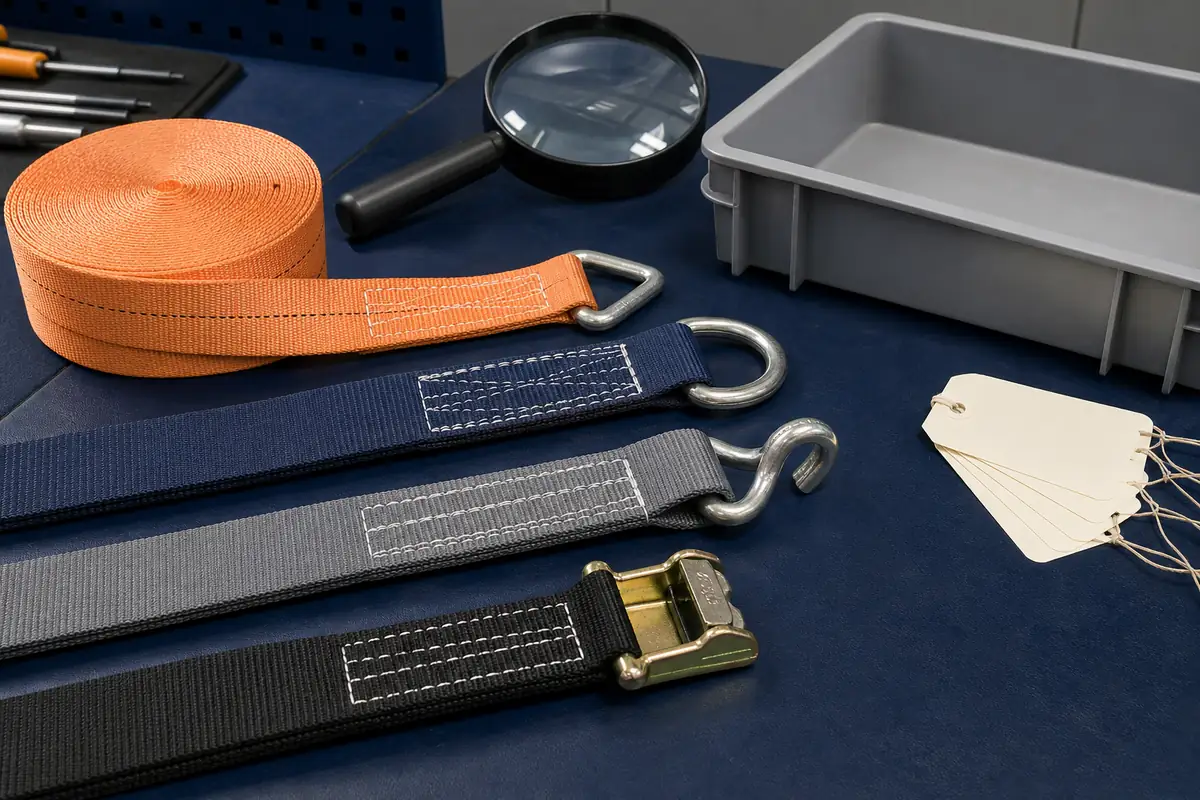
Unloaded webbing, stitched connection and hardware with magnifier, blank quarantine tray and tags
Inspection and retirement criteria should belong to the exact finished assembly, its traceability and its real service environment.

Create a pre-use inspection language

Define checks for cuts, abrasion, melted or glazed fibres, broken stitching, illegible identity, bent or cracked hardware, corrosion, jammed mechanisms and damaged hooks. The applicable standard and manufacturer instruction govern final criteria.

Record in-transit recheck responsibility

Cargo can settle and tension can change. The buyer or carrier must define when and how trained personnel check the load under the rules governing the route, without relying on product marketing as operating advice.

Design retirement and quarantine flow

Give users a clear route to remove suspect items, prevent accidental reuse, record the reason and obtain replacements. Do not repair, knot or rework rated equipment outside an approved process.

Feed field failures back to the SKU

Capture product code, batch, date, route, cargo, anchor, edge, weather, photos and failure location. Separate misuse, wear, environment and manufacturing causes before changing the specification.

Can an operator tell when a strap must leave service?

We will connect product identity, inspection cues, quarantine and replacement to the purchasing file.

Decision 09 · Range continuity

Control Tie-Down SKUs, Batches and Replacement Compatibility

A distributor or fleet usually buys a system over time. If hook geometry, webbing, stitch, coating or label changes unnoticed, replacement stock may not match vehicles, training, evidence or prior approvals.

Build a decision-based SKU code

Link mechanism, width, length, fixed/adjustable ends, fitting, colour, protective part, label, pack and approved rating/evidence revision. Avoid codes that identify only size and colour.

Set batch and carton traceability

Define which lot references connect incoming webbing/hardware, sewing, assembly test, final inspection, label and carton. The level should match buyer risk and contractual requirements.

Approve changes before replenishment

Evaluate alternate yarn, weave, thread, buckle, hook, coating or factory against fit, function, evidence, training and schedule. Obtain buyer disposition before shipping a changed repeat order.

Plan spares and replacement intervals

Use fleet size, issue quantity, inspection history, loss, damage, route and replenishment lead time to set stock. Do not invent a universal service life without relevant evidence and operating conditions.

Will your next batch still fit the trailers and evidence already approved?

We will turn the range into controlled SKUs with change review, traceability and replacement logic.

Decision 10 · Commercial release

Turn the Cargo-Control Requirement Into a Comparable Bulk RFQ

MOQ, OEM programme, bulk pricing and timing depend on the approved assembly, evidence, quantity, packaging and destination. A strong RFQ makes suppliers quote the same object and identifies which decisions remain conditional.

Attach the operating and interface matrix

Include cargo, vehicle, anchor, route, restraint method, loading direction, user and exposure. Mark assumptions requiring the buyer's securement or compliance specialist.

Freeze the technical and evidence schedule

List webbing, sewing, tensioning hardware, fittings, protection, label, instructions, sample gates, tests and documents. Separate mandatory requirements from alternatives for review.

Request comparable commercial variables

Ask MOQ, quantity breaks, tooling, sample, test, packaging, production window, freight basis and validity against the same revision. Hide consumer unit-price language from the landing page.

Build release, pack and repeat-order records

Define approval owners, golden sample, inspection plan, carton marks, destination allocation, batch traceability, change control and replenishment. The order becomes repeatable only when the decision trail survives.

Are suppliers quoting different straps under the same product name?

Send your route, product family, quantity and evidence needs. We will organize a comparable bulk RFQ.

Decision 11 · Buyer FAQ

Tie Down Straps Manufacturer Questions for B2B Buyers

These answers define the starting information and evidence boundaries. Final product selection, rating, number of restraints, installation and use depend on the exact cargo, vehicle, route and competent buyer/operator review.

What information is needed to quote custom tie down straps?

Provide the cargo and vehicle, restraint method, anchor interface, route or destination, required assembly rating and evidence, webbing width and length, tensioning device, end fittings, labels, packaging, quantity and replacement plan.

Can webbing break strength be used as the rating of a complete tie-down assembly?

No. A complete assembly includes webbing, stitching, buckle or winch, end fittings and interfaces. The usable rating and evidence must be assigned to the approved assembly and its intended loading direction, not borrowed from one component.

Are tie-down straps the same as lifting slings?

No. Cargo restraint, towing, recovery and lifting are different applications with different product design, evidence and operating rules. A tie-down product must not be represented for lifting unless the exact product is separately designed, rated and documented for that use.

Where are cargo-control inquiries sent?

A restraint CTA transfers the eight-field brief to the website handler. Server-side routing delivers that cargo-control request to marketing@rainwear-manufacturers.com without invoking buyer-side email software.

Ready to replace a strap shopping list with a controlled restraint brief?

Send the cargo, vehicle, route and target product families. We will return the missing technical and evidence questions.

Cargo-control inquiries use marketing@rainwear-manufacturers.com.
The server receives the restraint brief and routes it without starting a buyer-side email programme.
Call WhatsApp