
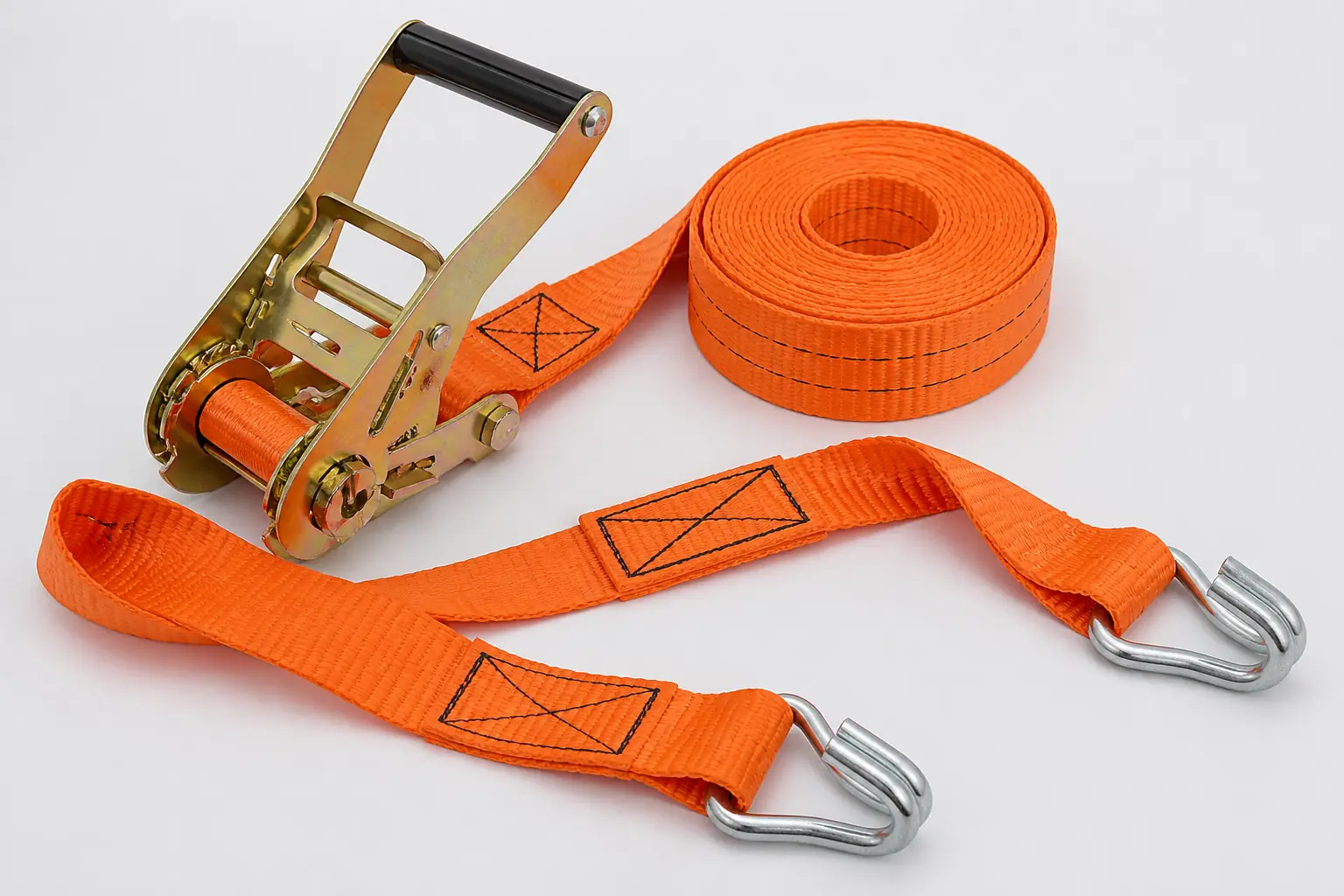
BUYING GUIDE / RATING AND EVIDENCE AUDIT
How to Audit a Ratchet Strap's Complete-Assembly Rating and Evidence Chain
Published by EverBen
A credible rating is a relationship among one exact assembly, its components, test or calculation basis, stated conditions, label and controlled production revision.
This buying guide helps procurement teams ask the questions that stop a webbing result, hook catalog number or generic certificate from becoming an unsupported whole-product claim. It does not choose a legal securement design or assign a rating to EverBen products. Those decisions require exact SKU evidence, the governing market and competent buyer review.
01 / CLAIM OBJECT
Start by naming exactly what the number describes
Before judging a rating, ask whether it belongs to webbing, hardware, a sewn subassembly, the complete strap, a straight pull or a securement system in a defined configuration.
- 01Published phrase
- 02Named object
- 03Exact method
- 04Decision owner
01
Copy the claim without improving it
Record the supplier's exact wording, value, unit, product code and source document. Do not rewrite a component result as an assembly rating or replace an ambiguous term with a more favorable technical term.
02
Identify the represented object
Match the claim to a drawing or bill of materials that names webbing, ratchet, hooks, sewing and dimensions. If the document cannot be tied to the offered assembly revision, mark the relationship unresolved.
03
State the intended decision
Clarify whether the number is for component selection, factory control, product marking, regulatory review or buyer use planning. One result can be relevant to several decisions but does not automatically close them all.
02 / COMPONENT CHAIN
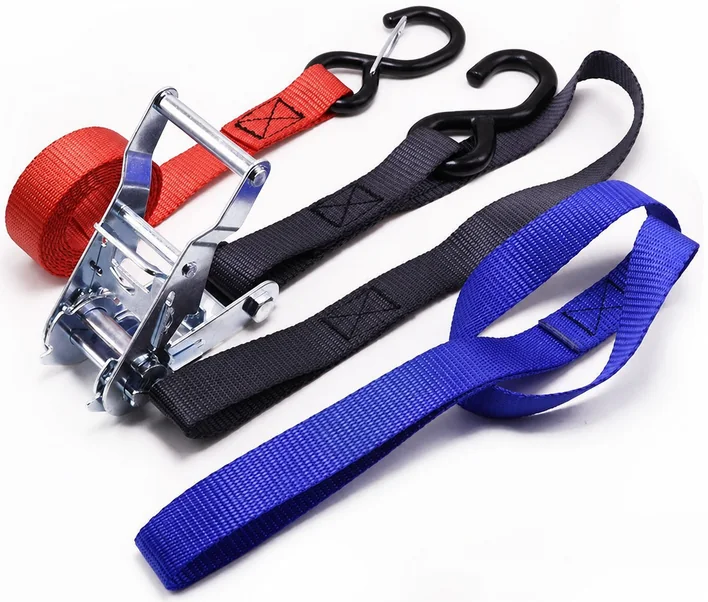
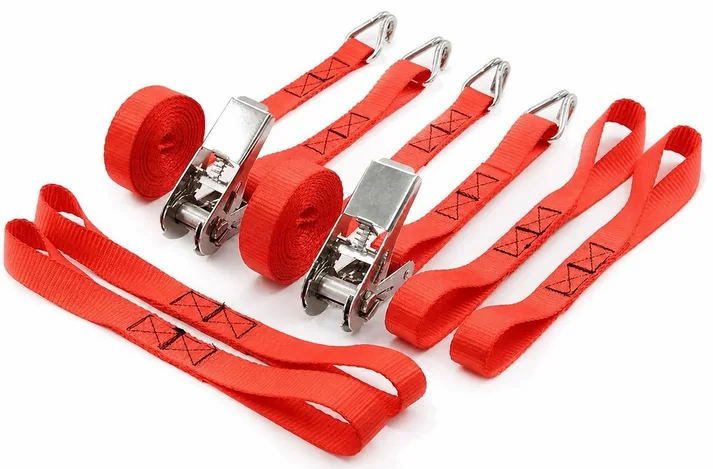
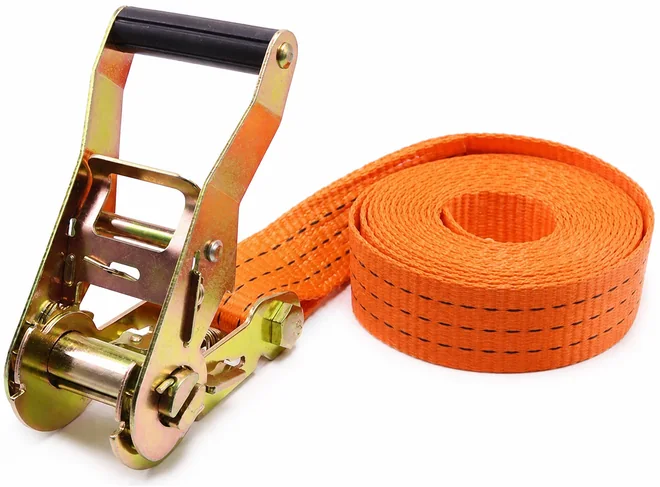
Trace the conclusion through webbing, sewing, ratchet and both end fittings
The complete assembly may be constrained by any component or connection. Procurement needs the relationship among records, not a folder of unrelated certificates.
01
Create a revision-controlled BOM
List supplier and internal codes for webbing, thread, ratchet, each fitting, sleeves, labels and packaging. Link the BOM to the exact sample and drawing reviewed by the buyer.
02
Map evidence to each connection
Include sewn joints, webbing path through the spindle, hardware attachment and any coating or heat-treatment route. A strong component does not prove the joined assembly.
03
Flag unmatched documents
A report for a different width, length, hook, seam, supplier, method or revision is contextual only. Keep the gap visible instead of assuming conservative equivalence.
03 / METHOD AND CONDITIONS
Read the method, specimen and direction before the result
A bare number cannot be compared. The evidence must disclose how the specimen was prepared, loaded, measured and interpreted, including any conditioning and failure mode.
| Entity | Required attributes | Evidence value | Review state |
|---|---|---|---|
| Claim | Exact phrase, number, unit and purpose | Defines the assertion | Clear / ambiguous |
| Assembly | SKU, BOM, drawing and revision | Names the represented product | Matched / unmatched |
| Specimen | Components, dimensions, condition and count | Defines what was examined | Equivalent / contextual |
| Method | Procedure, edition, direction and deviations | Defines comparability | Applicable / open |
| Decision | Rule, destination, reviewer and released wording | Controls publication and use | Accepted / conditional / rejected |
01
Identify the procedure and edition
Record the standard, customer protocol or internal method, revision date, laboratory or responsible party and deviations. Do not treat a logo or certificate cover as the method.
02
Describe the actual specimen
Capture assembly configuration, dimensions, component codes, conditioning, age or pre-use state, sample count and orientation. Ask whether the tested article is the same as the offered SKU.
03
Separate observation from approval
The report may describe force, elongation, damage or failure location, while a separate rule determines a working limit or acceptance. Keep calculation, regulatory and buyer approvals distinct.
04 / DESTINATION RULES
Match ratings and markings to the governing market and use policy
Requirements can differ by destination, vehicle type, commodity, carrier and customer. An assembly cannot inherit approval because it resembles a product sold elsewhere.
- 01Destination
- 02Applicable rule
- 03Product marking
- 04Named reviewer
01
Name the applicable rule owner
Record jurisdiction, carrier, customer, insurer and internal securement policy, then assign a competent reviewer. Procurement should not decide legal applicability from a supplier webpage.
02
Check the required marking relationship
Confirm which fields, units, languages, warnings and identifiers are required or preferred, who authorizes them and how they connect to the technical file. A blank or generic label does not complete traceability.
03
Keep product and operating duties separate
Product evidence may support an assembly statement, while the buyer still owns cargo evaluation, number and arrangement of restraints, anchor capacity, edge protection, inspection and trained use.
05 / SYSTEM BOUNDARY
Test the weakest-link logic without inventing equivalence
The smallest published number is not automatically the correct assembly limit, and the largest is never a substitute. The rule connecting component data to the assembly must be stated and supported.
- 01Component records
- 02Connection records
- 03Assembly basis
- 04Approved claim
01
Compare like objects
Keep webbing, hardware, sewn subassembly and complete-assembly evidence in separate rows. Convert units only with a documented basis and never combine unlike methods into a synthetic result.
02
Review direction and interface
Straight tensile evidence may not represent an angled, tip-loaded, bent or poorly seated fitting. Ask whether the assumed anchor geometry and load path match the buyer's proposed interface.
03
Document the derivation
If a working limit is calculated or assigned from other evidence, retain the exact formula, reduction rule, source values, applicable standard and approving party. Unsupported mental arithmetic is not traceability.
06 / TRACEABILITY
Prove that production and reorders still match the reviewed assembly
A strong initial report loses value if purchasing can change webbing, hardware, sewing, labels or suppliers without reopening the evidence review.
01
Connect batch to configuration
Define which lot, batch, date, supplier and revision identifiers travel from incoming components through assembly, inspection, packaging and shipment records.
02
Set change triggers
List changes in material declaration, weave, finish, thread, stitch layout, ratchet, hook, coating, dimensions, label, pack or process that require notification and technical review.
03
Retain comparison references
Keep the approved drawing, BOM, physical or photographed sample, artwork and pack standard. Reorder inspection should compare against the same revision and record authorized deviations.
07 / LIFECYCLE CONTROL
Connect purchasing evidence to inspection, quarantine and retirement
Ratings are commonly based on stated product condition. Procurement should therefore ensure the operating organization has a method for identifying damage, removing questionable equipment and replacing it.
- 01Pre-use inspection
- 02Route recheck
- 03Quarantine
- 04Replacement record
01
Define inspection ownership
Assign trained personnel and timing for webbing, sewing, ratchet, fittings, labels and contamination checks. The exact criteria must come from applicable product documentation and operating rules.
02
Create an unambiguous hold route
Damaged, questionable, mixed or unreadable assemblies should be segregated from usable stock. Define who may evaluate, rework, concede or retire them.
03
Feed findings back to sourcing
Record SKU, batch, route, cargo, anchor, edge protection, exposure, photos and damage location where permitted. Separate handling, environment and manufacturing causes before revising the specification.
08 / DECISION FILE
Compare evidence packages with one visible decision matrix
A supplier with more documents is not necessarily better documented. The useful package is the one that resolves each claim to the exact offered assembly and leaves gaps visible.
| Decision row | Required relationship | Gap indicator |
|---|---|---|
| Product identity | Claim resolves to SKU, BOM and revision | Generic or visually similar product |
| Method scope | Specimen and procedure match the conclusion | Different component, condition or edition |
| Assembly derivation | Component and connection basis is explicit | Unstated weakest-link assumption |
| Destination | Rule and responsible reviewer are named | Certificate treated as universal approval |
| Continuity | Batch, change and reorder controls preserve validity | Silent substitution remains possible |
Work backward from the proposed rating statement
Resolve the phrase to a destination decision, method, specimen, complete assembly revision and component records.
Keep unresolved relationships visible
Contextual documents can guide questions, but they do not inherit a pass from another product or market.
01
Score relationships, not document count
Check whether each record names the product, component, revision, method, condition, result and responsible party. Generic brochures and certificates remain context, not closure.
02
Separate technical and commercial gates
A technically acceptable sample may still lack packaging, traceability, quantity, timing or replacement support. Conversely, a complete quote does not repair an evidence gap.
03
Record the release boundary
State which claims and destinations are approved, which are rejected, which remain conditional and what change would reopen review. Publish only wording supported by the accepted file.
Limits of rating research and supplier examples
For a ratchet tie-down, qualify the complete ratchet, webbing, sewn junctions and end fittings as one BOM. Rating and marking language stays bound to the represented assembly, evidence method, revision and buyer-approved securement context; a component result does not transfer automatically.
Route-specific FAQ
Checks for complete-assembly evidence review
Does a webbing breaking-strength result prove the complete strap rating?
No. It describes the tested webbing under its stated method and condition. The complete assembly also includes sewn joints, ratchet, end fittings, dimensions and the rule used to derive or assign an assembly statement.
Can a component catalog value be used for the offered assembly?
Only when the exact component identity, configuration, source, conditions and applicable derivation are documented and accepted. A visually similar hook or ratchet is not enough.
Does a certificate logo prove compliance for every destination?
No. Review the certificate scope, product and revision, underlying method, issuing body, validity and destination relevance with the buyer's competent compliance owner.
Who decides the number and arrangement of straps for a load?
The buyer, carrier or operator's competent securement personnel must assess the cargo, vehicle, anchors, route and governing rules. This guide structures product-evidence questions and does not provide a universal securement plan.
When should rating evidence be reviewed again?
Review it after any relevant component, supplier, construction, process, dimension, marking, method, standard, destination or intended-use change, and whenever traceability to the approved assembly is lost.
How should procurement compare two evidence packages?
Use a shared matrix covering exact SKU, BOM revision, component relationships, methods, specimen conditions, results, claim derivation, destination, marking, traceability, change control and remaining gaps.
Evidence decision
Turn every rating claim into an auditable row
Provide the proposed SKU, complete bill of materials, drawings, label or stencil, test and calculation records, intended destination and change history. We will structure the open questions; the buyer's competent technical and compliance owners decide whether the evidence supports release.