
PRODUCT LANDING / COMPLETE ASSEMBLY CONTROL
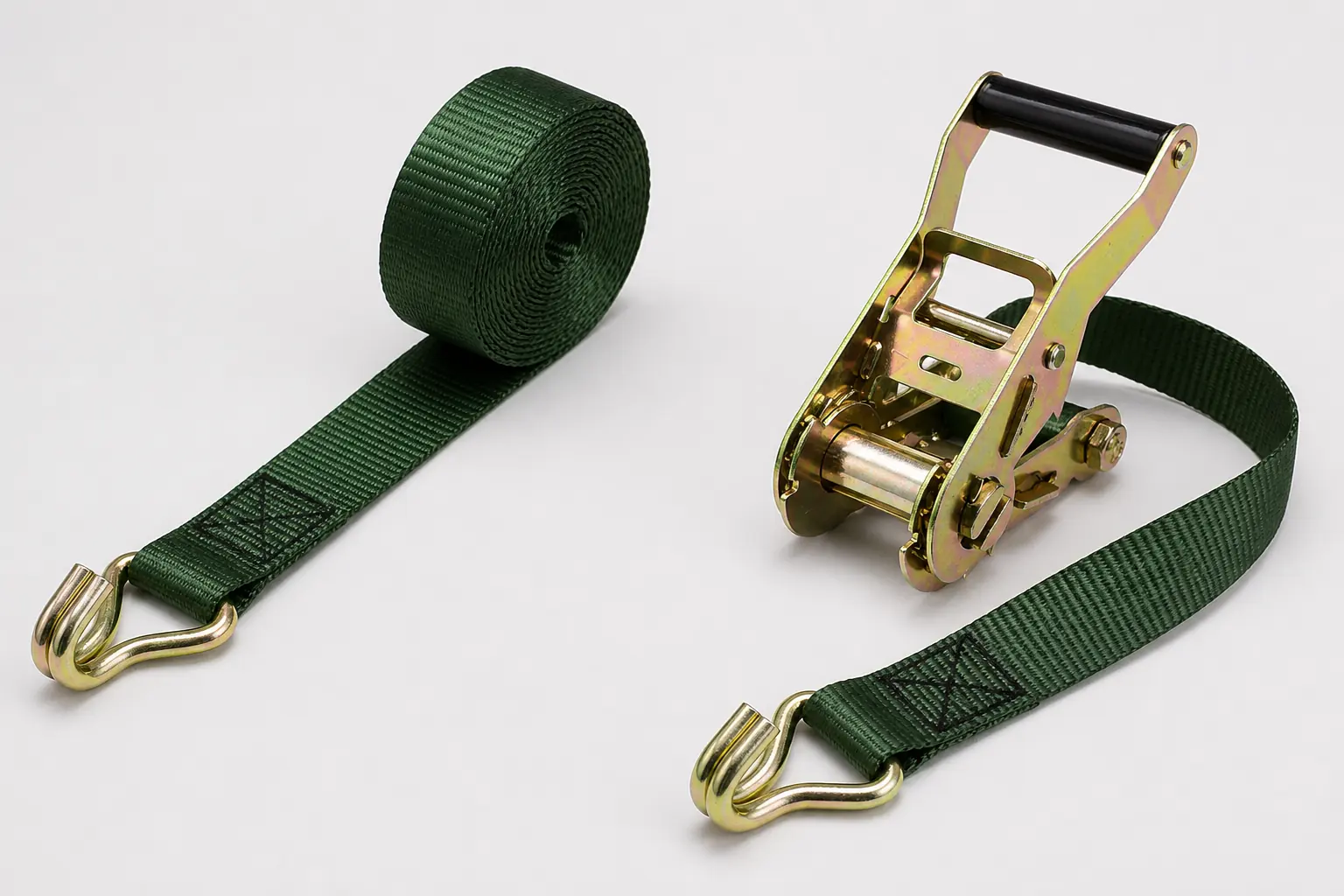
Ratchet Tie-Down Straps Manufacturer for Controlled Bulk Programs
Buy the complete restraint assembly, not an isolated webbing width or an unsupported capacity headline.
EverBen organizes bulk ratchet-strap inquiries around the cargo and vehicle interface, every assembly component, the buyer's destination and evidence plan, sample gates, packaging, inspection and replacement. No public number on this page is a product rating. Working load limits, breaking strengths, standards, markings and permissible use must be confirmed for the exact offered SKU and complete assembly before release.
01 / OPERATING CASE
Define the restraint job before choosing a ratchet strap
The same red strap can be unsuitable when cargo geometry, vehicle anchors, direction of movement, route rules or operator steps change. Start with the event the assembly must support.
- 01Cargo and motion
- 02Vehicle and anchors
- 03Restraint route
- 04Competent approval
01
Describe the cargo as an object
Record mass, dimensions, shape, surface, center-of-gravity concerns, rolling or tipping tendency, sensitivity to pressure and whether units can shift against one another. This information belongs to the buyer's securement owner; a supplier cannot infer it from a product name.
02
Name the vehicle and receiving point
Identify trailer, van, rack, rail, track, ring or other interface and provide drawings or photographs where permitted. A hook that fits in a catalog image may seat on an edge, lack clearance or release when the system becomes slack.
03
Map likely movement and restraint geometry
State the direction of expected movement, whether the strap passes over cargo or connects directly, the proposed angle, blocking or bracing, edge contact and any need for rechecks. Final arrangement and tiedown count remain a competent operator decision.
04
Fix the governing destination
List destination countries, carrier rules, customer specifications and internal operating procedures. Legal and standard requirements vary, so evidence and marking cannot be copied from another market or a visually similar strap.
02 / ASSEMBLY ARCHITECTURE
Specify every component in the two-part or endless assembly
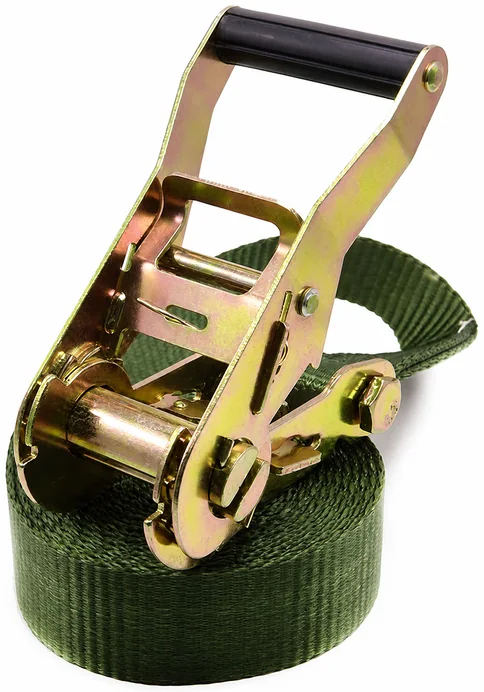
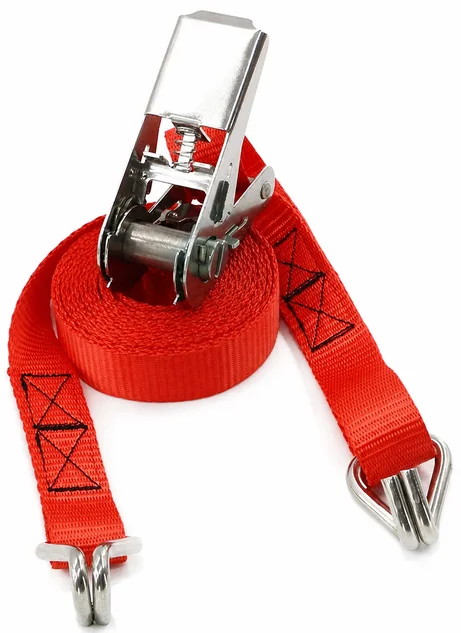
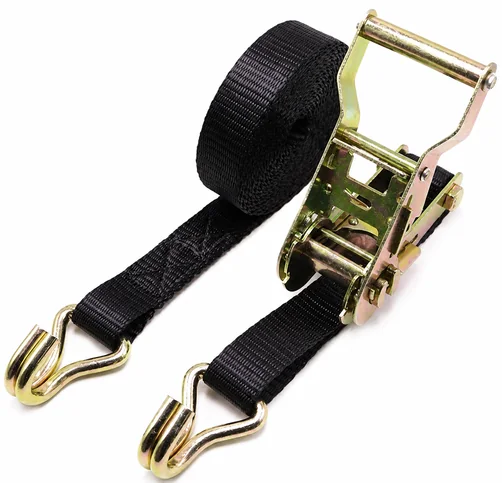
A ratchet tie-down is a system of webbing, tensioning mechanism, end interfaces and sewn connections. The offer should identify the complete configuration, not mix parts from unrelated examples.
01
Choose two-part or endless form
A two-part assembly combines a fixed section and adjustable section; an endless configuration routes webbing without two external hooks. Define the intended configuration explicitly, including fixed-end length, adjustable length and how excess tail is managed.
02
Identify the ratchet mechanism
Record handle style, usable clearance, take-up path, release sequence, surface finish and supplier component code. Confirm that the webbing width and thickness cooperate with the spindle and that operators can cycle the mechanism in the actual working space.
03
Name both end interfaces
Do not write only 'hook.' Define the fitting type, shape, throat, keeper if applicable, coating or material declaration requested, connection to webbing and the exact vehicle or cargo-side interface it must engage.
04
Control the sewn connection
Describe overlap, fold, thread, stitch pattern, protective layers and inspection points without prescribing an unverified construction. The supplier must link the approved sewing specification to the exact assembly evidence and retain a release reference.
03 / RATING BOUNDARY
Audit complete-assembly ratings instead of collecting isolated numbers
Webbing, ratchet, hook and sewn joint may each have different data. A defensible product statement must refer to the complete offered assembly under stated conditions and applicable rules.
- 01Exact SKU
- 02Complete assembly
- 03Applicable method
- 04Released statement
01
Separate breaking values from working limits
Ask the supplier to label every number by object, method, specimen condition, unit and decision purpose. A component breaking result is not automatically an assembly working load limit, and neither number alone determines the buyer's legal securement plan.
02
Find the weakest represented component
Trace the proposed rating through webbing, sewing, hardware, coating or heat treatment records, assembly configuration and any required reduction rule. If a component changes, the previous assembly conclusion may no longer apply.
03
Match evidence to destination
Record the exact standard edition, regulation, customer protocol or internal rule requested by the buyer. A generic certificate image, test for another width or competitor statement cannot support the offered EverBen SKU.
04
Keep use design with the buyer
The buyer's qualified personnel remain responsible for cargo assessment, securement layout, number of devices, anchors, edge protection, installation, inspection and operation. The product page supports sourcing evidence, not a universal loading instruction.
04 / END FITTINGS
Qualify end fittings against the buyer's receiving geometry
End hardware is an interface with the vehicle or load, not a decorative option. Fit, seating, direction, clearance and behavior during changing tension must all be reviewed.
01
Request the receiving geometry
Use dimensions, drawings, photos and safe sample fixtures to confirm throat clearance, bearing surfaces, engagement depth and adjacent obstacles. Avoid selecting flat, wire, S-style, snap or track fittings from name alone.
02
Review the load path through the fitting
Determine where the fitting bears, whether force remains aligned, and whether the connection can rotate, tip-load or damage the rail. The supplier should disclose the interface assumed by any component evidence.
03
Consider slack and release behavior
Ask what prevents an end fitting from disengaging when cargo settles or tension changes, and how the operator releases it without uncontrolled movement. Keeper requirements and closed interfaces are project decisions, not universal upgrades.
04
Control substitutions
A visually similar hook may differ in dimensions, material route, finish, supplier or documented performance. Require a component code and written change approval so purchasing cannot replace it silently during reorder.
05 / WEBBING AND SEWING
Define webbing and stitched joints as controlled assembly inputs
Color and nominal width are not enough. The technical file should identify the webbing route, finished dimensions, yarn or material declaration, weave and sewing specification used in the offered sample.
- 01Declared webbing
- 02Cut and heat control
- 03Approved sewing
- 04Assembly traceability
01
Identify the exact webbing code
Request supplier code, declared material, nominal and measured width, thickness or mass basis if relevant, color reference, weave description and any finish. Do not infer polyester, elongation or exposure behavior from appearance.
02
Set measurable tolerances
Agree how and where length, fixed-end length, width, hardware dimensions and sewn overlap are measured and conditioned. State units and sampling plan so two suppliers cannot quote different physical products under the same shorthand.
03
Review cut ends and webbing path
Confirm how cut ends are controlled, how webbing enters and exits the ratchet, and where rubbing or folding may occur. Heat treatment of an edge, coating or sleeve should be treated as a controlled process rather than a cosmetic detail.
04
Link stitches to an approved specimen
Retain a photographed, coded or sealed reference for stitch layout, thread appearance and workmanship. Performance conclusions still require applicable evidence for the whole assembly; visual similarity alone is not acceptance.
06 / OPERATOR INTERFACE
Evaluate threading, take-up, handle clearance and controlled release
A strong component set can still create misuse when the ratchet is difficult to thread, overfilled, obstructed or released under an unsafe condition. Samples must be assessed in the intended workflow.
01
Map the threading sequence
Document which webbing end enters the spindle, the required starting slack, tail direction and how the finished tail is stowed. The final instruction must come from the approved product and buyer's safe operating process.
02
Check ratchet capacity and clearance
Confirm that the chosen length and operating sequence do not pack excessive webbing onto the spindle. Review hand space, gloves, surrounding cargo and vehicle structure using an unloaded representative setup.
03
Define tensioning boundaries
Do not encourage extra leverage, improvised handle extensions or unspecified tightening force. The buyer should define training and acceptable operation from the exact product documentation and applicable securement plan.
04
Plan controlled release
Cargo may shift or store energy. The buyer's competent owner must define stability checks, unloading sequence, exclusion zones and release method. The supplier's role is to provide accurate product instructions and evidence, not replace site controls.
07 / EXPOSURE AND PROTECTION
Design the buying brief around edges, abrasion, weather and chemicals
The operating environment affects webbing, hardware, coatings, labels and inspection frequency. Exposure questions should be stated before a sleeve or finish is treated as a solution.
- 01Contact map
- 02Exposure map
- 03Protection trial
- 04Inspection rule
01
Map every contact point
Identify cargo edges, trailer rails, deck surfaces, adjacent restraints and points where webbing may vibrate, slide, crush or cut. Edge protection must be selected and positioned for the actual contact geometry.
02
Separate cargo and strap protection
A soft sleeve may protect a painted surface while a harder protector addresses a sharp corner, but either can move or alter pressure. Trial the full contact stack without treating a catalog accessory as universal proof.
03
Declare environmental exposure
Record sunlight, rain, salt, dirt, heat, cold, oils, fuels, cleaning agents and storage conditions. Ask for relevant evidence or restrictions for the exact material and finish; do not generalize from fiber name.
04
Translate exposure into inspection
Define pre-use checks, route rechecks where required, post-use cleaning, drying, storage, quarantine and retirement ownership. The buyer must approve the thresholds that apply to its operation and jurisdiction.
08 / SAMPLE AND EVIDENCE
Use staged approvals so one sample cannot approve every claim
A useful development plan separates identity, fit, function, evidence, decoration, packaging and shipment release. Each gate has a different specimen and decision owner.
| Gate | Entity | Attributes | Decision record |
|---|---|---|---|
| Identity | Complete sample | BOM, dimensions, color and interface | Deviation log |
| Handling | Unloaded assembly | Threading, clearance, take-up and release | Buyer observations |
| Evidence | Exact assembly revision | Method, specimen, result and destination | Accepted and open claims |
| Decoration | Marked product and unit pack | Identity, language, artwork and legibility | Artwork release |
| Shipment | Lot and packed carton | Traceability, inspection, count and condition | Release authorization |
01
Start with an identity sample
Confirm component codes, assembly form, dimensions, color and basic workmanship without calling the sample rated or compliant. Log differences from the inquiry before more evidence is ordered.
02
Run an interface and handling review
Use safe unloaded fixtures to assess hook seating, ratchet clearance, threading, tail management and packaging recovery. Record observations rather than converting them into performance claims.
03
Request matched evidence
Ask for reports, declarations, traceability and marking review that name the exact component or assembly, method, condition, date and destination. Ambiguous documents stay open and do not inherit a pass.
04
Release a controlled reference
After the buyer accepts the complete configuration, retain a coded sample, bill of materials, approved artwork and pack standard. Shipment inspection must compare with this package and record authorized changes.
09 / MARKING AND CUSTOMIZATION
Keep color, labels and private branding subordinate to product identity
Custom appearance can support fleet control and resale, but decoration must not obscure, contradict or imply unverified technical information.
- 01Identity fields
- 02Destination review
- 03Artwork sample
- 04Controlled release
01
Separate identity from marketing
Define which fields identify SKU, batch, supplier, length, assembly, date or rating and which fields are optional branding. The required content and format must come from the applicable market and buyer review.
02
Approve color against a physical reference
Screen colors vary and dye routes can affect appearance. Use a named color reference and accepted webbing sample; record whether color has any operational meaning so substitutions cannot create confusion.
03
Control printed and sewn labels
Specify location, orientation, legibility after folding, attachment method, language and revision. Never copy another brand's label, certification mark, WLL or warning language onto an unverified assembly.
04
Check artwork on a complete pack
Review webbing print, labels, instruction material, bag and carton together. A decorated sample should be a separate release gate because artwork can cover inspection zones or introduce unsupported claims.
10 / PACKAGING AND LOGISTICS
Package metal hardware and webbing for count, condition and recovery
Bulk packaging should control abrasion, corrosion risk, tangled hooks, sharp contact, mixed variants and receiving effort without hiding product identity.
01
Define the unit pack
State whether assemblies are coiled, banded, bagged or boxed; how hooks and ratchets are isolated from webbing; and which labels remain visible. Any rust inhibitor or protective material needs destination and compatibility review.
02
Prevent variant mixing
Use controlled SKU, color, fitting, length and carton identifiers. If several variants share a master carton, define separators, count method and scan or receiving logic before approving the pack.
03
Model carton and pallet handling
Request net and gross weight, carton dimensions, units per carton, pallet pattern and any stacking restriction for the offered order. Commercial figures stay quotation-specific and require a final packed sample.
04
Plan receiving and storage
Define how buyers verify counts, inspect transit damage, quarantine suspect hardware, keep straps dry and separated, and return packaging feedback. Packaging is part of the delivered system, not a late logistics afterthought.
11 / QUALITY AND CHANGE CONTROL
Protect the approved assembly from silent component drift
A repeat order should resolve to the same controlled bill of materials, evidence state and pack standard unless the buyer authorizes a documented change.
- 01Approved BOM
- 02Incoming controls
- 03Assembly release
- 04Reorder comparison
01
Control incoming components
Define identification and inspection for webbing, ratchets, hooks, thread, labels and packaging. Supplier certificates can support a review but do not replace checks matched to the buyer's risk and exact component.
02
Record in-process characteristics
Use the agreed measurement basis for cut length, sewn overlap, stitch appearance, webbing path, ratchet function and component identity. Sampling and acceptance rules must be stated before production.
03
Quarantine nonconforming assemblies
Create a route for mixed fittings, damaged coating, webbing defects, unreadable labels, dimension deviations and packaging errors. Rework, concession or scrap needs named authority and traceable disposition.
04
Require advance change notice
Any change in webbing source, weave, dye, finish, thread, hardware, coating, sewing, label, pack or evidence route should trigger buyer review. Retain before-and-after references so reorder drift can be detected.
12 / COMPARABLE RFQ
Compare quotations on delivered scope, not a price per strap
A low unit price can omit evidence, sample rounds, artwork, inspection, protective packing, component control or replenishment support. Normalize the deliverable before ranking suppliers.
| Workstream | Required supplier disclosure | Closure gate |
|---|---|---|
| Assembly | BOM, dimensions, ratchet, fittings, sewing and tolerances | Complete sample |
| Evidence | Exact object, method, condition, result, destination and owner | Claim decision |
| Customization | Color, identity fields, artwork, label and controlled pack | Decorated reference |
| Quality | Incoming, process, release, traceability and change controls | Inspection plan |
| Commercial total | Development, quantity, packing, inspection, timing and replenishment | Comparable quotation |
Price the delivered controlled assembly
Compare ratchet offers from the released ratchet body, webbing, sewn junctions and end fittings, then price the represented evidence, inspection, marking, pack protection and replacement file for that complete assembly.
Do not reward an omitted line
Any excluded evidence, sample, pack or control remains visible instead of being mistaken for a lower equivalent price.
01
List development inclusions
Ask which samples, revisions, fixtures, evidence reviews, artwork proofs and packed references are included. Separate one-time development work from repeat-order pricing and record charge conditions.
02
Define commercial variables
Request project-specific MOQ, price basis, currency, Incoterm, payment terms, tooling, inspection, packaging, carton and transport assumptions. No number should be carried from another SKU or order volume.
03
State timing as a dependency chain
Break timing into requirement closure, component availability, sample approval, evidence review, artwork, production, inspection and dispatch. Treat dates as quotations with conditions rather than fixed public promises.
04
Plan replenishment and retirement
Include replacement demand, spare ratios, shelf and storage policy, retired-product segregation and emergency reorder communication. A controlled bulk program continues after the first shipment.
What this sourcing route does not establish
This page defines a sourcing workflow; it does not verify material, working load limit, breaking strength, compliance, road approval, safe tiedown count or suitability for a specific cargo. Any released statement requires evidence for the exact complete assembly, while certification, quantity, pricing and dispatch remain quotation-specific.
Route-specific FAQ
Decisions required before ratchet-strap approval
Can EverBen publish a working load limit for these ratchet straps?
Not from this page. Any working load limit, breaking value or related statement must be established for the exact complete offered assembly, stated conditions, evidence method and destination requirements before release.
Can I select a strap from width and color alone?
No. The brief also needs cargo and vehicle facts, assembly form, lengths, ratchet, both end interfaces, sewn connections, restraint geometry, exposure, evidence, marking, packaging and the buyer's competent securement approval.
Are ratchet tie-down straps suitable for lifting or recovery?
Cargo restraint, lifting, towing and recovery are different tasks. This route does not approve a tie-down assembly for lifting, towing or recovery; use only a product expressly designed, evidenced and authorized for the intended task.
Can hooks, webbing or ratchets be changed after sample approval?
Only through documented change control. A component substitution can alter fit, load path, evidence scope, markings and inspection, so it requires updated records and buyer approval before production or reorder.
What should a bulk inquiry include?
Provide cargo and vehicle context, destination, proposed restraint route, anchor geometry, assembly type, webbing and hardware preferences, evidence and marking needs, samples, quantity, packaging, timing and replenishment expectations.
Where are ratchet-strap inquiries routed?
Your project details will be reviewed by the EverBen team responsible for this product family.
Scope handoff
Issue one brief that every strap supplier must answer on the same basis
Send the cargo description, vehicle and anchor interface, intended restraint route, destination, proposed assembly, evidence expectations, sample quantity, order volume, packaging and replenishment plan. We will return the unresolved fields before a commercial quotation is treated as comparable.