
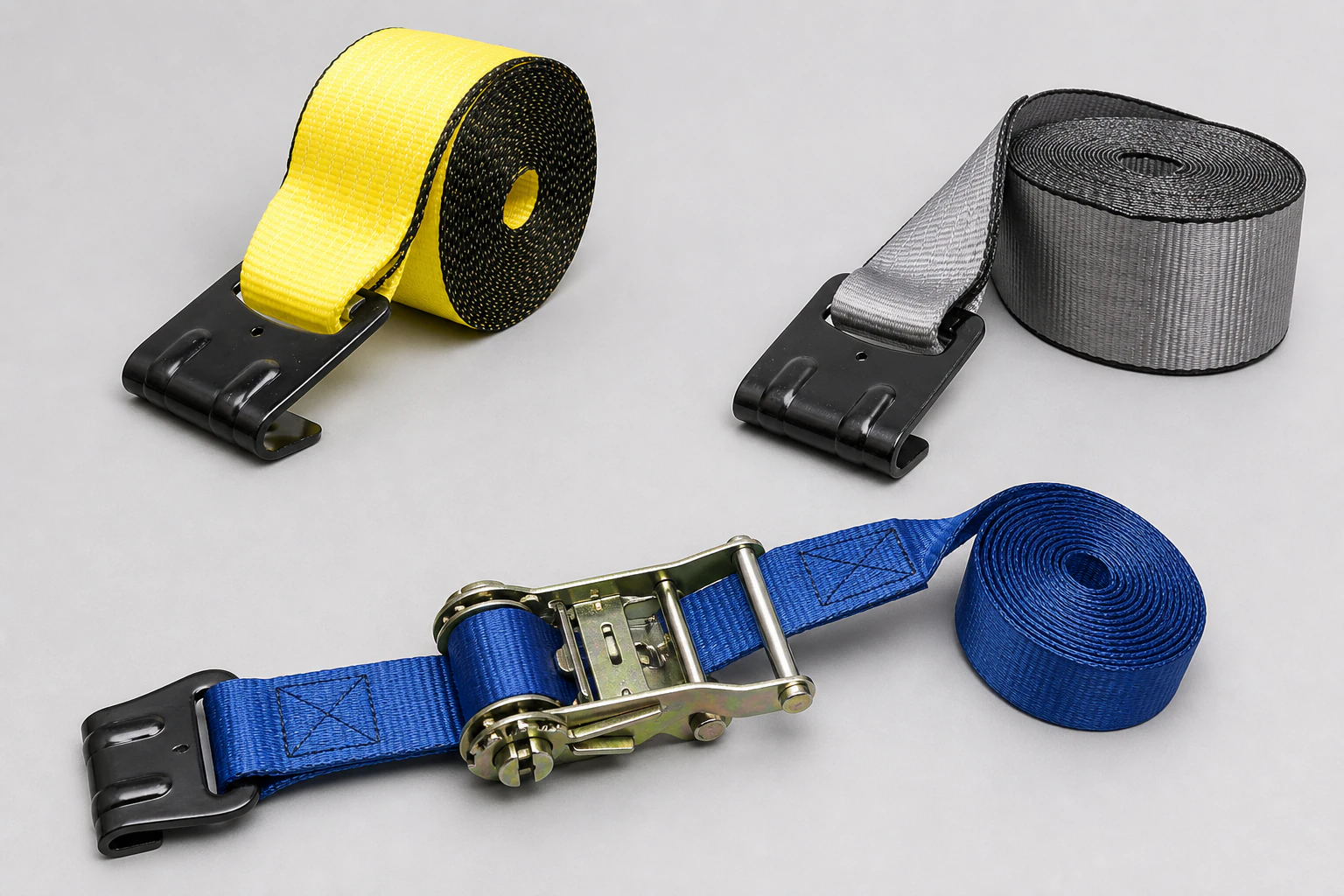
PRODUCT LANDING / WINCH AND TRACK SYSTEM CONTROL
Truck Winch Straps and E-Track Systems Specified as Complete Interface Programs
A wide winch strap and an E-track logistic strap do not share the same connection route. The webbing, free feed end, winch or buckle, end fitting, anchor or track, sewing and released evidence must be controlled as a complete system.
This product page separates open-deck winch routes from interior track routes, then turns width, length and fitting requests into sample, evidence, packaging and continuity gates. It does not copy numeric ratings from filenames or qualify an assembly from a photograph.
01 / SYSTEM BOUNDARY
Separate Winch, Logistic Track and Cargo Decisions First
Start with the route that actually carries restraint through the vehicle. A product family name cannot decide anchor compatibility, system capacity or operating approval.
- 01Describe vehicle and cargo
- 02Choose winch or track route
- 03Map every interface
- 04Release bounded evidence
01
Winch route
Identify the installed winch, free-end feed direction, side rail or stake-pocket interface and cargo path. Confirm who owns the vehicle securement plan. A replacement strap request should not assume that any webbing width, end hook or wind-up length fits the existing winch.
02
E-track route
Identify the actual track series, orientation, mounting context, slot condition and intended fitting. State whether the strap uses a cam, ratchet or another controlled tensioner. Track appearance alone does not establish positive engagement, assembly rating or mounting adequacy.
03
Cargo contact route
Map every surface, edge, bend, wrap and clearance along the strap. Define where edge protection or sleeves are considered and who approves them. Neither a wide webbing nor an interior track automatically protects cargo from abrasion, crushing or movement.
04
Use exclusions
Keep lifting, towing, recovery, fall protection and personal restraint outside the program unless a separately qualified product and rule set cover them. State route and destination limits in the RFQ, artwork and instructions so commercial language cannot expand the approval.
02 / WINCH ASSEMBLY
Freeze the Free Feed End, Webbing and Cargo-Side Fitting
A winch strap is a controlled assembly even though one end remains free for the winch. Define every measurement and interface from the beginning.
01
Free feed end
Define the cut or finished free end, usable feed length, edge condition and any identification near the tail. Verify that the proposed width and thickness can enter the buyer's winch route under a safe sample review. Do not pre-wind or instruct field use without approval.
02
Webbing body
Control nominal width, thickness range, weave identity, source, color, edge and length reference. Separate supplier material declarations from complete-assembly evidence. A wider strap may alter winch fit, bend behavior and storage, so width cannot be treated as an isolated strength choice.
03
Fitted end
Specify flat hook, wire hook, chain anchor, ring, sewn loop or another fitting by drawing and position. Confirm geometry against the intended anchor sample. The end fitting, sewing and webbing connection belong to the represented assembly, not to a generic hardware catalog.
04
Sewn connection
Define fold, protective clip or sleeve, stitch pattern, thread, placement and workmanship boundaries. Retain a controlled sample and production check. Visible stitching can confirm construction identity but cannot prove a numeric rating unless the matched assembly method supports that conclusion.
03 / TRACK ASSEMBLY
Treat Track, Fittings, Tensioner and Webbing as One Logistic System
Logistic straps operate through two track interfaces and a tensioning device. Control both fixed and adjustable sides plus the installed track context.
- 01Identify track and mounting
- 02Match both fittings
- 03Approve tensioner and webbing
- 04Verify complete system record
01
Track identity
Record series, manufacturer or controlled drawing, orientation, slot geometry and relevant mounting information supplied by the buyer. Inspect the actual track condition. A fitting rated in one manufacturer's track may not inherit the same conclusion in a different or damaged track.
02
Two end fittings
Define fixed-side and adjustable-side fittings separately, including spring or latch mechanism, plate geometry, finish and connection to webbing. Observe insertion, positive seating and release in the exact track sample without active cargo. Mixed fitting revisions require explicit control.
03
Tensioning device
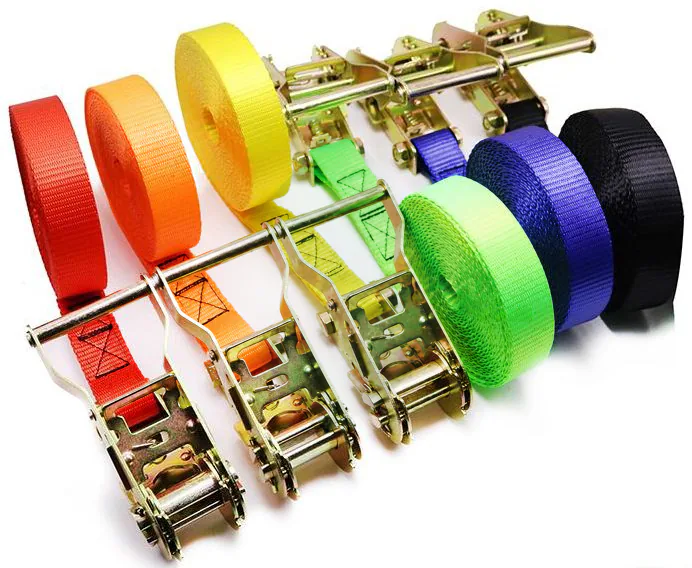
Specify cam buckle, ratchet buckle or other device by revision and compatible webbing window. Hand tension and mechanical leverage create different handling risks and claims. Keep the tensioner decision linked to cargo sensitivity, route, evidence and buyer instructions.
04
Fixed and adjustable lengths
Give measurement reference points for the fixed section, adjustable section, tail and total usable route. Include tolerances and captivated hardware where required. Marketing length, carton coil length and usable restraint length are separate values that should not be confused.
04 / WIDTH
Choose Webbing Width from Interfaces and Evidence, Not Appearance
Width affects winch feed, fitting connection, bend radius, cargo contact and packaging. It must close across the whole assembly.
01
Winch compatibility
Compare proposed width and thickness with the winch mandrel, slot, guides and available winding space under a controlled sample review. Record skew, edge contact and feed observations. Do not force a wider webbing into a winch simply because the end fitting matches.
02
Fitting compatibility
Confirm the fitting's webbing slot, fold stack, protective clip and stitch area accept the specified construction. Identify any bunching or side clearance. Nominal hardware width is not sufficient when webbing thickness, edge and fold route differ.
03
Cargo contact
Define the intended contact zone and whether wider webbing changes pressure distribution, edge approach or wrapping behavior. Treat any surface-protection statement as a separate claim requiring a matched cargo or method. Width alone does not guarantee gentler handling.
04
Evidence object
Every width option should resolve to its own SKU, BOM, sample and supported claim set. If component documents cover multiple widths, map each exact relationship. Avoid extending a result from one assembly simply because another uses the same polymer name.
05 / LENGTH
Calculate Length from Route, Take-Up and Handling Allowances
A useful length specification states reference points and operating allowances rather than repeating a nominal catalog number.
01
Route distance
Measure the approved path from anchor or track interface through cargo contact and back to the tensioning or feed point. Include route variation across expected cargo sizes. The longest geometry is not automatically safe; the buyer still approves restraint layout and tiedown count.
02
Winch take-up
Define minimum tail needed for correct engagement, expected winding allowance and limits on excess layers for the specific winch. Keep these as buyer-approved interface requirements, not universal instructions. Sample validation should use the intended webbing construction and winch condition.
03
Logistic adjustment
Set fixed-side length, adjustable range, usable tail and buckle access for the selected track positions. Check both shortest and longest expected cargo states. A strap that reaches may still leave poor buckle location, insufficient tail or unmanageable excess.
04
Packed length
Specify how long straps are folded or coiled without hiding the delivered measurement. Packaging consumption and coil diameter belong in logistics planning but should not redefine usable length. Agree the inspection method and tolerance before production.
06 / END FITTINGS
Match Flat Hooks, Wire Hooks, Chains, Loops and Track Fittings
End hardware is an interface decision, not a style choice. Geometry, finish, sewing and the receiving anchor should be reviewed together.
- 01Identify receiving anchor
- 02Choose fitting geometry
- 03Verify seating and clearance
- 04Release the matched assembly
01
Flat hook route
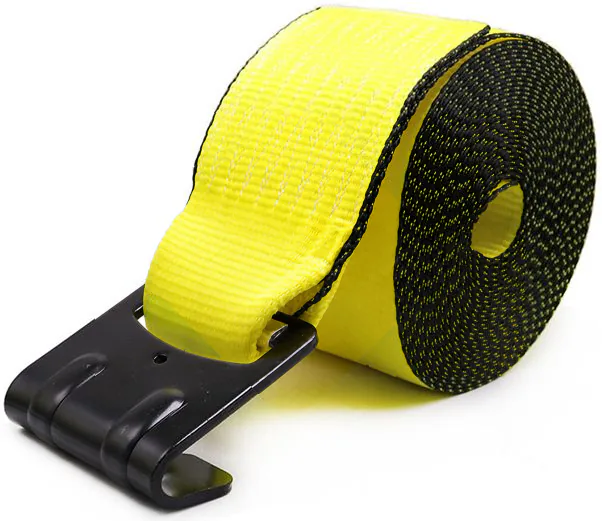
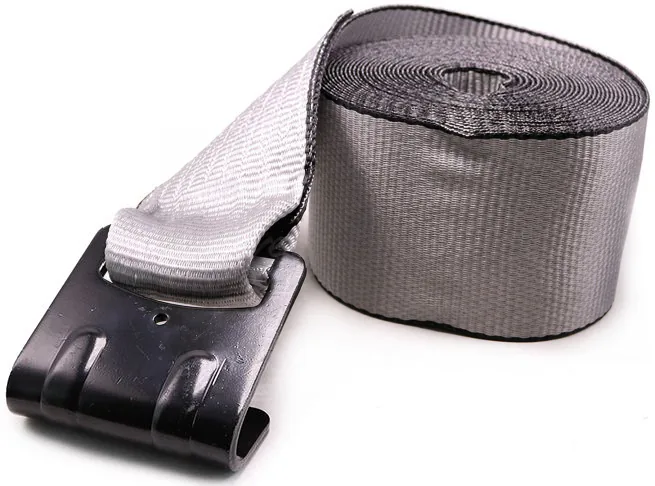
Record throat, plate width, lip, abrasion clip or related feature and the side rail or stake-pocket geometry it is meant to address. Inspect seating and webbing protection using controlled samples. Do not call a hook universal because it resembles the legacy photograph.
02
Wire hook route
Define wire diameter, throat, opening, coating and the intended anchor. Observe side loading, clearance and possible disengagement under the buyer's safe plan. A wire hook option requires its own sewing and assembly evidence rather than borrowing a flat-hook result.
03
Chain, ring or loop
Specify chain length and connection, ring geometry or sewn-loop dimensions plus finish and workmanship. Confirm contact with the selected anchor and cargo route. Component capacity does not automatically determine the complete strap's released rating.
04
Track fitting route
Identify spring-loaded or other fitting style, track family, engagement mechanism and webbing connection. Observe positive seating, retention feature and release in a compatible track sample. Track mounting and field inspection remain buyer-controlled system responsibilities.
07 / EVIDENCE
Map Component Records to the Exact Complete System Claim
A certificate or catalog example only helps when its represented object and conclusion match the delivered SKU and intended destination.
01
Claim wording
Write the exact number, unit, condition, standard or descriptive statement proposed for the page, tag, carton or instruction. Name the decision owner. Generic strength language needs a different evidence burden from a destination-specific assembly rating or compliance claim.
02
Object identity
Link the claim to webbing, sewing, fitting, buckle or winch interface, track context and complete assembly revision. A component report remains contextual when connections or other parts are absent. Similar colors, widths or hardware shapes do not establish identity.
03
Method and specimens
Record procedure, edition, specimen condition, count, direction, setup, deviations and result. Separate supplier examples from buyer-required verification. Do not infer road approval, safe tiedown count or service life from an isolated laboratory record.
04
Destination decision
State who reviews the evidence for the country, vehicle, channel and intended wording. Preserve accepted, conditional and rejected statements. Unsupported language should remain blocked across web copy, labels, quotations and training materials.
08 / SAMPLE GATES
Approve Identity, Interface, Evidence and Decoration in Sequence
Staged samples prevent a stock item or artwork proof from silently becoming the final controlled product.
- 01Confirm identity sample
- 02Close vehicle interfaces
- 03Release evidence and artwork
- 04Retain final reference
01
Identity sample
Confirm width, length references, webbing, free tail, fittings, tensioner, sewing and general workmanship on one complete assembly. Log differences from the proposed BOM. A stock-color sample should not approve production color, label or pack by accident.
02
Interface sample
Review the winch, rail, stake pocket, track and fitting interfaces using buyer-supplied or controlled mockups. Capture engagement and clearance observations without active cargo. Keep vehicle installation and restraint design outside the factory sample claim.
03
Evidence sample
Use specimens traceable to the intended BOM for any agreed material, component or assembly work. Record condition and method before interpreting results. Do not combine reports from different width, fitting or track routes into one unqualified conclusion.
04
Decorated reference
Apply approved color, tag, print and packaging only after product identity is stable. Check every published field against released evidence. Retain a physical sample or controlled photographs, measurements, BOM, artwork and reviewer disposition for production comparison.
09 / CUSTOMIZATION
Control Color, Labels and Instructions by Route
Customization must preserve product identity and claim boundaries while meeting channel and destination needs.
01
Color system
Define webbing color target, comparison lighting, allowed variation and approved reference. If color process, finish or supplier changes construction or surface behavior, trigger renewed review. Digital swatches support discussion but do not replace a production standard.
02
Route identification
Make winch, E-track and other logistic variants distinguishable by SKU, label or pack without relying on color alone. Include width, length reference, fitting and tensioner identity as required. Prevent look-alike assemblies from being picked into the wrong vehicle system.
03
Claim and warning fields
Release exact wording only after evidence and destination review. Specify language, placement, durability and revision. Numeric ratings, standards marks and compatibility statements must resolve to the delivered assembly; supplier examples cannot be copied as EverBen approval.
04
Instruction ownership
Define whether the buyer, supplier or qualified system owner provides threading, engagement, inspection and retirement content. Instructions should identify boundaries and pre-use checks without inventing universal securement practice. Artwork changes require version and approval control.
10 / QUALITY
Convert Interfaces into Incoming, Process and Final Controls
Inspection should preserve the approved system relationship from component receiving through packed-lot release.
- 01Verify incoming identity
- 02Approve first-piece interfaces
- 03Inspect finished lot
- 04Resolve deviations before release
| Gate | Entity | Attributes | Decision record |
|---|---|---|---|
| Identity | Complete sample | BOM, dimensions, color and interface | Deviation log |
| Handling | Unloaded assembly | Threading, clearance, take-up and release | Buyer observations |
| Evidence | Exact assembly revision | Method, specimen, result and destination | Accepted and open claims |
| Decoration | Marked product and unit pack | Identity, language, artwork and legibility | Artwork release |
| Shipment | Lot and packed carton | Traceability, inspection, count and condition | Release authorization |
01
Incoming identity
Verify webbing source and construction, fitting and buckle revisions, chain or hook, thread, labels and packaging against controlled documents. Quarantine mixed or substituted components. Appearance alone does not establish material, coating or performance evidence.
02
Process controls
Check cutting, free-end finish, webbing orientation, fold, stitch placement, hardware capture, buckle threading and track-fitting direction. Use first-piece approval and defined frequency. Rework should remain traceable to the actual lot and process stage.
03
Final checks
Confirm dimensions, operation, fittings, cosmetic condition, tag, count, pack and documentation against the order. Any performance sampling requires a separate method and decision rule. A passed visual check cannot authorize an unrelated capacity or compatibility statement.
04
Deviation disposition
Define segregation, reporting, root-cause, rework and concession authority before production. Notify the buyer before shipment when a deviation touches a frozen interface, source, evidence claim or reference sample. Retain affected quantity and lot linkage.
11 / PACKAGING
Pack Long Webbing and Hardware without Losing Identity
Packaging must protect fittings and prevent tangling while keeping route, length and lot information available.
01
Fold or coil
Define coil diameter, fold sequence, band position and how the free winch tail or adjustable logistic tail remains identifiable. Avoid sharp folds at hardware connections. Confirm unpacking does not require cutting near webbing or labels.
02
Hardware separation
Prevent flat hooks, chain, buckles and track fittings from abrading webbing or adjacent products. Use sleeves, trays, partitions or orientation when justified. Record any added material in pack, cost and disposal declarations rather than introducing it silently.
03
Carton schedule
State units per inner and master carton, route assortment, dimensions, weight method, marks and destination needs. Verify a real packed sample before final freight calculations. Do not reuse carton data from a different width, length or hardware configuration.
04
Traceability
Connect product tag, unit pack, master carton, shipment documents and retained inspection records through agreed lot fields. Define mixed-lot and partial-shipment rules. Reorder investigation depends on resolving delivered assemblies to the approved BOM and evidence revision.
12 / COMPARABLE RFQ
Compare the Same Delivered Winch or Track Program
A useful quote exposes interface work, evidence, samples, inspection and packing instead of hiding them behind one unit price.
- 01Freeze route and BOM
- 02Expose evidence and sample scope
- 03Price the delivered pack
- 04Approve reorder conditions
| Workstream | Required supplier disclosure | Closure gate |
|---|---|---|
| Assembly | BOM, dimensions, truck winch and E-track, fittings, sewing and tolerances | Complete sample |
| Evidence | Exact object, method, condition, result, destination and owner | Claim decision |
| Customization | Color, identity fields, artwork, label and controlled pack | Decorated reference |
| Quality | Incoming, process, release, traceability and change controls | Inspection plan |
| Commercial total | Development, quantity, packing, inspection, timing and replenishment | Comparable quotation |
Price the delivered controlled assembly
Compare winch and E-track offers from the released track or winch interface, fittings, tensioner, webbing route and complete-system record, then keep evidence, inspection, marking, packing and replacement support tied to that exact configuration.
Do not reward an omitted line
Any excluded evidence, sample, pack or control remains visible instead of being mistaken for a lower equivalent price.
01
Configuration ladder
Request separate rows for each width, length, fitting, buckle or track route and color. Name development and production quantities. Avoid blended pricing that prevents the buyer from seeing which interface or hardware change drives cost.
02
Evidence and samples
List existing declarations, required verification, sample rounds, artwork proofs, inspection and retained references as explicit commercial rows. State who supplies winch, track or anchor mockups. An omitted evidence cost is not an equivalent lower price.
03
Timing dependencies
Map buyer inputs, component booking, identity sample, interface review, evidence closure, artwork release, production, inspection and dispatch. Treat dates as dependent estimates until scope and quantity are fixed. Do not promise stock or shipment without confirmation.
04
Reorder continuity
Ask how webbing, fittings, tensioners, sewing, retained references and lot records remain controlled. Define mandatory change notice and reapproval triggers. A replenishment price is meaningful only when it preserves the approved interfaces and released evidence.
What this sourcing route does not establish
This page defines a sourcing workflow; it does not verify material, working load limit, breaking strength, compliance, road approval, safe tiedown count or suitability for a specific cargo. Any released statement requires evidence for the exact complete assembly, while certification, quantity, pricing and dispatch remain quotation-specific.
Route-specific FAQ
Decisions required before winch-and-track approval
What is the difference between a winch strap and an E-track logistic strap?
A winch strap normally presents a free feed end to a compatible winch and one cargo-side or vehicle-side fitting. A logistic strap generally connects two fittings to compatible track and includes a separate tensioning device. Approve each route independently.
Can width and length be chosen from an old filename?
No. Filenames and legacy marketing text are discovery inputs only. The purchase specification should define measurement points, tolerances, interface compatibility, complete-assembly evidence and destination decisions.
Does a fitting photograph prove it engages the buyer's track?
No. The track series, slot geometry, gauge or construction, fitting revision, engagement observation and complete system decision must be matched. Similar-looking fittings are not automatically interchangeable.
Which end fittings can be discussed for winch straps?
Flat hooks, wire hooks, chain anchors, rings, loops and other routes may be considered only as controlled option rows. Their fit and supported assembly claims depend on the buyer's exact anchor and evidence package.
What should remain frozen for reorders?
Freeze the approved BOM, webbing construction and source, dimensions, sewing, fittings, buckle or winch interface, finish, label, pack, inspection plan, evidence revision and change-notification path.
Scope handoff
Send one controlled truck-strap system brief
Describe the vehicle and cargo context, route, winch or track identity, webbing width and length logic, end fitting, quantity, destination, evidence wording, customization and packaging. Open interfaces will be returned as questions rather than assumed approval.