
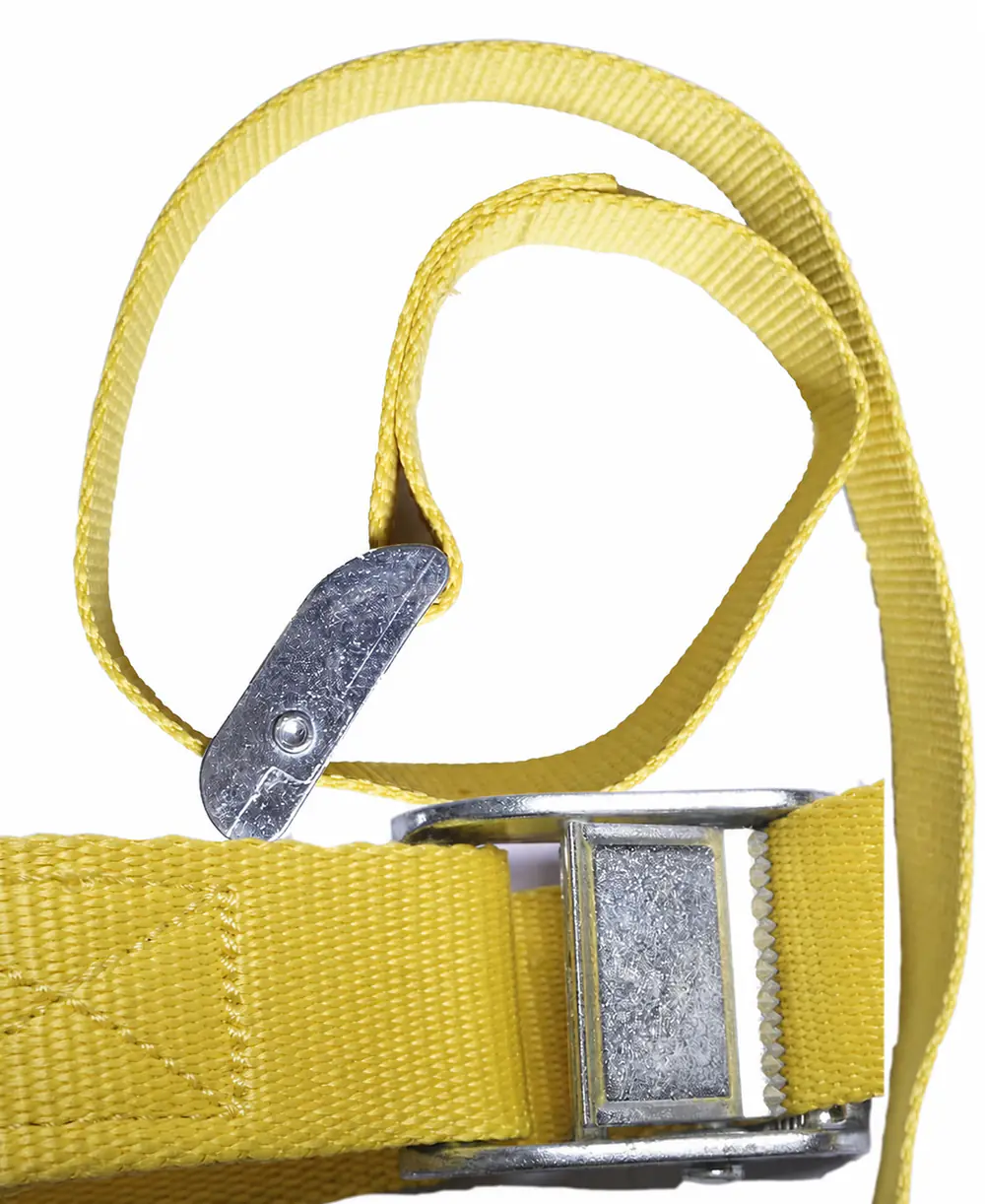
PRODUCT LANDING / COMPLETE ASSEMBLY CONTROL
Cam Buckle Tie-Down Straps Built around Buckle, Spring and Webbing Compatibility
A cam strap is not approved by choosing a width and color. The buckle tooth, return spring, webbing construction, sewing, end fittings, operating route and released evidence must describe one complete assembly.
This product route turns a broad inquiry into an auditable wholesale program. It separates observable configuration from unverified performance claims, keeps hand-tensioned cam straps distinct from ratchet systems, and gives procurement teams explicit gates for samples, decoration, packing and replenishment.
01 / TASK BOUNDARY
Choose a Hand-Tensioned Cam Route before Discussing Details
Begin with the restraint task and decision owner. A cam buckle may offer controlled hand pull and compact hardware, but that does not make every cam assembly suitable for every cargo, vehicle or regulatory route.
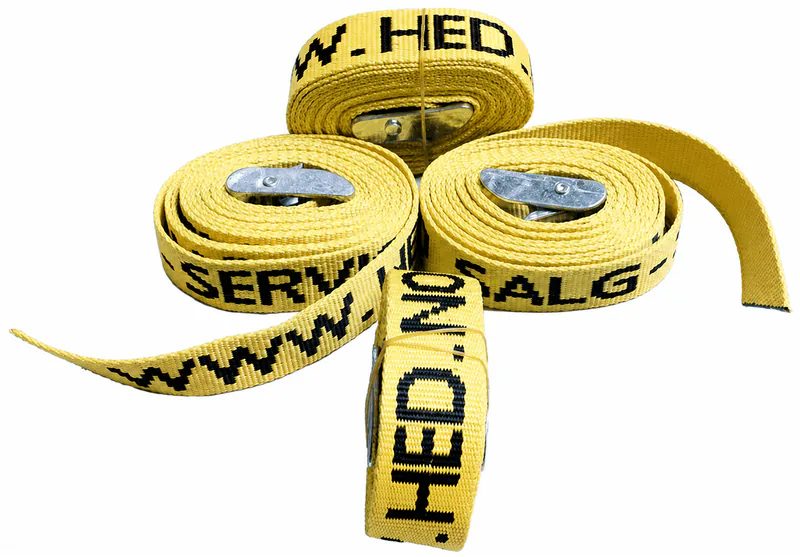
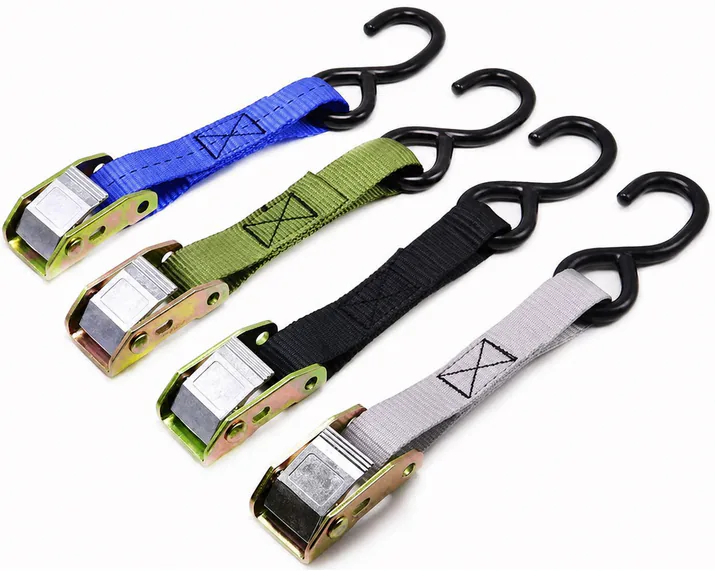
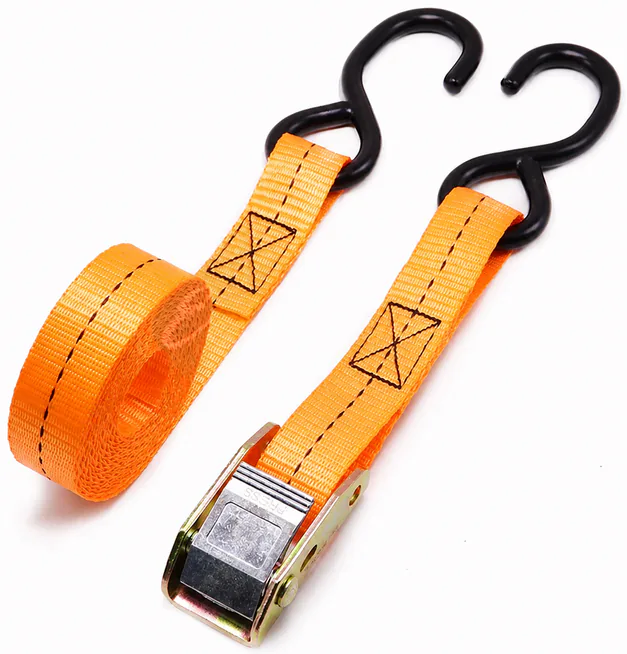
- 01Describe cargo and route
- 02Choose tensioning family
- 03Define complete assembly
- 04Release only supported claims
01
Separate cam from ratchet
Record why hand tension is requested and which surface, clearance or handling concern drives that choice. Do not describe cam hardware as a lower-cost ratchet substitute. The buyer still owns the securement design, tiedown count, anchor suitability and operating approval for the actual load.
02
Name the restraint route
Describe whether the strap is endless, hook-to-hook, track-connected, soft-loop assisted or another controlled form. State how it passes over or around cargo and where each end terminates. A product name without the route leaves buckle orientation, free-tail direction and fitting geometry unresolved.
03
Define the use boundary
State whether the inquiry concerns internal organization, recreational equipment, packaged goods or another bounded context. Exclude lifting, towing, recovery and personal restraint unless a separately qualified product and rule set explicitly cover them. Marketing language cannot expand the approved use.
04
Assign the decision owner
Name who approves the cargo plan, evidence wording, artwork, shipment release and site instructions. Factory samples support that decision but do not replace the buyer's risk assessment. Open questions should remain visible in the RFQ rather than becoming assumed acceptance criteria.
02 / COMPLETE ASSEMBLY
Freeze the Whole Cam-Strap Architecture
Treat the saleable item as a connected system. A controlled drawing and BOM should resolve every component and interface instead of letting a buckle photograph stand for the delivered assembly.
01
Buckle body and lever
Identify buckle family, compatible nominal webbing range, body construction, lever geometry, tooth plate, pivot and finish. Record supplier part identity or controlled drawing revision. A visually similar buckle may have a different feed path, clearance, spring arrangement or contact pattern.
02
Webbing path and tail
Show the webbing entry face, exit direction, fixed-side connection and usable free tail. Include nominal width, thickness window, weave identity, color and edge condition in the controlled specification. Tail length and orientation affect handling even before any performance statement is considered.
03
Sewn interfaces
Locate every stitch pattern, fold, keeper and soft loop. Define thread identity, stitch geometry, acceptable placement, edge distance and visual defect boundaries through drawings and approved samples. Stitch appearance alone cannot demonstrate assembly capacity, so evidence and workmanship records remain separate.
04
End fittings and protectors
Specify each hook, snap, loop, track fitting, sleeve, coating or protector by position and revision. Confirm fit with the intended anchor geometry using a controlled sample. The complete assembly inherits the limitations of its weakest supported component and interface, not the strongest catalog item.
03 / INTERFACE
Engineer the Tooth, Spring and Webbing Pair as One Decision
The locking interface depends on more than nominal width. Tooth form, spring return, buckle clearance and webbing construction should be reviewed together under defined conditions.
- 01Identify tooth and spring
- 02Freeze webbing window
- 03Observe the paired interface
- 04Release or revise the pair
01
Tooth engagement
Record tooth plate identity, contact direction and the intended webbing face. Inspect for burrs, malformed edges, incomplete engagement and concentrated marking. Do not infer acceptable grip from sharp appearance; acceptance requires the agreed method, specimen conditioning and decision boundary.
02
Spring return
Define the expected unloaded lever movement, return behavior and seating observation without inventing force values. Review the spring, pivot and lever as an assembly. A returning lever does not by itself prove retention under the buyer's load or after contamination and repeated operation.
03
Webbing construction
Control polymer declaration, weave family, nominal width, thickness range, edge treatment, color route and source. Coatings, softeners, surface texture and lot variation may alter interaction with the teeth. Pairing approval belongs to the exact webbing revision rather than the color name.
04
Clearance window
Use controlled samples to observe thread-in, movement through the open buckle, lever closure and surface response across the specified webbing window. Keep any difficulty, bunching, skew or damage as recorded observations. Do not widen tolerances simply to make a sample fit.
04 / CONFIGURATION
Select End Forms and Length Logic without Mixing Programs
Endless straps, two-hook assemblies, soft-loop interfaces and track fittings solve different connection problems. Keep each configuration as a distinct controlled SKU or option row.
01
Endless-loop route
Define the complete loop path, buckle position, usable circumference and free-tail handling. State whether a keeper or protective sleeve is required. An endless form removes detachable hooks but still needs boundary statements for edges, contact surfaces and unintended release.
02
Hook-to-hook route
Name hook type, throat geometry, coating, connection method and protected surfaces at each end. Verify fit to the intended anchor sample without assuming universal compatibility. Distinguish open S-hooks from positive-locking fittings in drawings, labels and product language.
03
Soft-loop interface
Specify loop material, length, fold, sewing and intended connection sequence. Review the loop against the buyer's anchor or equipment sample for contact and clearance. A soft loop may change surface interaction, but no protective or strength conclusion should be published without matched evidence.
04
Length and adjustment
Define fixed-side length, adjustable-side range, tail allowance and measurement reference points for each SKU. Packaging coils and sewing consumption should be considered separately from usable length. Agree tolerances before sampling so production inspection is not based on a marketing dimension alone.
05 / MATERIAL IDENTITY
Control Webbing, Metal and Coating Declarations
Material names become useful only when connected to source, construction, revision and inspection. Keep requested declarations separate from performance conclusions.
01
Webbing declaration
Request the proposed polymer, weave construction, mass or thickness control, color process and source identity as relevant to the buyer's specification. Confirm which attributes are supplier declarations and which are independently verified. Never translate a generic polyester or nylon label into a performance guarantee.
02
Metal component identity
Record the buckle body, tooth plate, pivot, spring and end fitting materials at the level supported by supplier documents. Identify any heat treatment or alloy statement that requires evidence. Do not infer composition from color, magnet response or the appearance of a plated sample.
03
Finish and coating
Define finish color, process reference, coverage expectations and protected functional surfaces. Review coating at teeth, pivots and hooks for its interaction with movement and contact areas. Corrosion language requires a matched method, duration, specimen and acceptance rule rather than a plated appearance.
04
Substitution boundary
List components and sources that cannot change without notification and reapproval. A switch in webbing yarn, finish chemistry, tooth plate, spring or sewing thread may affect the approved interface. Change control must precede shipment, not be discovered during a complaint.
06 / HANDLING EVIDENCE
Observe Threading, Hand Pull, Release and Tail Management
A handling review should be repeatable and separated from capacity claims. Record the exact sample, sequence, condition and observation language.
- 01Thread the controlled sample
- 02Seat without hidden twist
- 03Record hand-pull observations
- 04Release and inspect
01
Thread-in sequence
Document which side opens, where the adjustable webbing enters and where the tail exits. Observe snagging, twist, skew and clearance with the specified sample. Supplier instructions can inform the sequence, but the buyer must approve wording for the actual assembly and intended context.
02
Controlled hand pull
Define the operator action and observation without claiming a universal tension. Cam buckles are hand-operated; the result can vary with user, posture, tail access and webbing condition. Treat handling notes as contextual evidence rather than a substitute for an assembly rating.
03
Release behavior
Observe lever access, return, webbing movement and any abrupt unloading risk under the buyer's safe test plan. Keep the sample unloaded or in a controlled fixture for initial review. User instructions should state boundaries and inspection requirements instead of promising effortless release in every condition.
04
Tail and keeper
Specify minimum usable tail for operation, maximum loose tail for packaging and any keeper or routing rule. Confirm the tail will not be mistaken for a fixed end or obstruct the lever. Tail management is a configuration decision and should appear in the drawing and approved sample.
07 / CONDITION MATRIX
Bound Slip and Surface-Marking Questions to Controlled Conditions
Terms such as non-slip or non-scratch are incomplete. Replace them with defined observations tied to specimen condition, method and decision owner.
01
Define movement
State what movement is measured or observed, at which reference points, after which sequence and for how long. Separate initial seating, webbing elongation, fixture movement and buckle interface movement. A single unqualified slip number can hide several different mechanisms.
02
Condition specimens
Record webbing lot, buckle revision, temperature or moisture condition, contamination route, precycles and specimen count as relevant. Dry showroom handling cannot represent wet, dusty, oily or aged service without a controlled method. Keep untested conditions outside the claim.
03
Inspect surfaces
Define acceptable and unacceptable tooth marking, glazing, pulled yarns, edge damage, coating transfer and cargo-contact marks. Use photographs with sample identity and timing. A visible mark may be expected contact evidence or a defect; the buyer's rule must decide.
04
Retest triggers
Name which component, material, coating, dimension, supplier, method or destination change forces a repeat review. Retesting should use the same controlled claim object or document the deviation. Historic results do not automatically transfer to a new buckle-webbing pair.
08 / SAMPLE GATES
Move from Identity Sample to Decorated Reference in Stages
Separate development questions from commercial approval. Each sample stage should have named evidence, owner, disposition and change rules.
- 01Approve identity sample
- 02Close interface questions
- 03Release decorated reference
- 04Retain the approved record
01
Identity sample
Use the first complete sample to confirm BOM, dimensions, webbing path, buckle operation, sewing and end fittings. Mark deviations explicitly. Do not treat an available stock sample as the final material, finish, label or pack unless those attributes are intentionally approved.
02
Interface sample
Review the exact buckle and webbing pairing plus the buyer's anchor or fixture samples. Capture thread-in, seating, surface and handling observations. Keep any load or performance evaluation under the buyer-approved method and qualified personnel rather than informal demonstrations.
03
Decorated sample
Apply approved color, label, logo or packaging to a controlled sample after the functional identity is stable. Check placement, contrast, legibility, adhesion or print route as relevant. Artwork approval must not silently authorize unsupported rating or compliance language.
04
Retention reference
Seal the approved sample or retain controlled photographs, measurements, BOM and artwork when physical retention is impractical. Link the reference to purchase order and lot release. Define storage duration and who resolves differences during production or reorder.
09 / CUSTOMIZATION
Customize Color, Identity and Packaging without Rewriting Evidence
Decoration creates new controlled objects. Keep visual options connected to approved components and claim language.
01
Webbing color
Define color target, comparison light, allowable variation and approved sample. Consider whether dye or finish route changes require renewed buckle-webbing review. Digital swatches are useful for discussion but do not replace a production color reference.
02
Label fields
Specify brand, SKU, lot, material declaration, warnings, care and destination-specific fields through released artwork. Decide whether the label is sewn, printed, sleeved or packed separately. Do not place numeric ratings or compliance marks until exact evidence and authorization are closed.
03
Hardware appearance
Control buckle and fitting finish, coating color and permitted cosmetic variation. Separate cosmetic acceptance from functional defects at teeth, pivots and hook contact areas. A decorative finish change belongs in change control if it can affect fit, movement or corrosion evidence.
04
Pack presentation
Choose unit bag, band, carton, assortment and instruction insert based on channel and handling needs. Keep statements on packaging aligned with the released product page and label. Retail-ready presentation, export carton protection and replenishment identification are distinct cost rows.
10 / QUALITY CONTROL
Translate Approved Features into Incoming, Process and Release Checks
Quality planning should preserve the approved relationships, not merely count finished straps. Define check points, records and disposition authority.
- 01Verify incoming identity
- 02Approve first-piece assembly
- 03Inspect released lot
- 04Resolve deviations before shipment
| Gate | Entity | Attributes | Decision record |
|---|---|---|---|
| Identity | Complete sample | BOM, dimensions, color and interface | Deviation log |
| Handling | Unloaded assembly | Threading, clearance, take-up and release | Buyer observations |
| Evidence | Exact assembly revision | Method, specimen, result and destination | Accepted and open claims |
| Decoration | Marked product and unit pack | Identity, language, artwork and legibility | Artwork release |
| Shipment | Lot and packed carton | Traceability, inspection, count and condition | Release authorization |
01
Incoming components
Verify identified buckle, spring, webbing, fittings, thread, labels and packaging against controlled records before assembly. Quarantine unapproved substitutions and mixed lots. Incoming appearance checks should not be recorded as proof of material or capacity unless the agreed method establishes that conclusion.
02
In-process assembly
Control webbing orientation, cut edge, fold, stitch placement, buckle threading, fixed-side connection and end fitting position. Use first-piece approval and defined frequency. Record rework so the final lot can be traced to the actual process route.
03
Final inspection
Confirm dimensions, operation, cosmetic condition, label identity, count, packaging and documentation against the purchase order. Any performance sampling requires its own method and disposition rule. A passed visual inspection does not authorize an unrelated numeric claim.
04
Nonconformance route
Define who segregates, reports, analyzes and approves rework, concession or rejection. Preserve photographs, lot identity and affected quantity. Supplier notification should arrive before shipment when a deviation touches a frozen component, evidence statement or buyer-approved sample.
11 / PACKAGING
Protect Buckles, Hooks, Webbing and Lot Identity through Delivery
Packaging is part of the delivered specification. It should prevent tangling and contact damage while keeping assembly and lot identity visible.
01
Coil geometry
Define how the strap is folded or coiled, how the buckle and fittings are positioned and whether a band or bag is used. Avoid sharp folds at functional interfaces. Confirm the packed form can be opened without cutting or scratching the assembly.
02
Contact separation
Prevent metal components from abrading webbing, decorated surfaces or adjacent units during transport. Use sleeves, partitions or orientation where justified by the approved pack. Do not add protective materials silently if they change count, waste declarations or customer handling.
03
Carton schedule
Record units per inner and master carton, orientation, gross and net weight method, carton dimensions, marks and destination requirements. Verify the actual packed sample before final logistics costing. Packaging numbers should be quotation-specific rather than copied from a different strap format.
04
Lot traceability
Connect unit, inner pack, master carton, shipment documents and retained records through agreed identity fields. Define how mixed lots or partial shipments are handled. Reorder comparisons depend on being able to resolve delivered goods back to the approved BOM and evidence revision.
12 / COMPARABLE RFQ
Compare Suppliers on the Same Controlled Delivered Scope
A useful quotation exposes what is included, open and conditional. Compare the assembly, evidence, customization, quality and logistics as one delivered program.
- 01Freeze comparable scope
- 02Expose evidence gaps
- 03Price delivered program
- 04Approve continuity conditions
| Workstream | Required supplier disclosure | Closure gate |
|---|---|---|
| Assembly | BOM, dimensions, cam buckle, fittings, sewing and tolerances | Complete sample |
| Evidence | Exact object, method, condition, result, destination and owner | Claim decision |
| Customization | Color, identity fields, artwork, label and controlled pack | Decorated reference |
| Quality | Incoming, process, release, traceability and change controls | Inspection plan |
| Commercial total | Development, quantity, packing, inspection, timing and replenishment | Comparable quotation |
Price the delivered controlled assembly
Compare the complete cam-buckle assembly by buckle body, spring return, tooth engagement, webbing construction, end fittings and the buyer's defined positioning task; record every proposed departure before pricing.
Do not reward an omitted line
Any excluded evidence, sample, pack or control remains visible instead of being mistaken for a lower equivalent price.
01
Quantity ladder
Request price and lead-time assumptions for named quantities, colors, configurations and pack routes. Separate development samples, production MOQ, tooling or artwork costs and replenishment terms. A low unit price with omitted evidence or packing is not an equivalent quote.
02
Evidence schedule
List every declaration, inspection, test or document required, its exact object and whether it is existing, proposed or buyer-specified. State language, destination and release owner. Do not pay for a generic certificate that cannot resolve to the delivered assembly.
03
Timing dependencies
Map sample approval, material booking, artwork release, evidence closure, production, inspection and dispatch as dependencies rather than guaranteed dates. Record what buyer input starts each clock. Shipping estimates should remain conditional until quantity, pack and route are known.
04
Reorder continuity
Ask how the supplier controls component sources, retained references, lot records and change notices between orders. Define which changes require resampling or renewed evidence. A replenishment price is meaningful only if it preserves the approved assembly and declared scope.
What this sourcing route does not establish
This page defines a sourcing workflow; it does not verify material, working load limit, breaking strength, compliance, road approval, safe tiedown count or suitability for a specific cargo. Any released statement requires evidence for the exact complete assembly, while certification, quantity, pricing and dispatch remain quotation-specific.
Route-specific FAQ
Decisions required before cam-buckle approval
Is a cam buckle strap interchangeable with a ratchet strap?
No. A cam buckle is generally tensioned by hand, while a ratchet adds mechanical leverage. The complete assembly, required restraint, released rating and destination rules must be reviewed before substitution.
Can one buckle be paired with any webbing of the same nominal width?
No. Nominal width alone does not establish tooth engagement, thickness clearance, weave response, surface marking, slip behavior or repeat-cycle compatibility. Approve the exact buckle and webbing pairing.
Which customization fields belong in the first RFQ?
State assembly form, webbing identity, length logic, color, buckle finish, end fittings, sewing, label fields, packaging, quantity, destination and the exact evidence statements required for publication or use.
Do product photographs prove working load limit or compliance?
No. Photographs establish only visible configuration. Numeric or compliance claims require controlled records matched to the exact assembly revision, method, specimen, destination and release decision.
What must remain controlled after approval?
The approved BOM, buckle and spring revision, webbing source and construction, sewing, end fittings, artwork, pack, inspection plan, lot identity and change-notification route should remain linked to replenishment orders.
Scope handoff
Send one comparable cam-buckle assembly brief
Identify the cargo context, restraint route, buckle and webbing interface, end fittings, quantity, destination, evidence wording, customization and packing. We will return open questions instead of silently inventing ratings or application approval.