
IMPORTER DECISION GUIDE
EVA & PEVA Table Cover Buying Guide for Importers
Published by EverBen
Compare EVA and PEVA table-cover suppliers through declared materials, fit trials, appearance controls, packing recovery and claim-specific evidence.
Preserve observations before diagnosing differences. Supplier declarations, physical trials and destination documents stay in separate review lanes until the buyer records a supported conclusion.
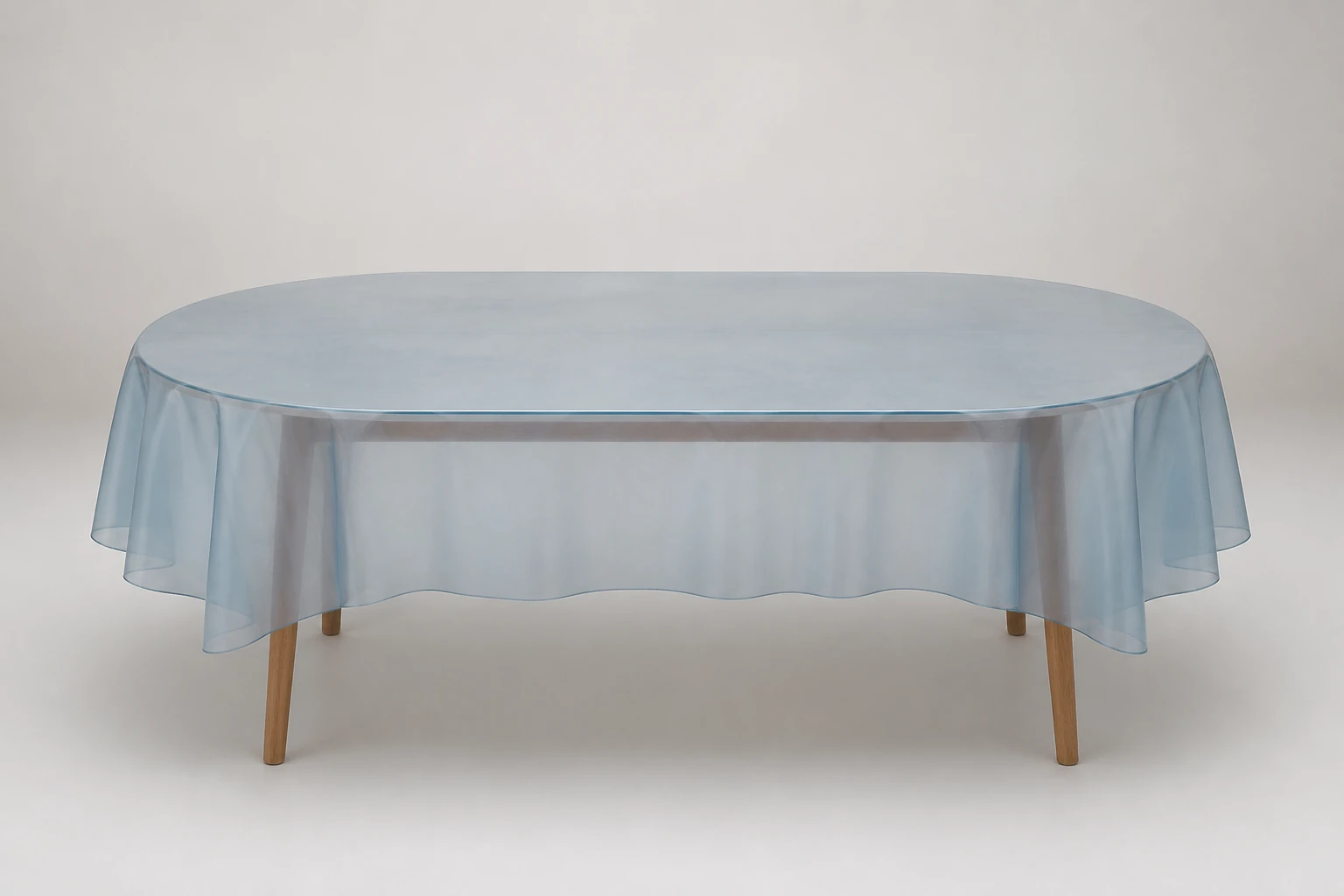
Buying-file architecture
Nine investigations that make supplier responses comparable
The workflow separates observation, declaration, physical trial, destination evidence and approval so attractive samples do not conceal unresolved assumptions.
First hierarchy check: preserve the observation context
A useful buyer note identifies sample, condition, table, timing, pack state and viewing setup before proposing a cause.
Child control: separate what was seen from what is inferred
Supplier statements and buyer observations enter distinct evidence lanes until a defined review joins them.
Importer review 01
Classify the quotation before comparing prices
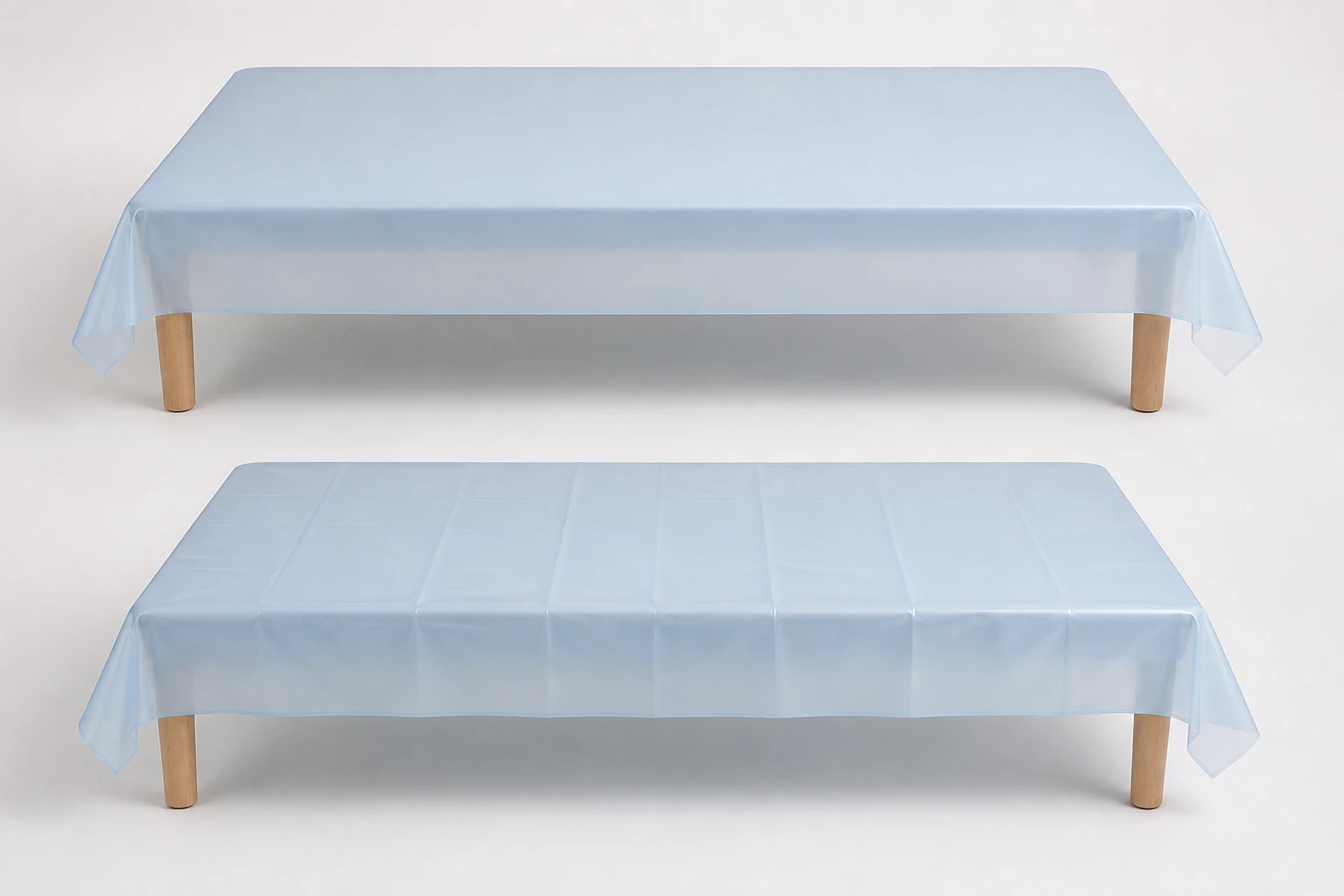
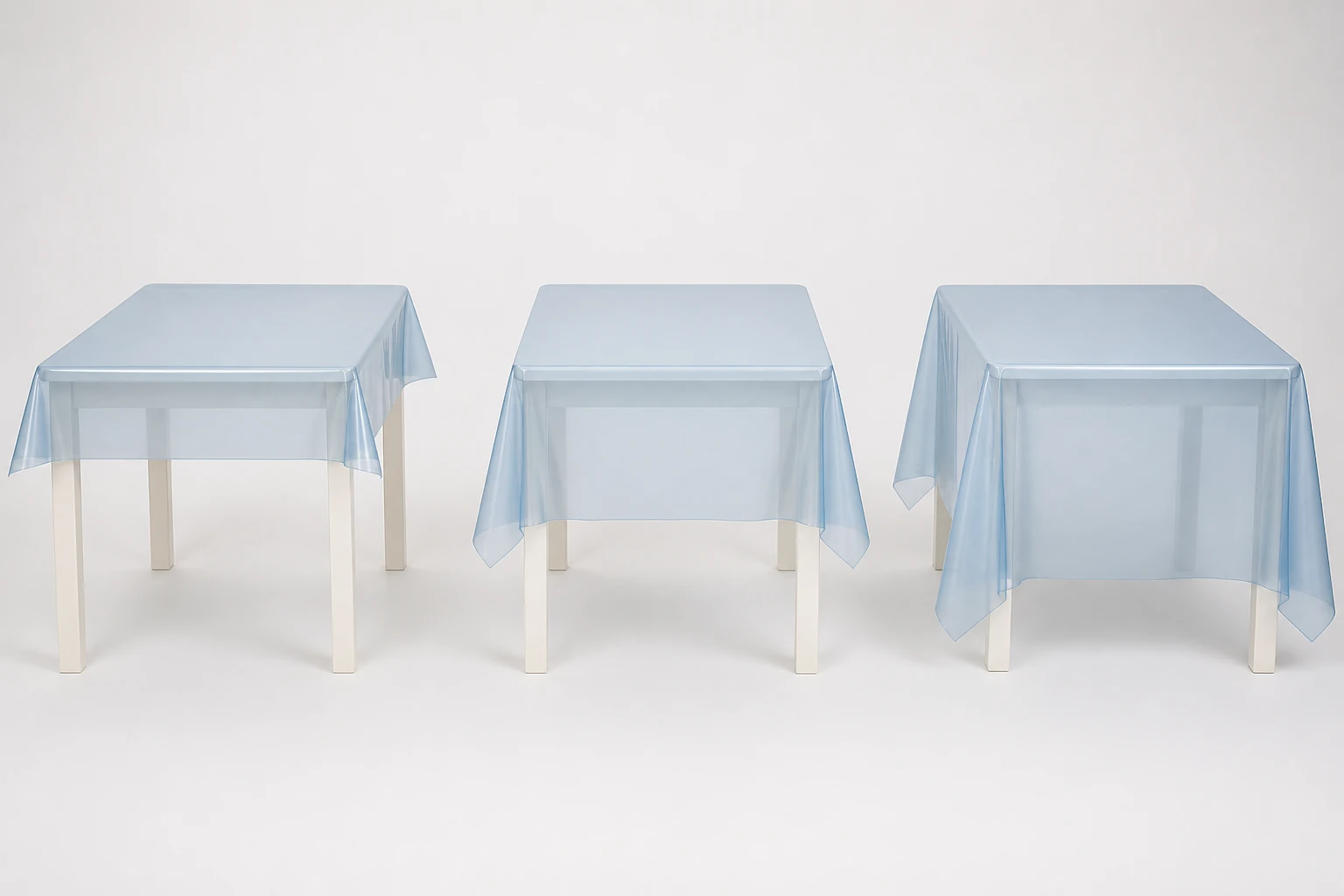
Begin by deciding whether each offer describes the same physical article, delivery format and sales programme.
Buyer investigation 01
Normalize roll and cut-piece offers
Convert each quotation into usable width, net length or finished-piece count while preserving core, splice and trim assumptions. A low roll price may hide different yield.
Buyer investigation 02
Separate loose covers from fitted products
Do not place elastic-edged, backed, rigid or free-drape constructions in one price column. Their conversion work and table interaction answer different requirements.
Buyer investigation 03
Record every supplier assumption
Mark proposed values, buyer requirements and unresolved questions with distinct statuses. This prevents an attractive sample from silently becoming the specification.
Importer review 02
Investigate polymer labels without guessing composition
EVA, PEVA and non-PVC trade names need supplier declarations and sample identity before they support a buying decision.
Buyer investigation 04
Ask what the quoted name represents
Request the declared film system, backing, print layer and relevant additives for the exact item. Appearance and odour are observations, not composition tests.
Buyer investigation 05
Keep claims in separate evidence lanes
Treat polymer identity, restricted substances, food contact, recyclability and performance as independent questions. One favourable report cannot answer all five scopes.
Buyer investigation 06
Define change notification early
Require advance notice when resin source, formulation, colour, gauge, print system or package changes. State which sample or document must be refreshed after each change.
Importer review 03
Measure fit, overhang and edge recovery on a table
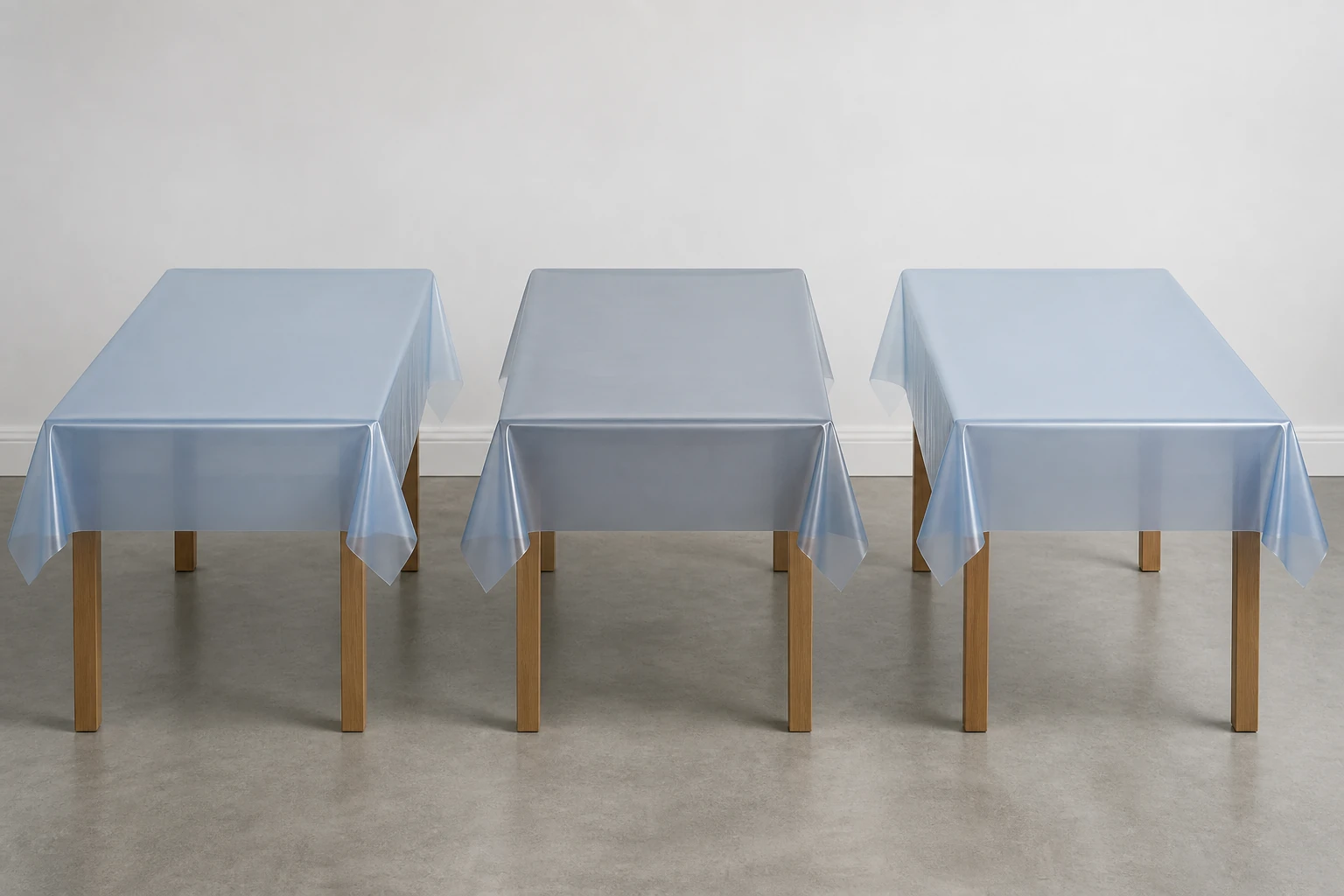
Flat dimensions become useful only after they are connected to the actual tabletop and opening condition.
Buyer investigation 07
Use a dimensioned tabletop record
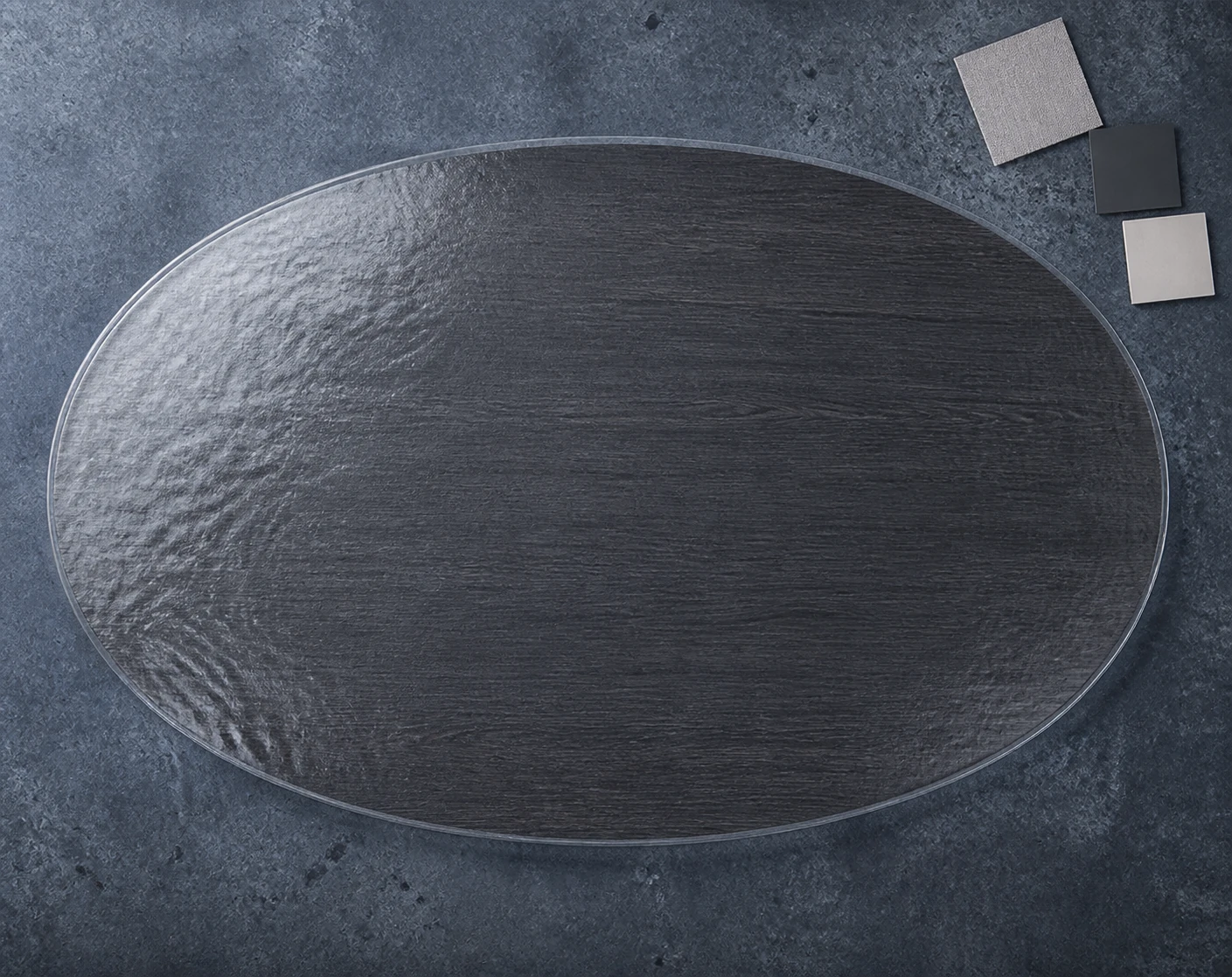
Capture length, width, diameter, corner radius and desired drop before ordering samples. Photographs should include scale and viewpoint identity.
Buyer investigation 08
Observe corners from fixed positions
Place the conditioned cover on the representative table and compare corner folds, edge waves and symmetry. Keep the setup unchanged across suppliers.
Buyer investigation 09
Recheck after folding or rolling
Measure the sample again following the proposed pack and recovery period. Persistent curl or crease behaviour belongs in the buying file, not an informal email.
Select the Table-Cover Architecture before Evidence Review
| Object | Geometry | Material and drape | Edge or anti-slip focus | Cleaning and heat boundary | Evidence gate |
|---|---|---|---|---|---|
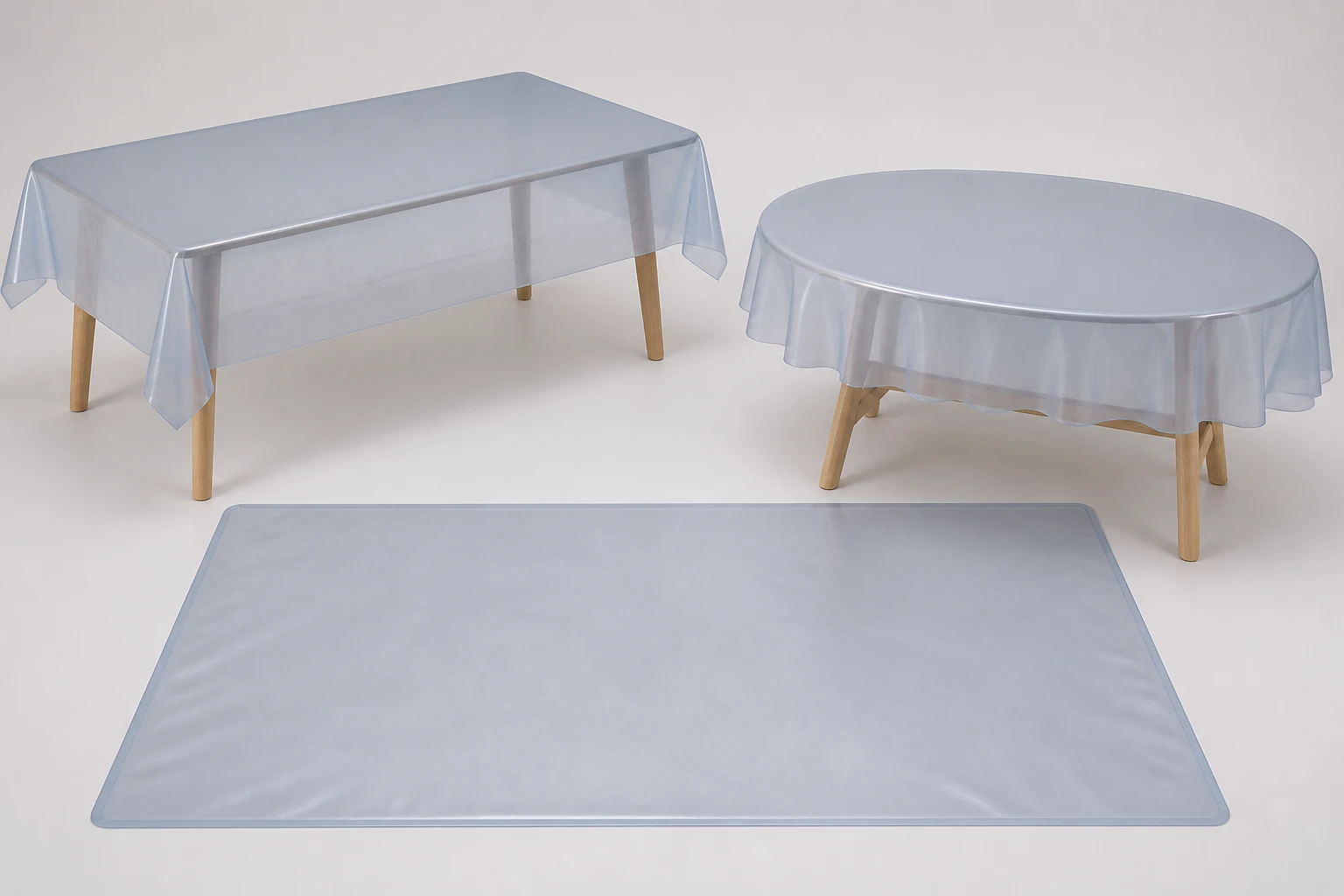
| Tablecloth | Top dimensions, drop and corner route | Declared material, surface and drape reference | Cut or finished perimeter | Project-specific cleaning and service condition | Dimensioned complete sample and pack recovery |
| Fitted table cover | Top, side depth and represented table fit | Flex and shape retention around corners | Corner retention and table interface | Accepted care route on the complete construction | Trial on the represented table geometry |
| Table mat | Individual flat outline and usable area | Surface, thickness method and lay-flat behavior | Edge finish and movement observation | No heat or cleaning claim beyond accepted evidence | Complete mat, surface and pack observation |
Importer review 04
Compare colour and surface using controlled viewing
Transparent film, printed motifs and textured faces can appear different when lighting or backgrounds change.
Buyer investigation 10
Choose a physical viewing standard
Set the light source, background, distance and approved swatch before judging tint or transparency. Screenshots remain communication aids rather than production masters.
Buyer investigation 11
Mark the consumer-facing surface
Identify which side is smooth, embossed, printed or protected, then ensure winding and folding preserve that orientation through packing.
Buyer investigation 12
Create a defect grading board
Collect agreed examples for scratches, gels, specks, pressure marks and print faults. Link each limit to inspection distance and occurrence frequency.
Importer review 05
Examine shade and print variation by lot
A signed sample controls one appearance; repeat orders require lot-aware comparison and change records.

Buyer investigation 13
Sample across roll positions
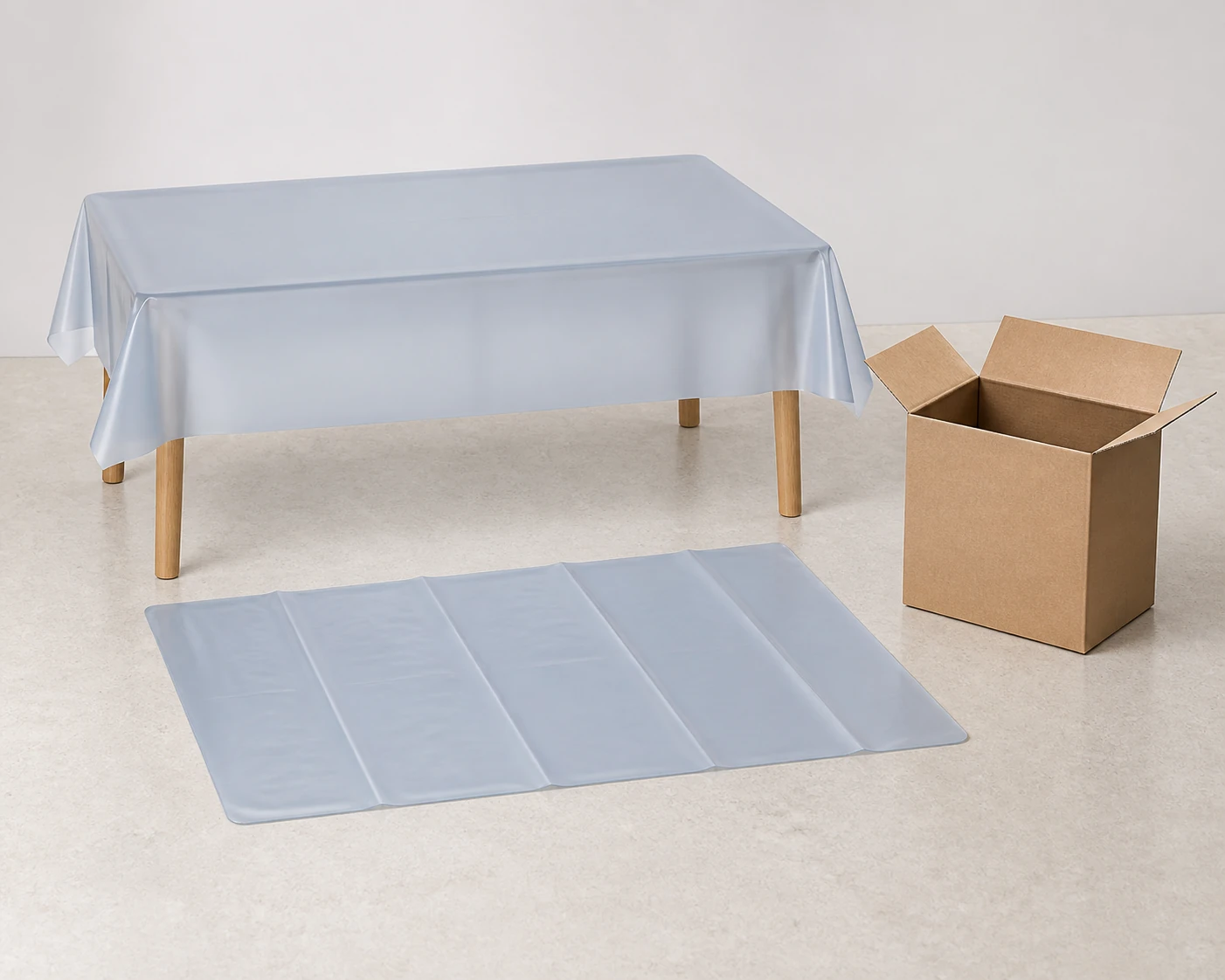
Compare beginning, middle and end material from selected rolls so shade drift and print consistency are visible. Preserve roll numbers with every observation.
Buyer investigation 14
Check repeat alignment after cutting
Lay out complete finished pieces and note motif orientation, repeat joins and edge placement. A good flat strike-off may still convert poorly.
Buyer investigation 15
Approve substitutions through evidence
If ink, pigment or base film changes, request a new strike-off plus finished sample. A supplier assurance should not bypass the affected approval gate.
Importer review 06
Evaluate cleaning and contact boundaries cautiously
Buyer trials should recreate intended use while keeping unsupported safety or durability conclusions out of the record.
Buyer investigation 16
Write the intended cleaning procedure
Name the cleaner, dilution, wiping material, contact time and frequency. Inspect haze, transfer, tack and print damage under those limited conditions.
Buyer investigation 17
Document food-contact intent explicitly
State whether food is expected to touch the cover and under what temperature and duration. Seek destination-specific professional review when direct contact is planned.
Buyer investigation 18
Test the representative tabletop interface
Observe sliding, trapped moisture and marking on the buyer’s actual finish. Results from glass do not automatically transfer to varnished wood or painted surfaces.
Importer review 07
Audit conversion and packed condition before release
The finished article can fail even when incoming film appears acceptable, so inspection must follow the conversion path.
Buyer investigation 19
Trace film through cutting and edging
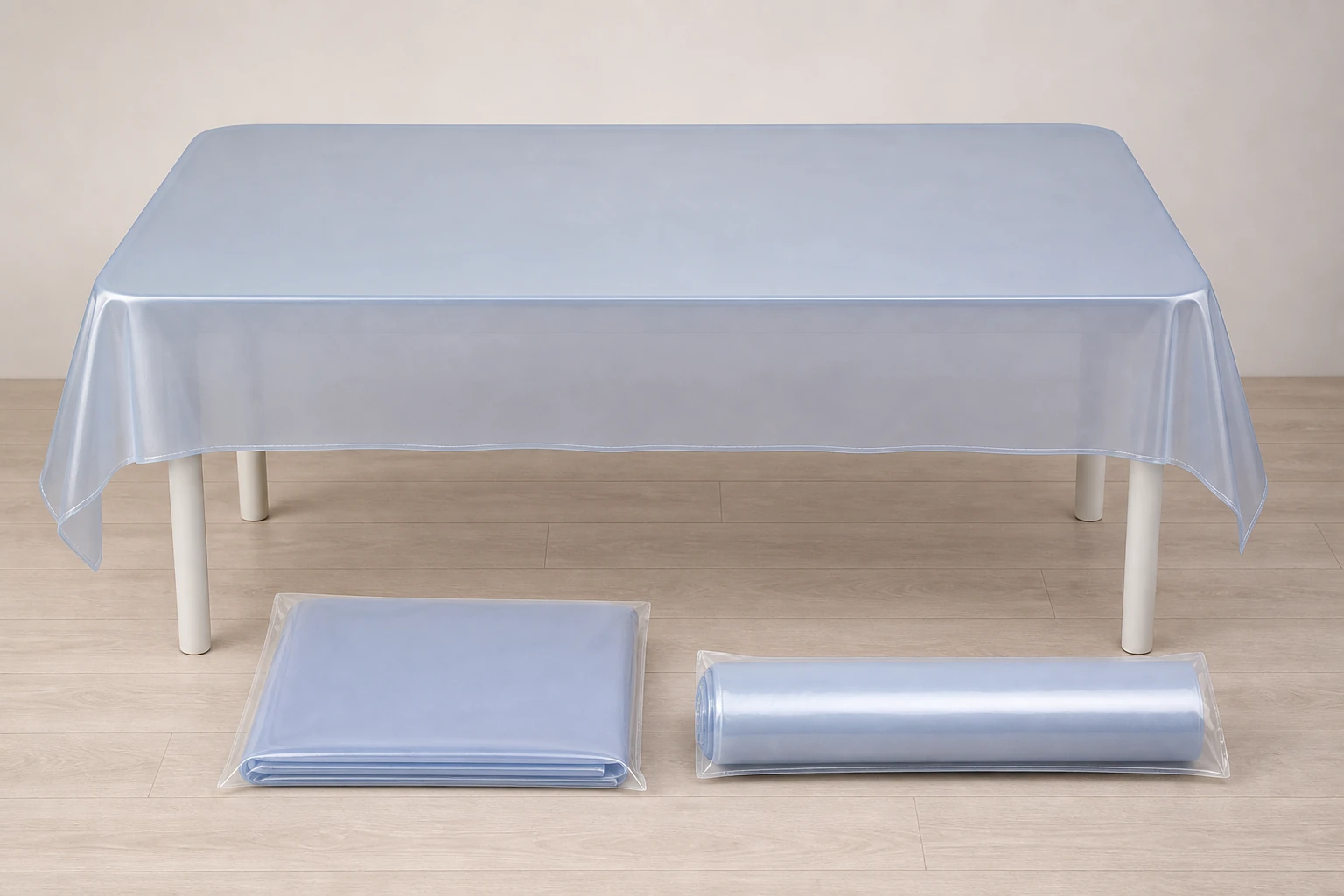
Connect roll identity to finished dimensions, outline and edge treatment. Record rejected pieces separately so replacement quantities remain auditable.
Buyer investigation 20
Challenge carton pressure and warm storage
Condition the agreed packed configuration, then inspect blocking, creases, odour and surface transfer after opening. Report the actual exposure and recovery time.
Buyer investigation 21
Verify assortment and consumer presentation
Count colours, sizes, inserts and units against the approved SKU matrix. Photograph the sealed retail pack and opened article as different approval objects.
Importer review 08
Build a claim-to-evidence matrix for the destination
Every intended statement needs its own represented article, scope, method, date and decision owner.
Buyer investigation 22
Map composition statements to material evidence
Connect polymer and restricted-substance language to the exact formulation and covered components. Do not extend a film report to printing, trim or backing without scope.
Buyer investigation 23
Map contact statements to use conditions
For food-contact intent, identify food type, temperature, duration and destination framework. A generic certificate lacking those conditions leaves the buying question open.
Buyer investigation 24
Schedule document and sample refreshes
Review evidence when the item, source, formulation, process, claim, market or legal requirement changes. Preserve superseded records without presenting them as current approval.
Importer review 09
Close the buying file with controlled approvals
Release should show exactly which requirements, proposals, samples and documents support the purchase order.
Buyer investigation 25
Reconcile the final deviation list
Resolve every supplier alternative in writing and transfer accepted values into the master specification. Open cells remain visible rather than being filled by assumption.
Buyer investigation 26
Sign distinct approval objects
Identify the retained film swatch, complete cover, print strike-off and packed sample separately. Each object closes only the decisions it represents.
Buyer investigation 27
Freeze revision and repeat-order triggers
Issue one release index for specifications, artwork, labels and evidence. Future orders compare against that baseline and reopen controls when declared changes occur.
Table-cover questions
Frequently asked questions for supplier due diligence
How can buyers compare table-cover quotations fairly?
Normalize the physical article, material declaration, usable dimensions, packing, quantity, development charges, evidence tasks and declared deviations before comparing unit price.
Why keep several retained samples?
A film swatch, print strike-off, complete cover and packed article represent different decisions; each should carry its own approval code.
What should a buyer record during a table trial?
Record table dimensions and finish, sample code, conditioning, overhang, corners, sliding, appearance, photographs and the time of each observation.
When is a food-contact review necessary?
Seek destination-specific qualified review whenever the finished article is intended or foreseeably expected to contact food under defined conditions.
How should repeat orders be controlled?
Compare the new supplier declarations, lot samples, finished measurements, print, pack and change notices against the frozen release revision.
Controlled next step
Apply the investigation to a live supplier file
Send the competing product descriptions, current samples, observed differences, destination and decision deadline. The comparison can be reorganized without treating incomplete evidence as approval.