
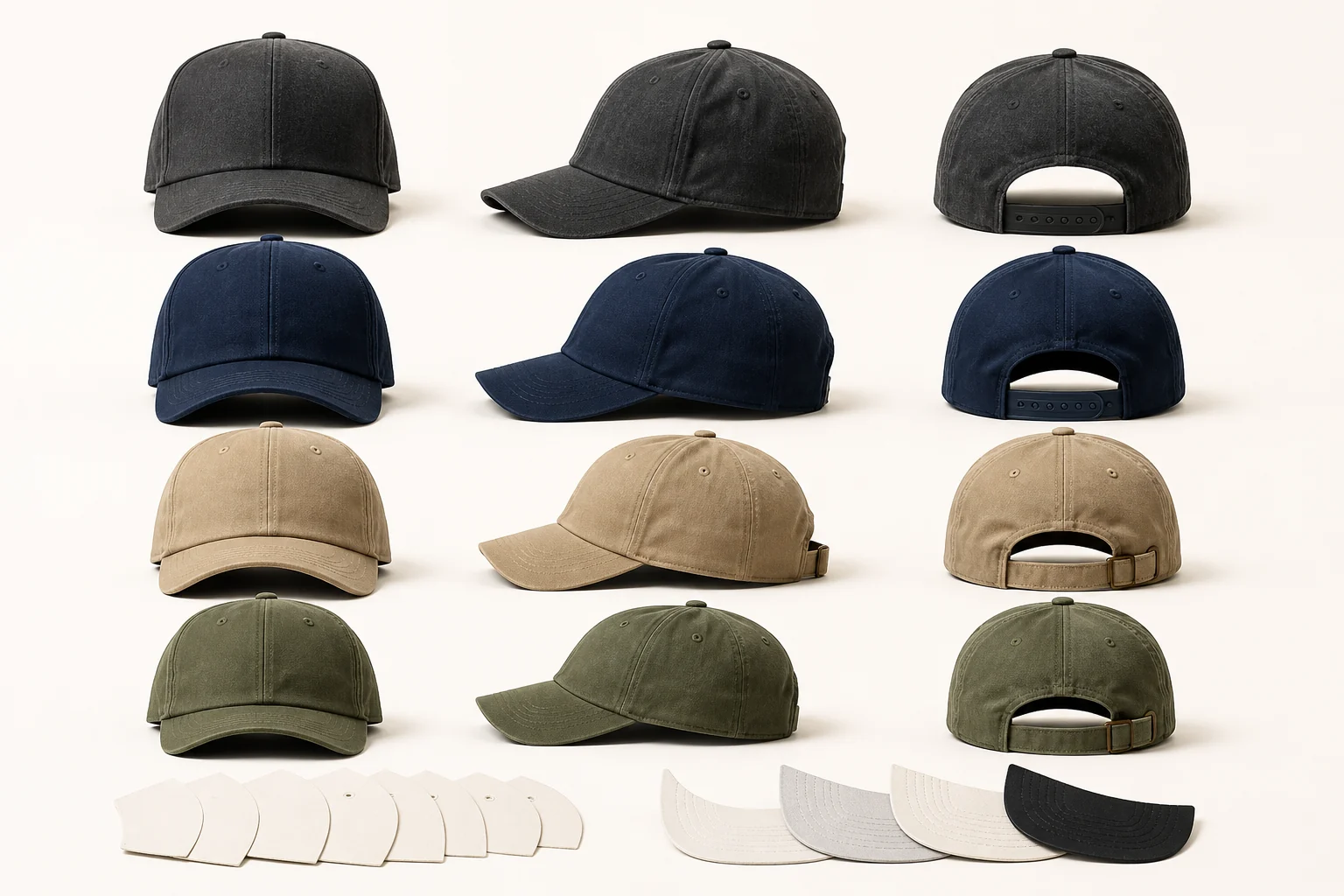
BUYING GUIDE / CROWN, PANELS AND VISOR CONSTRUCTION
How to Specify Baseball-Cap Crown, Panel and Visor Construction
Published by EverBen
A baseball-cap style name does not define its silhouette. Buyers need a controlled relationship between wearer and channel, crown block, panel geometry, front support, visor insert, closure, decoration and packed recovery.
This guide compares five-panel and six-panel routes without turning panel count into a quality ranking. It shows how to preserve complete-cap views, measure stable landmarks and approve one construction revision before bulk sewing.
01 / program boundary
Define the merchandise job, wearer and silhouette before selecting panels
Team uniform, promotional giveaway, staff cap and retail collection can require different crown stability, fit, decoration, handling and repeat-order control. Start with that job rather than copying a thumbnail.
- 01Define merchandise job
- 02Choose wearer and fit route
- 03Approve complete silhouette
- 04Freeze the program boundary
01
Name the cap’s job
Record channel, wearer, wearing frequency, climate, cleaning assumptions and decoration priority. Keep preference language separate from any protection or performance claim requiring evidence.
02
Choose a silhouette family
Describe low, mid or high profile, structured or soft front, crown lean and rear treatment through complete views. Avoid treating a style nickname as a pattern specification.
03
Set commercial boundaries
List copied brand features, undeclared substitutions and unsupported claims that are excluded. Require alternatives to be identified and priced as distinct construction routes.
02 / crown profile
Approve crown height, lean and volume from complete views and stable landmarks
A crown changes when compressed, supported or worn. Compare complete caps in a declared state and attach front, side, rear and top views to the same measurable sample and block revision.
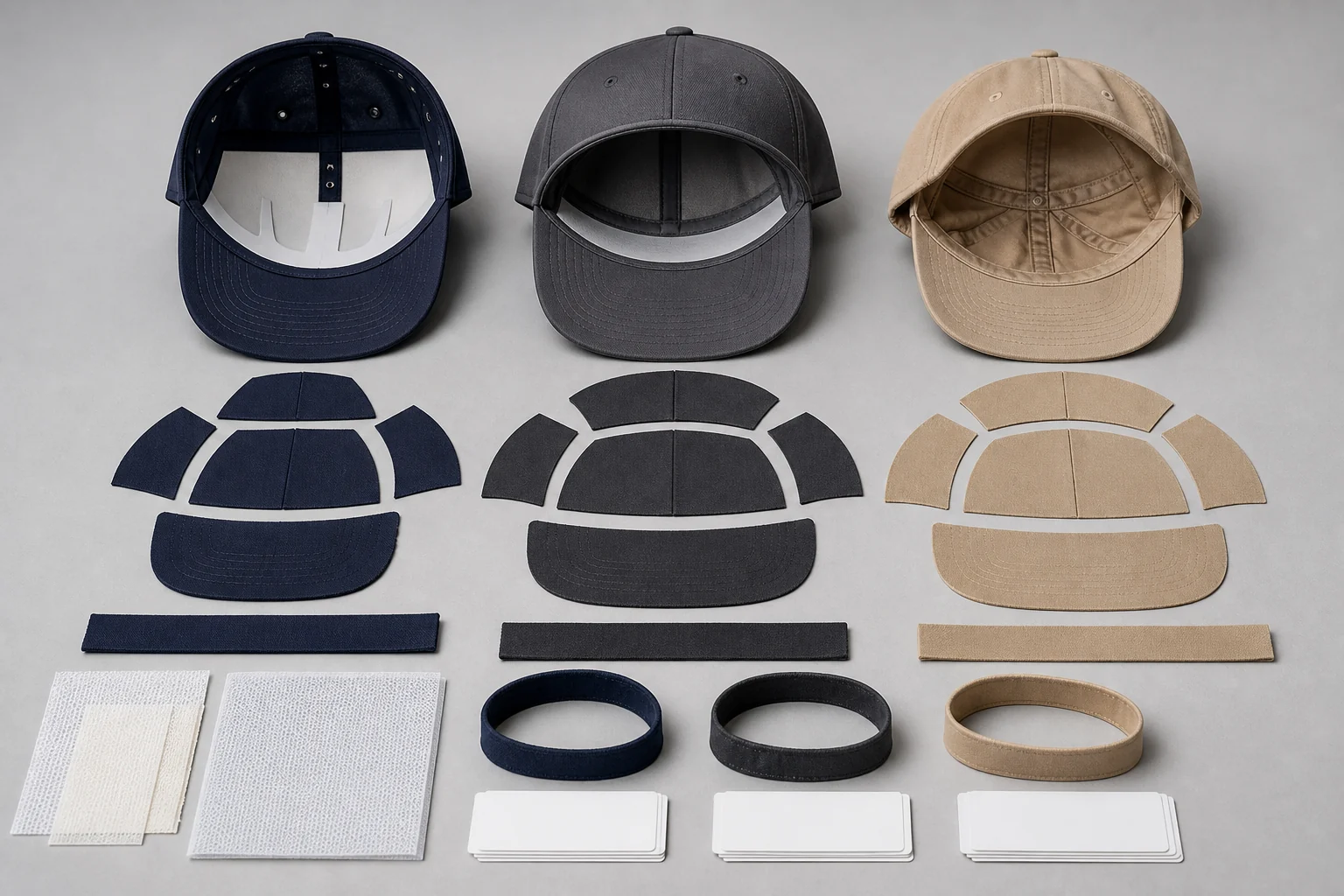
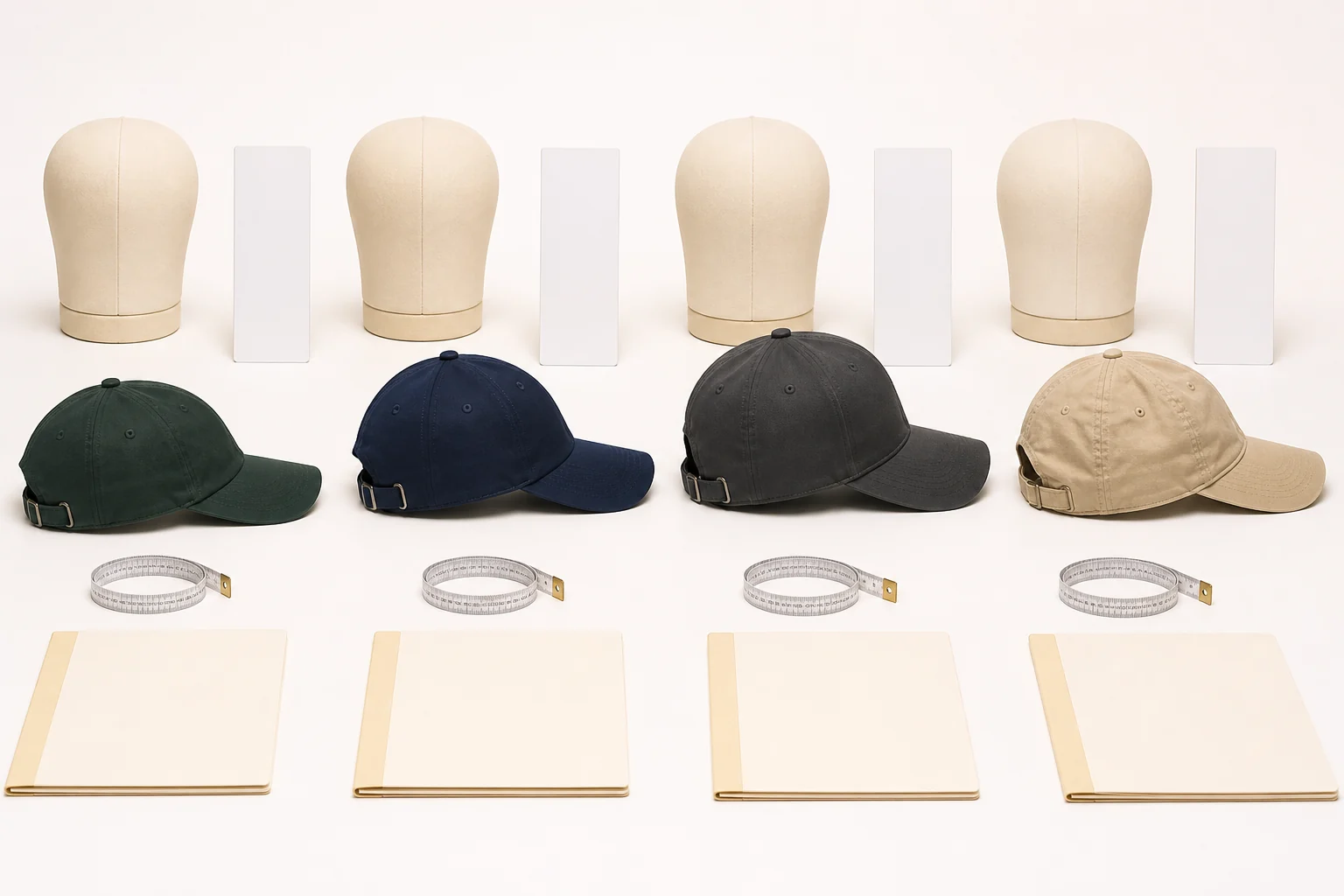
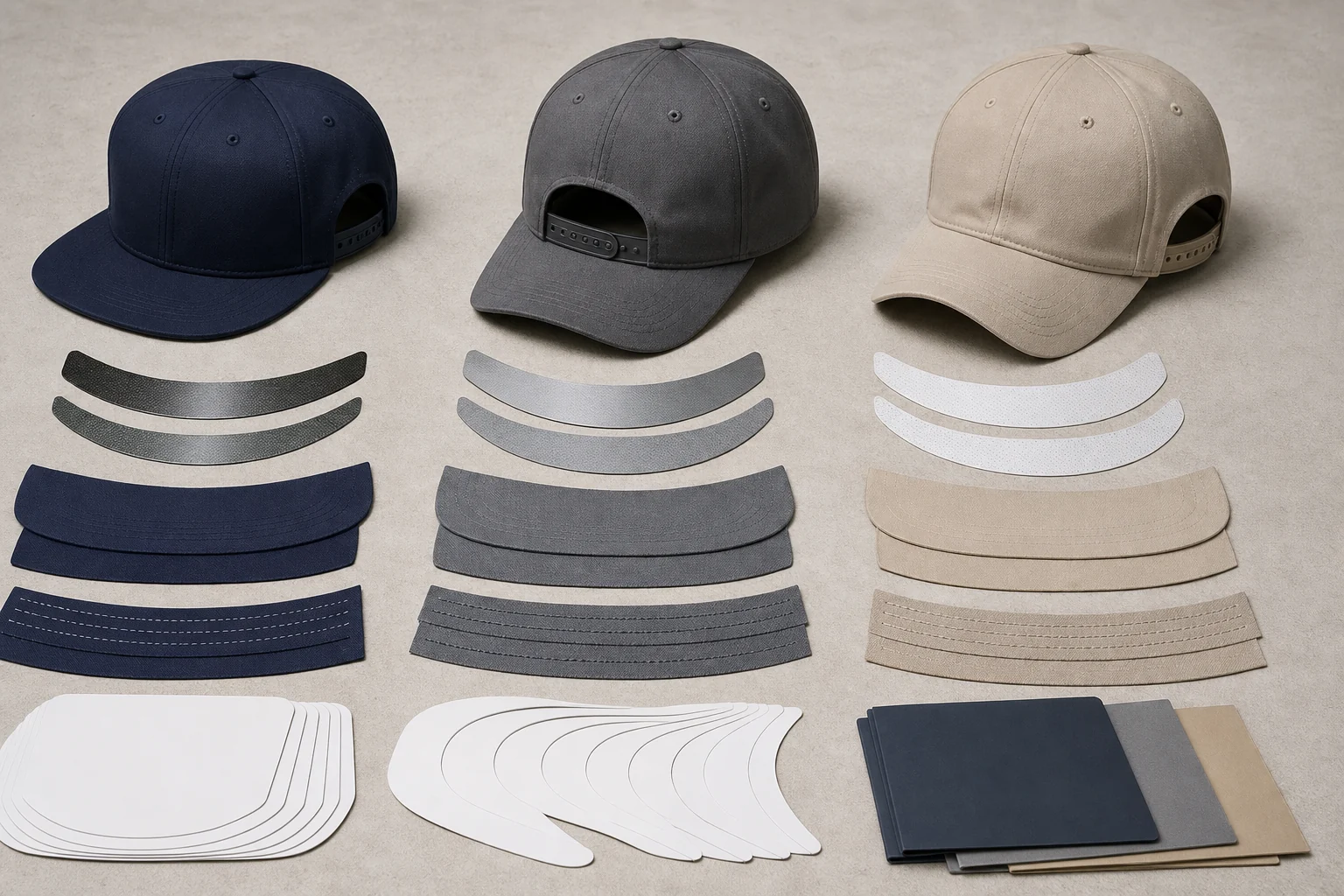
Work backward from the delivered cap silhouette
Resolve the style phrase to channel, wearer, complete views, crown block, panel pattern, support, visor, closure, fit, decoration, packed reference and approval owner.
Keep pattern and finished-cap approval distinct
A pattern cannot prove sewn balance, visor set, decoration response or packed recovery, and a panel-count label cannot transfer approval between different blocks.
01
Fix measurement landmarks
Define the sweatband edge, front seam, top button and rear opening used for height and circumference observations. Record whether the cap is free-standing, supported or conditioned.
02
Read the complete silhouette
Compare front height, side-wall fall, rear balance and top-button position together. A single three-quarter image can hide twist, unequal tension or rear collapse.
03
Control the crown block
Archive the governing crown pattern under a dated code beside the authorized physical cap. Any change to panel shape, seam allowance or support returns the complete silhouette to review.
03 / panel architecture
Choose five-panel or six-panel architecture by seam path and front-field consequence
Panel count affects shaping and where seams cross the decoration field, but it is not a universal grade. Compare pattern pieces, support and complete-cap form as one architecture.
- 01Compare pattern-piece routes
- 02Map seams across artwork
- 03Sew complete trial caps
- 04Approve one panel revision
01
Map every panel
Identify front, side and rear pieces, grain direction, seam allowances and top-button convergence. Retain the complete pattern set rather than a generic five-panel or six-panel label.
02
Protect the decoration field
Overlay artwork on actual seam and curvature landmarks. A broad front panel can reduce seam interruption, while a six-panel crown may suit a different shape; approve the exact artwork-to-crown route.
03
Check seam balance
Follow seams from the top button to sweatband on complete caps. Record twisting, puckering and unequal pull without assuming that panel count alone caused the symptom.
04 / front support
Control structured and unstructured fronts as complete layer systems
Support material, coverage, bonding or sewing and fabric hand interact. Specify the exact front-layer route and assess it before and after decoration rather than asking for a stiffer cap.
| Decision row | Required relationship | Gap indicator |
|---|---|---|
| Silhouette | Complete views resolve to block, panel and support revision | Style nickname only |
| Support | Material, coverage, placement and attachment are identified | Generic stiff-front request |
| Decoration | Artwork, backing and hooping resolve to finished crown | Blank cap used as decorated approval |
| Handling | Pack, dwell and recovery state are recorded | Hand-shaped presentation only |
| Continuity | Pattern, material and change controls preserve validity | Silent support or fabric substitution |
01
Declare support materials
Identify buckram or alternative support, weight or construction reference, coverage and placement. Keep physical swatches and an internal complete-cap view in the approval file.
02
Check edge transitions
Inspect where support ends near seams, sweatband and crown sides. Abrupt transitions can create ridges or unequal collapse that exterior merchandising photos conceal.
03
Trial decoration interaction
Review stitch or patch route, backing, hooping and finished crown form on the exact supported construction. A blank cap approval does not automatically approve decorated shape.
05 / visor construction
Engineer visor outline, insert, curve and stitch rows as one component
The visor determines more than appearance. Its pattern, insert and attachment influence projection, edge level, curve, handling and packed recovery, so complete geometry belongs in the specification.
- 01Freeze visor template
- 02Approve insert and layers
- 03Sew and shape complete cap
- 04Verify curve after packing
01
Dimension the outline
Fix width, centre projection, side projection and crown attachment landmarks. Keep the complete visor visible from overhead and side views with the governing template.
02
Approve insert and cover
Identify insert material, thickness or stiffness reference, fabric layers and grain direction. A similar curve made with a different insert can behave differently during handling.
03
Control curve and stitching
Define delivered curve, stitch-row number and spacing, centreline and acceptable edge level. Record the rest or recovery condition before judging a questioned sample.
06 / fit system
Verify internal opening, sweatband and closure travel together
Crown architecture must still fit the intended wearer. Measure the complete internal route at named closure settings and review rear opening, sweatband, seam bulk and crown depth as one system.
01
Define size context
State target head-size range, wearing allowance and whether the cap is adjustable or sized. Do not use one-size language as a substitute for measurable opening and trial evidence.
02
Measure closure travel
Record snap, strap, buckle or hook-and-loop settings with internal circumference and rear-opening geometry. Keep component identity and setting visible in photographs.
03
Trial complete fit
Review pressure, stability, depth, visor position and closure comfort on the exact cap route. Separate wearer preference from measurable construction departures.
07 / release evidence
Connect crown and visor approval to decoration, production and packing evidence
A cap can leave the approved silhouette through fabric, sewing, decoration, pressing or nesting changes. Use an evidence register that identifies the represented object and reapproval trigger.
| Entity | Required attributes | Decision value | Review state |
|---|---|---|---|
| Program | Channel, wearer, silhouette, fit and claim boundary | Defines the represented merchandise route | Clear / open |
| Crown | Block, panels, seams, support, fabric and complete views | Defines the controlled crown construction | Matched / unmatched |
| Visor | Template, insert, cover, stitch rows, curve and attachment | Defines the controlled brim component | Approved / conditional |
| Finished cap | Closure, sweatband, decoration, lot, labels and pack | Bounds the delivered-product approval | Approved / conditional |
| Continuity | Pattern, component, process, revision and reapproval controls | Preserves the accepted relationship | Active / reapproval due |
01
Retain physical references
Keep sealed blank and decorated caps, pattern revision, support, visor insert, fabric, closure, sweatband and color standards under one SKU revision.
02
Inspect complete production caps
Check crown views, seam paths, visor centreline, internal opening, closure, decoration and labels by lot. Component checks cannot replace the complete-cap relationship.
03
Validate pack recovery
Record nesting direction, caps per stack, crown support, carton and dwell condition. Photograph immediate and timed recovery without hand reshaping before release.
08 / commercial continuity
Carry panel, crown and visor controls into quotation and reorder
A useful RFQ makes proposed routes and open decisions visible. Preserve the approved construction in purchase, inspection and change records so a later cap with the same style name is not assumed equivalent.
- 01Issue controlled cap RFQ
- 02Review complete samples
- 03Freeze one production revision
- 04Reapprove affected changes
01
Issue a construction matrix
List channel, crown profile, panel pattern, support, visor, fabric, closure, fit, decoration, labels, packing, quantity and destination. Require each field to be answered or marked open.
02
Price alternatives separately
Separate panel, support, insert, closure, decoration and packing options. Evaluate savings together with sample, tooling and reapproval consequences.
03
Control every change
Require written notice for pattern, material, component, decoration, process, site or pack changes. Reorders remain on the approved route only while the controlled relationship is preserved.
Limits of cap-style shorthand
Style names and panel counts can organize cap choices, but they do not qualify an EverBen cap or publish a universal best crown architecture. A purchasing conclusion depends on the exact wearer, crown block, panel pattern, support, fabric, visor, closure, fit, decoration, finished sample, pack, destination, acceptance owner and buyer-approved wording.
Route-specific FAQ
Checks before crown, panel and visor construction approval
Is a six-panel cap always better than a five-panel cap?
No. Panel count changes seam paths, front field and shaping options, but suitability depends on the intended silhouette, fabric, support, decoration and approved construction.
What defines crown profile?
Use complete front, side, rear and top views plus stable measurements such as crown height and internal opening. Record the sample state and block revision so results remain comparable.
When should a structured front be selected?
Choose support after defining crown shape, decoration and handling. Buckram or another support can change hand and embroidery behavior, so approve the exact layer and placement in the finished cap.
How is visor curve specified?
Define complete visor width, projection, centreline, edge geometry, insert, stitch rows and the sample state. A phrase such as curved brim is not a repeatable production instruction.
Can a flat visor be curved after delivery?
Handling can change some inserts, but the commercial route should state the intended delivered curve and recovery requirement. Do not rely on users to correct an uncontrolled visor.
Does one-size-fits-most prove fit?
No. Define internal opening, closure travel, sweatband route and target head-size context. Test the exact closure and complete cap at named settings.
What cap changes require reapproval?
Reapprove affected lanes after crown block, panel shape, seam allowance, support, fabric, visor insert, stitch, closure, sweatband, decoration or packing changes.
What belongs in a baseball-cap RFQ?
Include use and channel, crown views, panel route, support, visor geometry, fabric, closure, fit range, decoration, color, labels, packing, quantity, destination and release evidence.
Construction decision
Turn a cap reference image into a controlled crown and visor brief
Send the merchandise job, target crown profile, panel route, front support, complete visor dimensions, insert and curve, closure, fit range, fabric, decoration, pack, quantity and destination. EverBen can map those inputs to measurable samples and release records.