
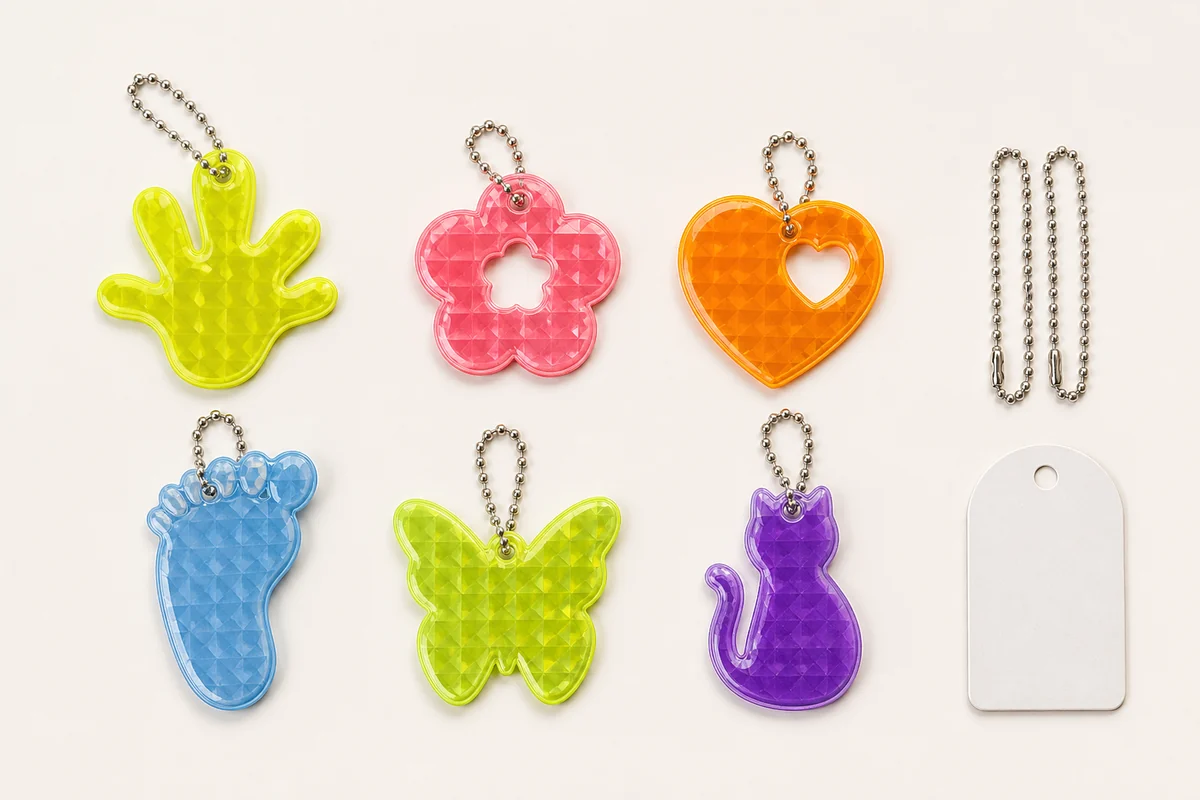
BUYING GUIDE / REFLECTIVE KEYCHAINS, ARM BANDS & PATCHES
How to Choose Reflective Keychains, Arm Bands and Patches by Application
Published by EverBen
A reflective accessory is useful only when its product role, location, viewing angle, attachment and claim are defined. A bright tag, arm band or patch must not be promoted as certified protective equipment merely because it returns light in a photograph.
This guide separates hanging tags, adjustable bands, snap wraps, sew-on patches and adhesive patches. It gives B2B buyers a route for controlling materials, attachment, substrate compatibility, dimensions, artwork, aging evidence, inspection and packed presentation.
01 / role and context
Define what the accessory is expected to do and where it will be seen
Start with audience, object, location, lighting, observer, motion and claim. Separate promotional identification, supplemental visibility and buyer-defined warning uses instead of applying one safety label to every reflective item.
- 01Define accessory role
- 02Map observer and light
- 03Identify object or wearer
- 04Freeze claim boundary
01
Name the product role
Record whether the item supports identification, decoration, supplemental conspicuity, event distribution, bag marking or another buyer-defined purpose. State exclusions such as PPE, rescue and traffic-control claims.
02
Map observer geometry
Describe approach direction, viewing distance category, light source, expected movement, obstruction, orientation and competing background. Avoid promising visibility from every direction or under all conditions.
03
Identify the user and object
State whether the accessory attaches to a bag, zipper, bicycle bag, sleeve, arm, ankle, equipment case or another substrate. Record age, misuse, snag and detachment questions for buyer review.
02 / product family
Choose tag, adjustable band, slap wrap or patch by attachment behavior
The correct format depends on how the object moves, how long it stays attached, how the user handles it and whether the substrate may be pierced, compressed, bonded or wrapped.

Work backward from the attached, decorated and packed accessory
Resolve role, observer, location, product family, reflective face, carrier, dimensions, attachment, substrate, artwork, evidence, inspection and packed unit before approving a shape or color.
Keep raw material, attachment component, finished accessory and application evidence separate
A reflective sheet cannot prove ring retention; a loose strap cannot prove fit; and a blank patch cannot prove bonding, sewing, artwork, substrate compatibility or packed presentation.
01
Use hanging tags deliberately
Define tag shape, overall dimensions, hole reinforcement, split ring, chain, swivel clip or snap hook, attachment opening and swing allowance. Review detachment and snag risks on the intended object.
02
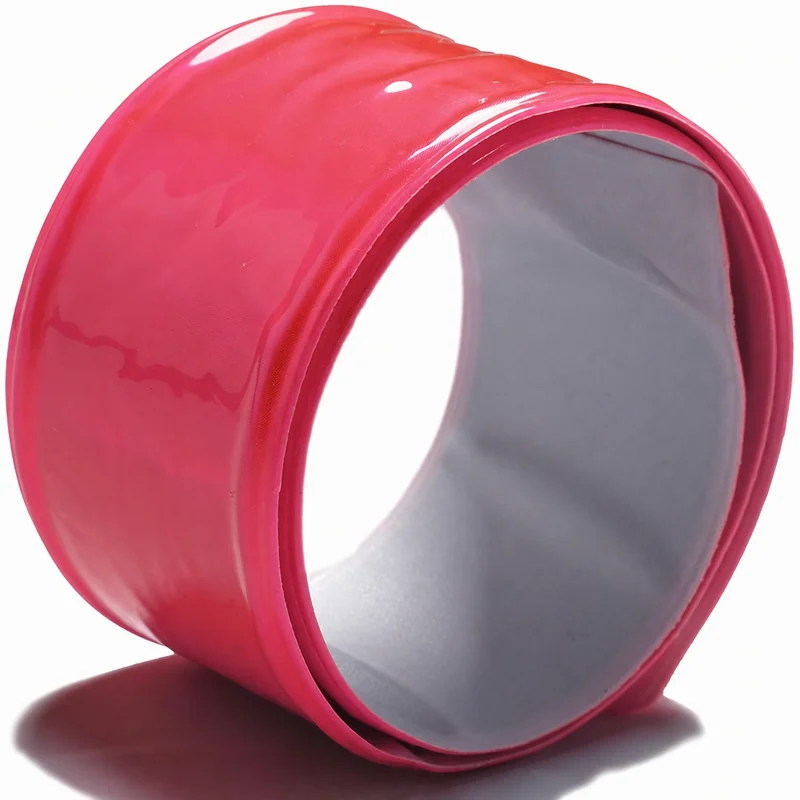
Define wearable bands
Control strap length, width, elastic or non-elastic carrier, closure type, adjustment range, edge finish and intended layer. Do not claim universal adult, child, arm or ankle fit.
03
Separate wrap and patch routes
Snap wraps need controlled spring core enclosure and compatible wrap diameter. Sew-on, adhesive and heat-applied patches need distinct substrate, edge, bonding and removal decisions.
03 / material system
Control reflective face, carrier, hardware, closure and backing separately
A complete accessory may combine reflective film or textile, fluorescent carrier, foam, webbing, elastic, spring core, metal ring, plastic clip, hook-and-loop, thread and adhesive. Each component needs a declared identity and approved relationship.
- 01Freeze component identities
- 02Build one complete sample
- 03Inspect interfaces and edges
- 04Bind evidence to revision
01
Identify the reflective face
Record supplier-declared material family, color, finish, backing, product code and lot. Keep camera appearance separate from any method-based evidence and do not infer construction from sparkle.
02
Identify carrier and edges
Control coated film, fabric, webbing, elastic, foam, binding, welding, stitching or molded edge. Review cut edges, corners, stiffness, hand and surface condition on finished samples.
03
Identify attachment components
Record ring, chain, clip, buckle, hook-and-loop, spring core, adhesive or release liner details. Link component supplier and assembly route to the complete accessory revision.
04 / dimensions and attachment
Engineer dimensions, reflective area and attachment landmarks
Overall size alone is insufficient. Control reflective face dimensions, border, hole or seam position, strap range, overlap, hardware orientation, patch corners and artwork zone on one drawing.
| Format | Required relationship | Typical gap |
|---|---|---|
| Hanging tag | Hole, ring or clip, opening, object and swing route are defined | Tag only without hardware |
| Adjustable band | Carrier, length, closure, overlap, edge and layer are linked | Universal-fit wording |
| Slap wrap | Core, enclosure, length, width, edge and target diameter are controlled | Exposed or unidentified core |
| Sew-on patch | Patch edge, seam, substrate and back access are defined | Loose patch only |
| Bonded patch | Adhesive or transfer, substrate, preparation and conditioning are recorded | Adheres-to-anything claim |
01
Dimension the visible face
Record overall width and height, reflective face, border, radius, thickness basis and front/back construction. Keep nominal marketing size separate from measured finished-product landmarks.
02
Dimension the attachment
Locate holes, rings, clips, closures, seams, spring-core ends, backing split and release liner. Define orientation and assembly sequence with complete views.
03
Protect the usable area
Reserve artwork and attachment zones so they do not obscure the intended reflective face or weaken an edge. Review both the blank and decorated finished sample.
05 / substrate and use
Validate the accessory on the actual substrate and handling route
An accessory can behave differently on coated fabric, mesh, elastic, painted equipment, a zipper pull or a curved limb. Buyer-defined trials should represent application, removal, flexing, storage and expected exposure.
- 01Identify substrate and location
- 02Apply complete sample
- 03Run agreed handling route
- 04Record bounded observations
01
Use the target substrate
Record material, surface, coating, texture, curvature, cleanliness and preparation. Do not transfer adhesion or sewing observations from an unrelated fabric or rigid panel.
02
Run the handling sequence
Attach, adjust, wrap, flex, swing, remove and store the named sample using buyer-approved conditions. Record edge lift, rotation, loosening, snagging, discomfort or surface marking as observations.
03
Bound the represented result
Identify sample, method, duration or cycles if supplied by the buyer, conditions, observations, owner and limits. Release claims only from identified sample records and documented observations.
06 / artwork and claims
Control branding without turning an accessory into unsupported protective equipment
Promotional artwork can reduce reflective area, change flexibility or interfere with attachment. Product wording must remain inside the actual role and evidence of the final decorated item.
01
Define artwork method
Record print, transfer, emboss, label, insert or molded route; artwork dimensions; colors; position; bleed; orientation and approved file revision. Review the decorated sample under normal and illuminated views.
02
Protect construction
Check whether artwork changes welding, sewing, bonding, flex, spring action, closure or surface finish. Keep decoration off critical holes, edges and attachment interfaces unless specifically approved.
03
Authorize product wording
Use identifiers such as reflective tag or visibility accessory only to the verified level. Exclude compliant garment, PPE, accident prevention and guaranteed detection claims without a separate applicable route.
07 / release and packing
Connect inspection, assortment and packing to the delivered accessory set
The delivered product includes hardware, backing, instructions, backing card, bag, assortment and carton. Release records must represent this complete scope rather than an unassembled reflective piece.
| Object | Fields | Purpose | Status |
|---|---|---|---|
| Application | Role, user, object, location, observer and claim | Bounds use | Resolved / open |
| Components | Reflective face, carrier, hardware, closure, spring or backing | Identifies construction | Matched / unmatched |
| Finished sample | Dimensions, edges, attachment, artwork and revision | Links parts to product | Accepted / conditional |
| Application observation | Substrate, method, conditions, handling and owner | Bounds result | Current / gap |
| Packed SKU | Assortment, labels, backing card, bag, carton and comparator | Connects release to delivery | Released / hold |
01
Separate approval objects
Track raw reflective material, attachment component, blank assembled accessory, decorated sample, substrate trial and packed unit as distinct records with revision and owner.
02
Inspect critical details
Check family, dimensions, material, color, face, edge, hole, ring, clip, closure, spring enclosure, backing, artwork, count, assortment and packing against references.
03
Retain the packed comparator
Archive full front, back, edge and attachment views plus a packed reference or controlled record. Preserve component and carton relationships for repeat orders.
08 / RFQ and continuity
Carry application decisions into quotation comparison and reorders
Quotations remain comparable only when accessory family, materials, dimensions, attachment, substrate route, artwork, evidence and packing are identical. Show substitutions and reapproval consequences explicitly.
- 01Release one scoped RFQ
- 02Compare application-bound samples
- 03Lock the accepted accessory record
- 04Reopen affected lanes on change
01
Issue one accessory matrix
List role, location, product family, reflective face, carrier, dimensions, hardware, closure or backing, substrate, artwork, evidence, inspection, assortment, packing and quantity.
02
Price alternatives separately
Separate material, size, ring, clip, elastic, closure, spring, patch backing, decoration and pack options. State sample and application-review consequences beside each alternative.
03
Require change notice
No reflective material, carrier, hardware, spring, adhesive, dimensions, artwork, process, site or pack change should enter production before affected decision owners review it.
Visibility and safety-claim boundary
Reflective tags, bands, wraps and patches may support identification or supplemental conspicuity only within their defined application. Approve application wording only after the named component, finished sample, attachment route and destination requirement have matching records.
Route-specific FAQ
Checks before reflective accessory application approval
Is every reflective keychain a safety product?
No. A tag can support visibility or identification in a defined setting, but it must not be described as PPE, a compliant garment or a life-saving device without an applicable finished-product route and evidence.
When should a buyer choose a hanging tag?
Choose a tag when an unobstructed attachment point, acceptable swing, snag risk and viewing geometry fit the intended bag, zipper or equipment application. Define ring or clip construction and retention.
How is an arm band different from a slap wrap?
An adjustable arm band uses a controlled strap and closure range, while a slap wrap coils around a compatible object through its internal spring structure. They require different fit, edge, closure and misuse reviews.
Should a patch be sewn or bonded?
The decision depends on substrate, construction, exposure, appearance, reversibility and buyer-defined evidence. Adhesive or heat-applied routes need substrate and conditioning review; sewn routes need edge and seam control.
Does camera flash prove retroreflective performance?
No. Photography is only visual context. Bind material identity and any performance evidence to the exact supplier code, lot, condition, method and finished accessory revision.
Can artwork cover the reflective face?
Artwork area, method and location must be controlled. Confirm that decoration does not obscure the intended reflective area, weaken attachment or create an unsupported visibility claim.
What should inspection check?
Check product family, dimensions, material identity, edges, attachment, closure, patch backing, artwork, visible defects, assortment, labels, packing and the buyer-defined functional observations.
What changes trigger reapproval?
Reflective material, carrier, color, adhesive, spring core, elastic, ring, clip, closure, dimensions, edge finish, artwork, substrate, process, site or packing changes can reopen affected decisions.
Application decision
Convert a mixed reflective-accessory idea into an application-controlled brief
Send audience, intended object or body location, viewing setting, accessory family, dimensions, reflective and carrier materials, attachment, substrate, artwork, handling, evidence, packing, quantity, destination and claim boundary. EverBen can organize these fields into comparable sample and release decisions.