
IMPORTER BUYING GUIDE
Industrial PVC Strip Curtains Manufacturer Buying Guide
Use this field-to-RFQ investigation to compare installed geometry, traffic effort, cold behavior, hardware scope and packed condition.
Investigate the installed doorway before changing material or accepting a price. Each observation is tied to its lane, strip, hardware position, climate side and traffic event.
- Site evidence precedes material diagnosis
- Small-bay and complete-doorway trials stay distinct
- Repeat orders inherit exact drawing and sample references
Field investigation route
Trace a strip-curtain question from site observation to buyer decision
Nine investigations preserve what was measured, viewed or trialled before suppliers are compared. The sequence separates doorway geometry, hanging layout, material condition, passage behavior, hardware scope and packed continuity.
Start at the affected strip lane
Record its location, sample identity, installation history, temperature, moving object and visible effect before discussing cause, correction or a replacement specification.
Compare departures against the same doorway file
A loose roll, small hanging bay and complete installation answer different questions. Keep each result within its declared specimen and condition while the buyer owns the final acceptance rule.
Importer guide 01
Audit the doorway before requesting prices
A buyer can remove most quotation ambiguity with one measured opening record.

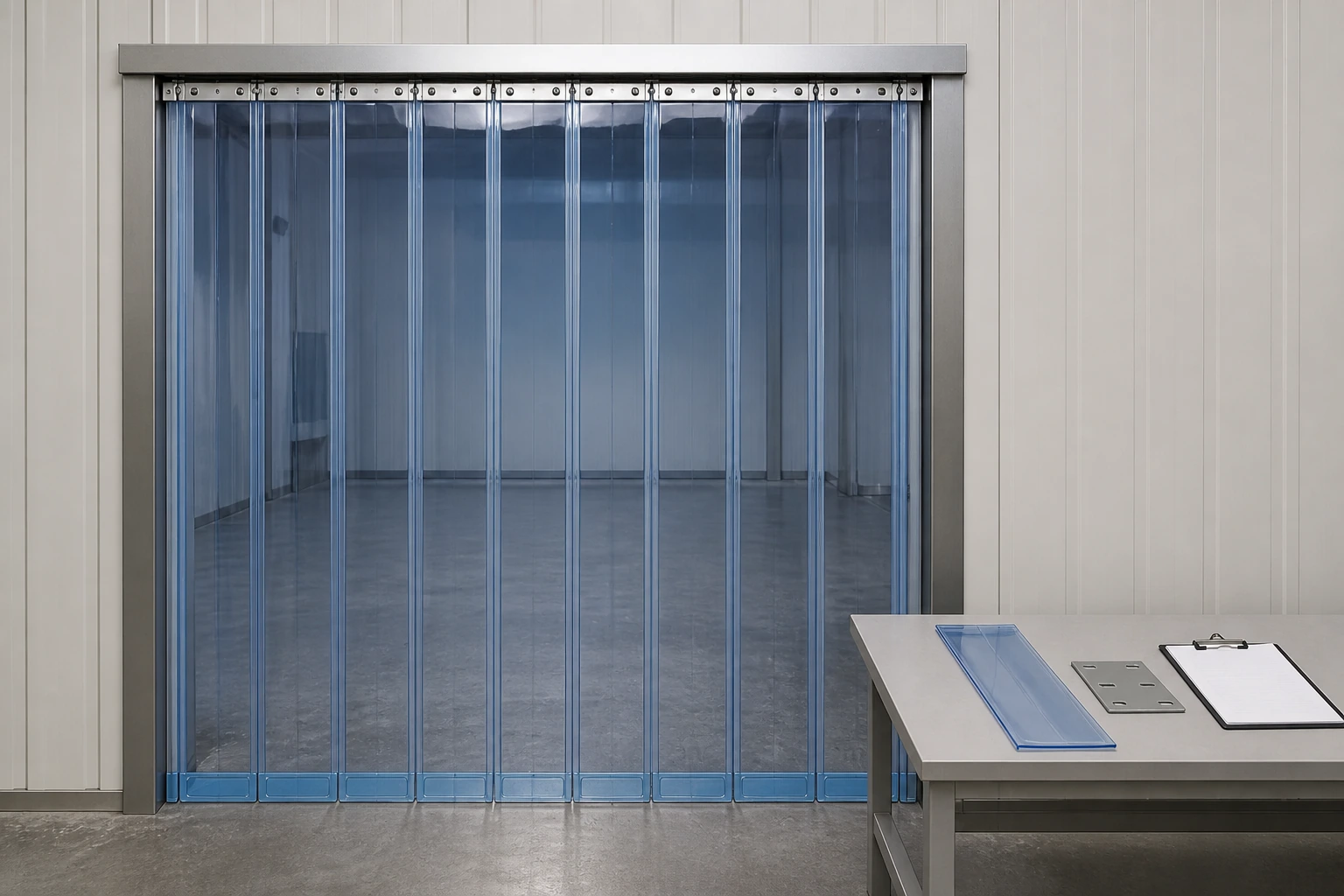
Photograph the supporting frame
Take wide photographs that show the complete opening, frame, rail and floor relationship before focusing on damage. Add a location note and direction of view; close-ups without that context cannot show whether a strip is central, at a jamb or beside an obstruction.
Log temperatures on both sides
Record conditions on both sides at the strip location during ordinary work and the reported problem period. Use the facility’s approved instruments and retain timestamps; a room set point or supplier label is not a substitute for site history.
Observe the busiest traffic period
Watch a representative busy period and list the moving objects, load envelopes and approach directions. The observation should separate repeated contact from occasional incidents so the buyer does not diagnose material from an unrepresentative moment.
Importer guide 02
Compare strip layouts on installed geometry
Roll price does not reveal overlap, strip count or finished resistance.
Recalculate overlap from width
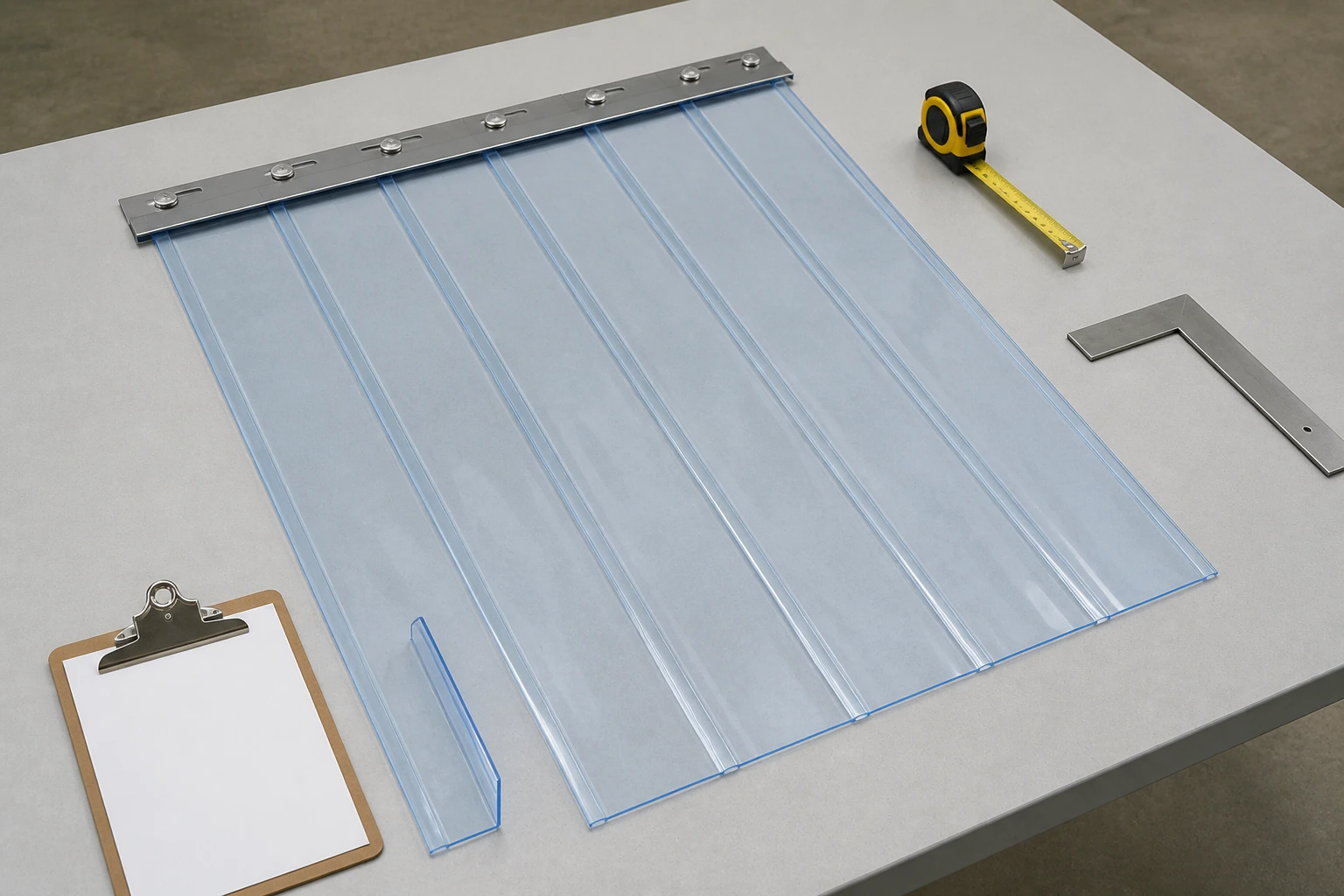
Measure finished strip width and hanger pitch on the installed curtain, then reconstruct the lane pattern on a sketch. Compare that drawing with the purchase record; do not infer overlap from how the strips look in one photograph.
Compare edge closure
Inspect the centre and both edges while the curtain rests after normal traffic. Note persistent gaps, displaced lanes and contact with the frame, because an edge condition can differ from the apparent closure at mid-opening.
Model replacement access
Confirm that plates or hooks allow one strip to be removed and replaced without damaging neighbours. If access is blocked by the frame or another door, record that constraint before a replacement hardware proposal is requested.
Translate the Doorway Survey into a Strip-Curtain Decision
| Traffic route | Strip width, thickness and overlap logic | Temperature and material route | Mounting and clearance | Survey inputs | Installation and maintenance evidence |
|---|---|---|---|---|---|
| People, carts or vehicles under named conditions | Calculated from the represented opening and passage task | Declared strip identity tied to actual operating conditions | Rail, substrate, top/side/floor clearance and installer ownership | Opening dimensions, traffic direction, environment and obstruction map | Small bay, complete doorway, component count and change record |
Importer guide 03
Investigate visibility and collision reports
Sight-line complaints need route, height and lighting observations before changing tint or thickness.
Trace the first lost sight line
Stand at each real approach point and identify when the opposite lane, person or moving load first becomes visible. Record lighting and strip condition so a sight-line complaint is not reduced to a material colour choice.
Separate scratches from haze
Clean a small identified area using the approved method and compare it with an untouched area. Surface scratches, residue, condensation and internal haze have different causes and should not be grouped under “poor clarity.”
Trial pedestrian and vehicle lanes
Run pedestrian and vehicle observations separately with controlled speed and load. Stop the trial if the facility’s safety owner requires it; the guide organizes evidence and does not authorize traffic operations.
Importer guide 04
Test cold behavior within the actual scenario
A cold rating should lead to a named conditioning and deformation question.
Condition production strips
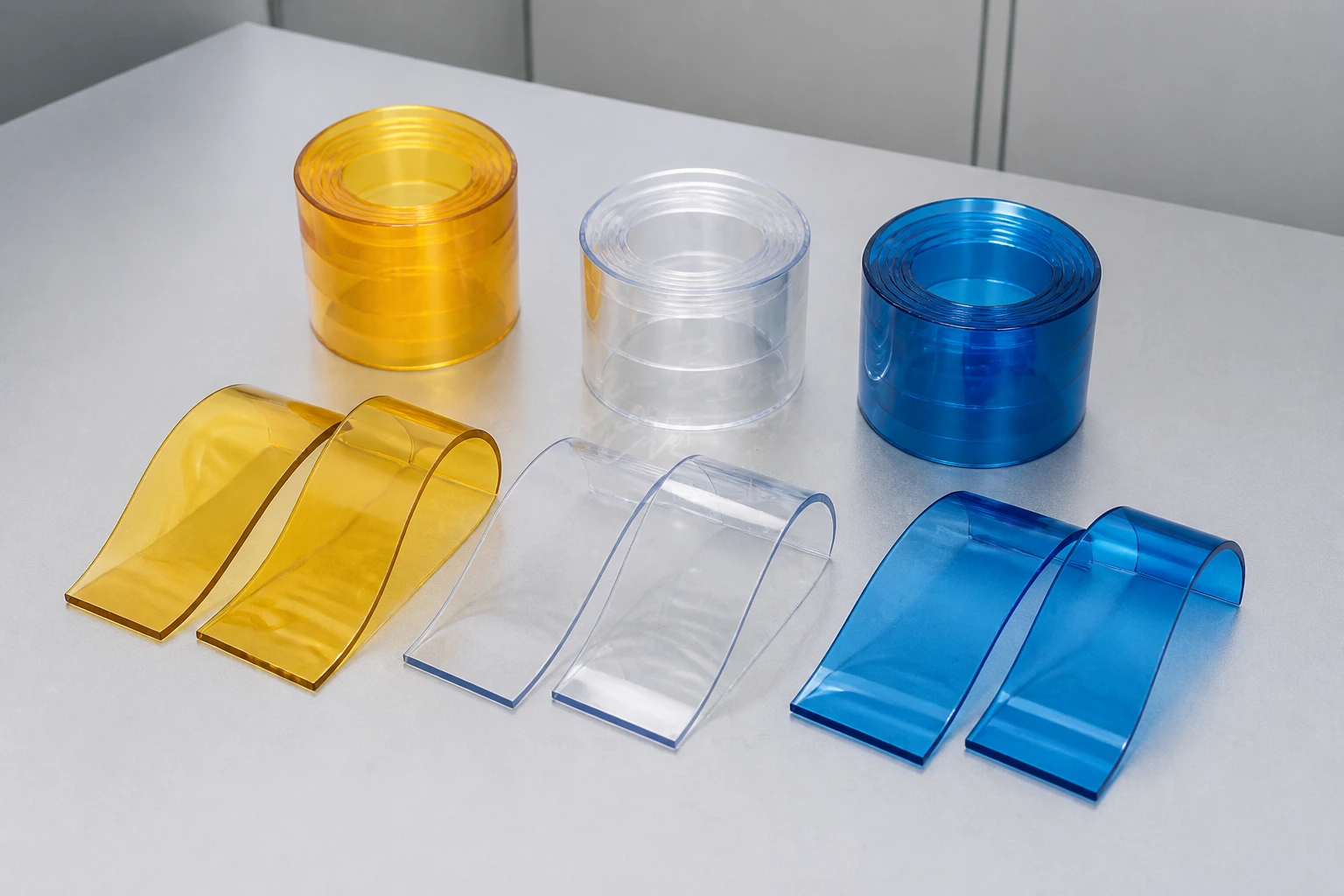
Use production-facing strips with preserved material and lot identity for any conditioning work. State the chamber or site condition, duration and stabilization step so another reviewer can understand exactly what was observed.
Reproduce passing deformation
Reproduce only the displacement that actually occurs at the doorway, using a safe controlled method. Extreme bending can create dramatic pictures but may answer no procurement question and must not be used to rank suppliers.
Record recovery after impact
Observe the affected lane immediately after contact and again at defined later points. Record curl, twist, gap and contact with adjacent strips without converting the result into a universal recovery claim.
Importer guide 05
Normalize hardware and installation scope
Suppliers may include very different rail, plate, fastener and labor assumptions.
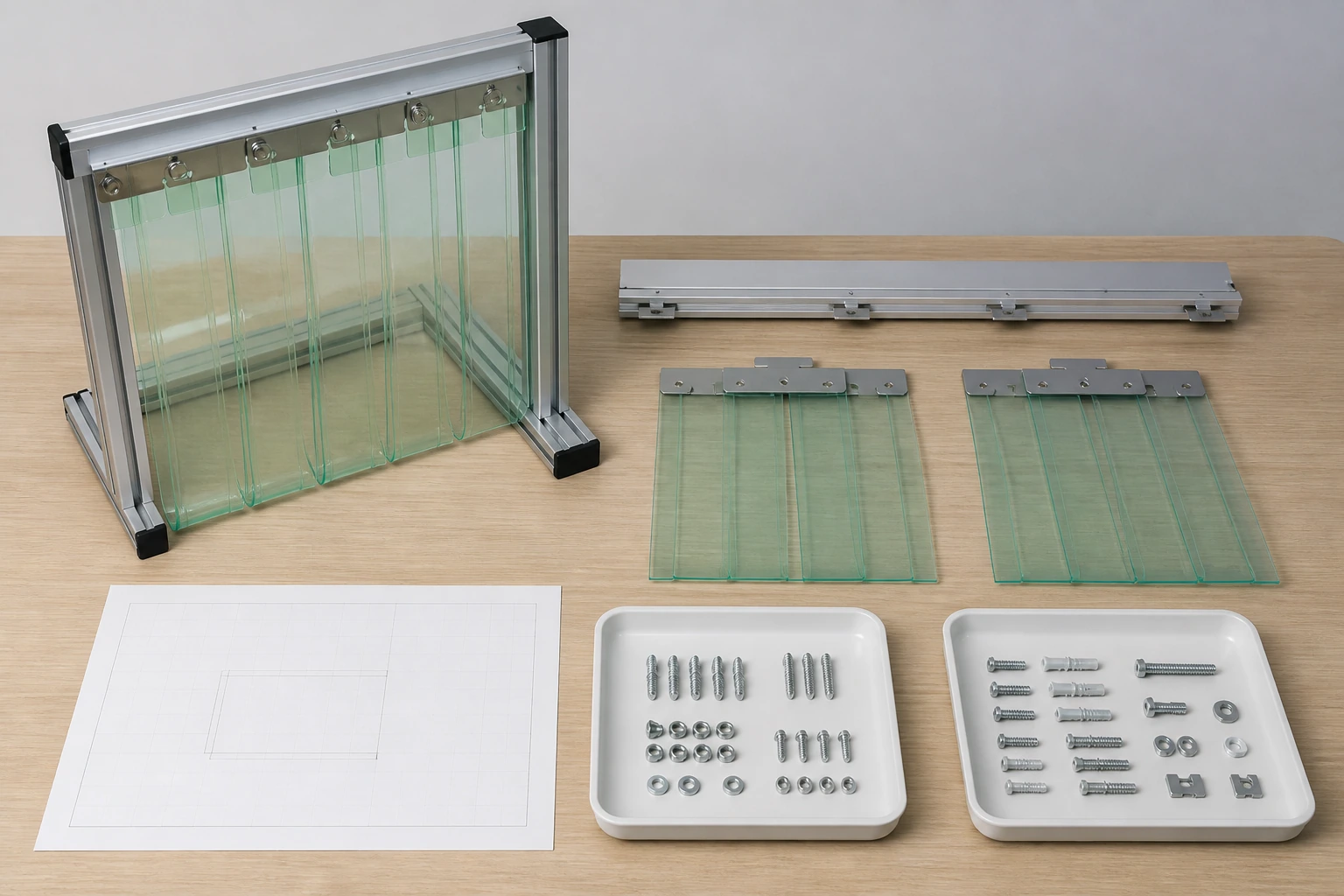
List every supplied component
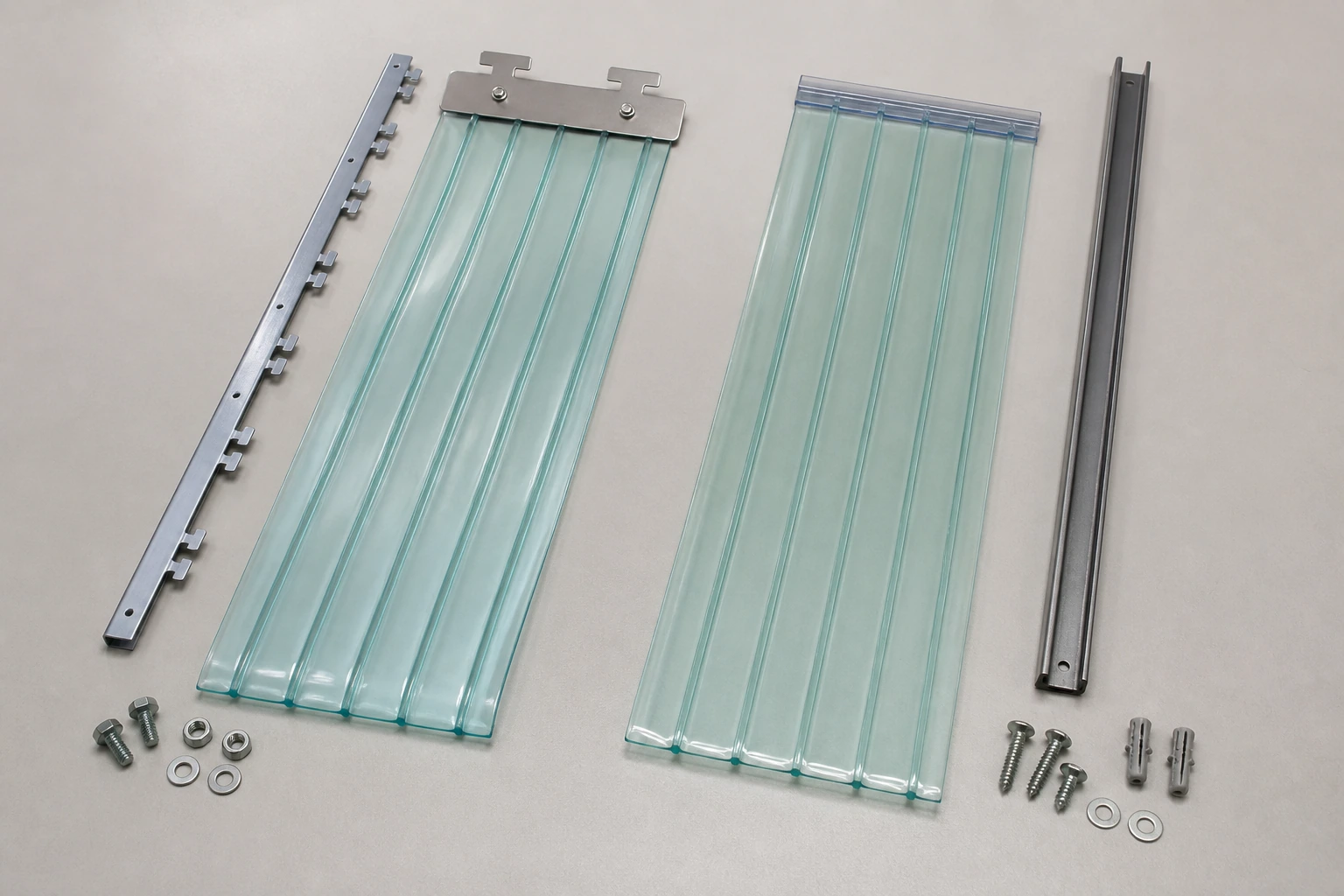
Open the kit and list rail sections, connectors, plates, prepared strips, fasteners, instructions and spares. Match each item to the purchase scope before installation so missing hardware is not misdiagnosed as a site-fitting problem.
Check substrate responsibility
Identify the actual wall, lintel, panel or independent frame that will carry the rail. The installer or qualified project owner must approve anchors and structural suitability; a strip supplier’s generic screw list cannot decide that responsibility.
Price installation separately
Separate material, cutting, punched plates, rails, approved fasteners, site labour, access equipment and disposal on the comparison sheet. Buyers can then see whether two quotations describe the same installed scope.
Importer guide 06
Build a sample ladder for curtain systems
Material coupons, hanging strips and full doorway trials answer different questions.
Approve roll identity first
Begin with a coded roll or full-width strip reference that establishes the proposed material, surface and colour. A photograph or generic sample name cannot control later cutting, hardware or production identity.
Trial a small hanging bay
Use a small bay to review strip orientation, overlap, plate fit and basic passage behavior before committing to the complete opening. Record what the bay cannot prove, including edge closure and interaction with the actual frame.
Release the complete kit
Release a complete doorway trial only after material and small-bay questions are resolved. Its drawing, hardware, traffic condition and observations should become the reference set for the commercial order.
Importer guide 07
Write an inspection plan around replaceable parts
The useful acceptance file connects strips, hardware, labels and replacement instructions.
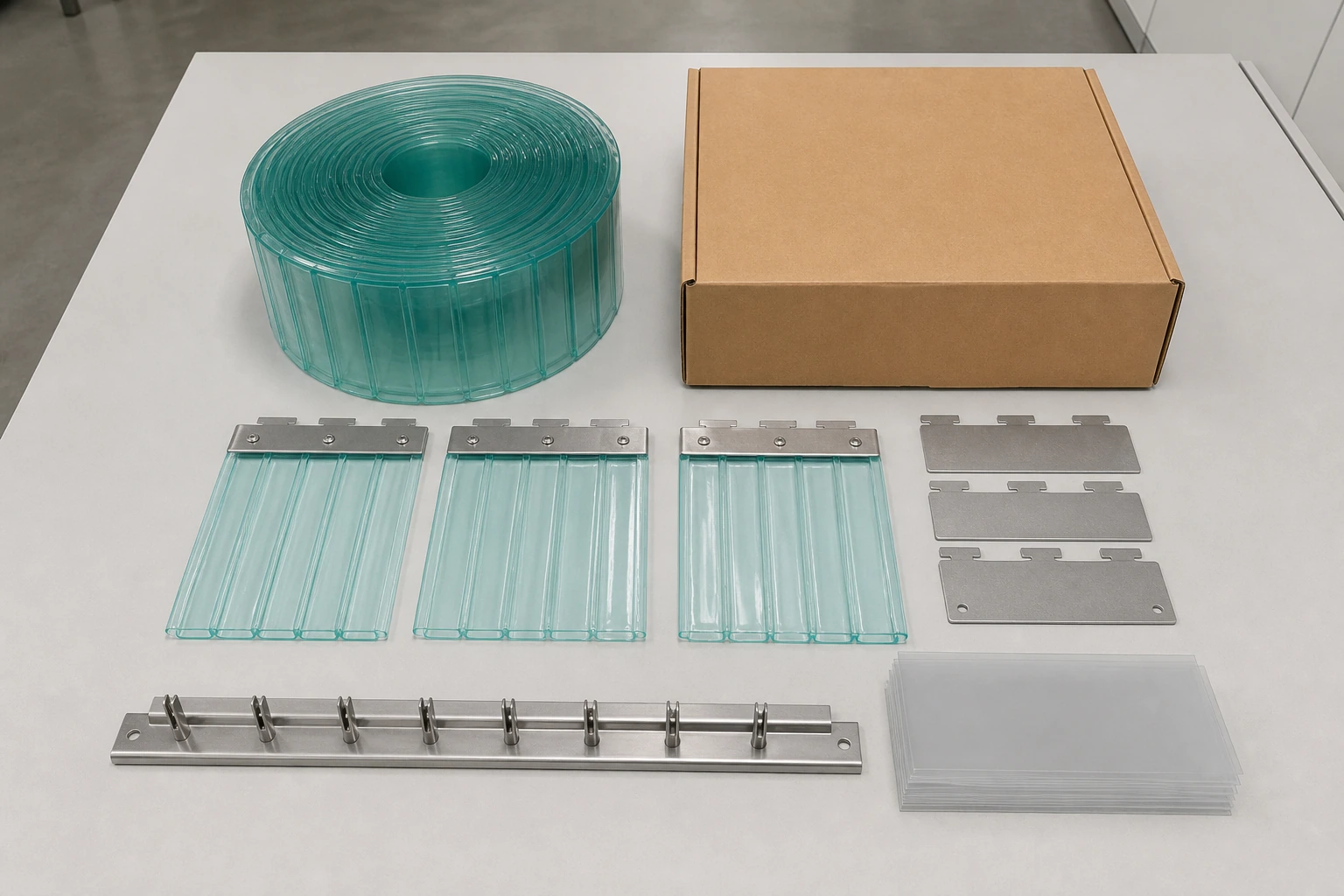
Sample strip dimensions
Measure sampled finished strips at named positions with a stated method and conditioning history. Keep the values linked to the exact kit or carton, rather than copying them into a general product statement.
Verify punched locations
Overlay sampled hole or plate locations on the released drawing and trial them on the supplied rail. Accumulated pitch error may matter even when one component appears acceptable on its own.
Count packaged hardware
Count hardware by type and reconcile partial rail sections, connectors and fasteners before the kit reaches the site. Record buyer-supplied items explicitly so an absent component is not hidden by the phrase “installation by others.”
Importer guide 08
Diagnose deformation after transport
Coil memory and surface marks must be traced through winding, heat, pressure and storage time.
Record coil diameter
Record how strips were coiled or folded, the approximate pack geometry and the point where pressure was concentrated. The evidence should describe the received condition without guessing the supplier’s internal packing history.
Map pressure points
Inspect surfaces where straps, carton edges, plates or neighbouring strips applied pressure. Link each mark to its pack location and preserve photographs before attempting recovery or cleaning.
Observe recovery after hanging
Hang identified strips in a neutral condition for an agreed period and record which changes occur without intervention. Settling observations must stay tied to those samples; they do not excuse a layout or material mismatch.
Importer guide 09
Freeze the accepted doorway configuration
Reorders should preserve compound, dimensions, overlap, rail and installation revision.
Research boundary: the U.S. Department of Energy describes strip curtains as vertically oriented plastic barriers at walk-in openings; the document does not establish a universal savings figure for every doorway. ISO 8570:1991 specifies a low-temperature cold-crack method for plastic film and sheeting and was confirmed current in 2021; it is not a universal finished-curtain purchase target. Review the DOE walk-in technical support document and ISO 8570, then set the actual operating condition and acceptance boundary.
Retain coded samples
Retain coded material, finished strip and hardware references in conditions that preserve their identity. The sample register should say what each item represents and when it is no longer reliable for comparison.
Link lots to shipments
Connect incoming material, conversion reference, finished kit and shipment identifiers in one traceable chain. This lets a later concern be investigated without claiming that every piece in a broad product family is identical.
Require written change notice
Require written notice before changes to formulation, surface, colour, thickness, width, length, punch pattern, plate, rail or packing. The buyer can then reopen only the affected checks instead of discovering a silent substitution after delivery.
PVC strip curtain questions
Importer questions for installed strip-curtain decisions
What should an importer photograph during a strip-curtain site audit?
Capture the complete opening, mounting substrate, side and floor clearances, resting overlap, traffic direction and any bunching or damaged lane. Link each view to measured dimensions and the time and operating condition.
How can two strip-curtain quotations be normalized?
Recalculate finished strip count and overlap from one doorway drawing. Then compare declared material, surface, cut length, punched hardware, rail, fasteners, sample work, packing and exclusions as separate commercial lines.
Which sample stage comes before a full doorway trial?
Begin with a coded roll or strip reference to identify the proposed material. Follow with a small hanging bay for overlap and hardware review, then release a complete doorway kit only after the earlier questions are closed.
How should a cold-room strip concern be investigated?
Preserve the strip code, thickness, age, installation position and temperature history. Reproduce the buyer-defined deformation on a conditioned production strip and record recovery without extending that observation to another formulation.
What belongs in repeat-order change control?
Carry forward the approved material identity, drawing revision, overlap lane, cut and punch data, hanger schedule, visual boundary, sample codes and pack reference. Require notice before any connected input changes.
Investigation handoff
Apply the buying guide to one live industrial doorway
Send the measured opening, current strip and hardware references, site photographs, traffic event, temperature history, observed issue and purchasing deadline. The review will organize evidence gaps without treating the message as approval.