

Build the Roadway device order around one declared site role
Cones, folding triangles, water-fillable modules and road reflectors solve different placement problems. A buyer should begin by naming the location, responsible authority, expected viewing direction, setup duration and maintenance owner. EverBen then maps the requested device family to controlled geometry, components, packing and inspection records without implying a road approval that has not been supplied.
This route supports distributors, contractors and program buyers who need mixed traffic-guidance items. It does not treat every bright orange object as protection equipment. Positive-protection, crash-rating or accident-prevention language remains outside the offer unless the exact finished system has applicable evidence accepted by the buyer's responsible reviewer.
Separate device families before comparing quotations
A mixed request becomes comparable only after each line has its own construction and deployment fields. The table below keeps warning, channelizing and surface-mounted items from being merged under one catalogue label.
| Device family | Fields to freeze for supplier comparison | Receiving focus |
|---|---|---|
| Traffic cone | Overall height, base footprint, body compound, collar position, base mass and nesting allowance | Body recovery, base flatness, collar edges and stack release |
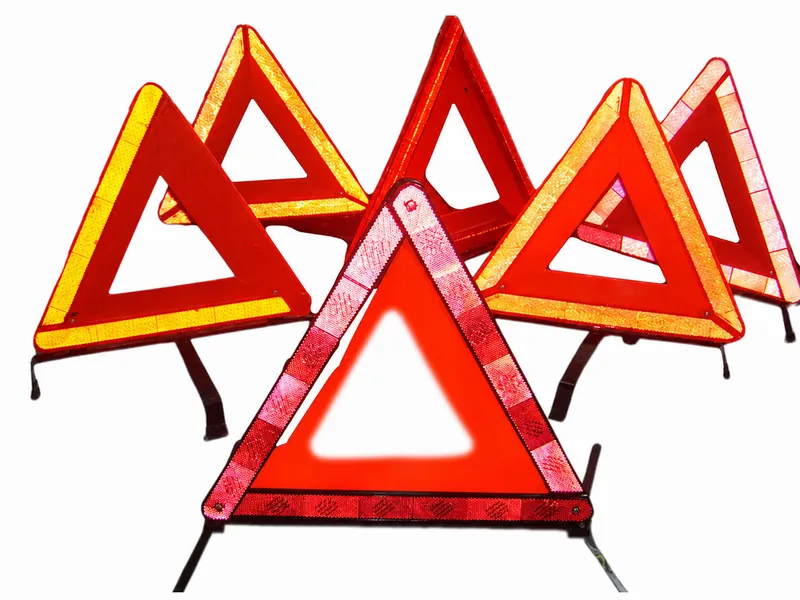
| Folding warning triangle | Deployed geometry, reflective face, hinge route, locking point, support legs and storage case | Opening sequence, leg contact, hinge movement and case completeness |
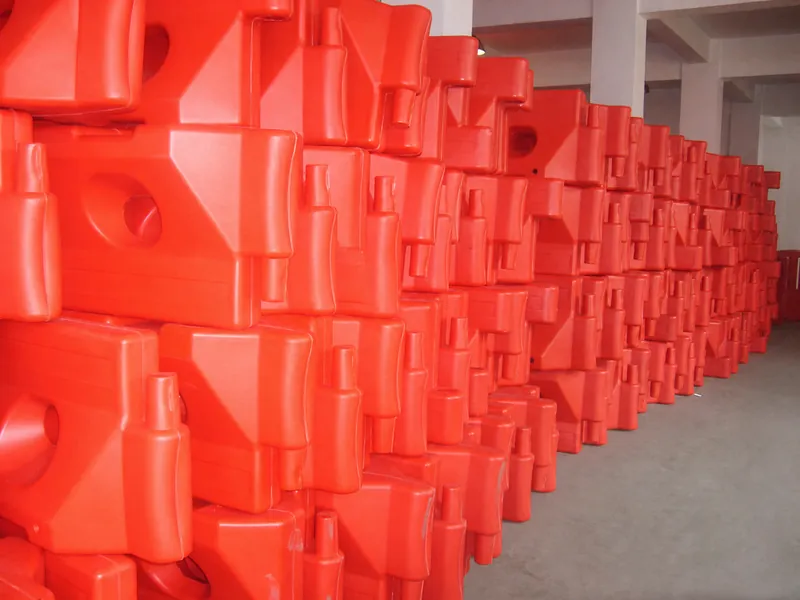
| Water-fillable module | Module length, wall form, fill opening, cap, molded connector, empty mass and proposed line arrangement | Visible cracks, cap fit, connector match and deformation after packing |
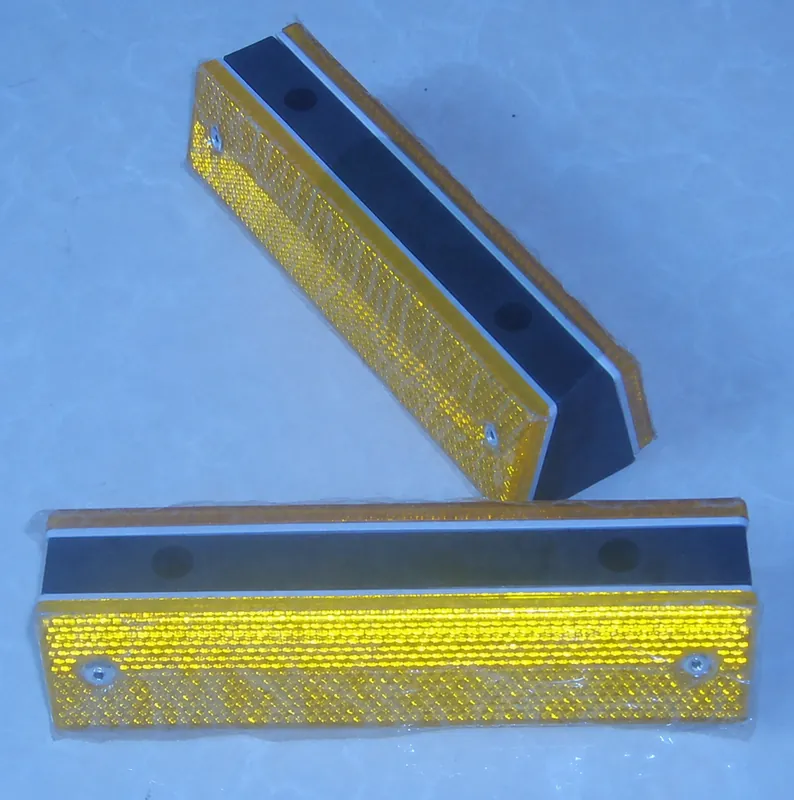
| Road reflector or blinker | Housing dimensions, reflective or optical face, fastener route, mount, power configuration and service access | Face condition, hardware count, housing closure and identification |
Compare complete Roadway constructions in one complementary image group
These full-product views support different buyer decisions: deployed triangle geometry, molded barrier condition and reflector hardware. They are not interchangeable evidence and should be tied to the relevant SKU line.
Control cone and triangle geometry with measured samples
For a cone, record height from the standing surface, base length and width, body-wall route, collar width and vertical position, complete mass, base material and stacking depth. The approval view should show the entire unit standing upright and a nested stack being separated. A flash photograph can reveal reflective response, but it cannot replace the buyer's named visibility method or prove placement compliance.
For a folding triangle, measure the deployed outline and document every joint that carries the open shape. Check that legs contact the intended surface, locks engage without forcing, reflective faces remain undamaged and the folded device enters its specified case. The case, instructions and triangle are one delivered set; approving only the bright face leaves the deployment route uncontrolled.
Specify barrier modules by connection and fill state
A water-fillable body needs a defined empty condition, proposed fill medium, cap arrangement, interlock direction and module-line drawing. Request both nested and deployed dimensions because transport efficiency and site footprint answer different questions. If the buyer expects turning angles, end pieces or signs, list those parts separately instead of assuming every molded body accepts the same accessory.
Receiving inspection should look for cracks around openings, cap mismatch, distorted connector faces, unstable contact surfaces and damage caused by dense nesting. Any statement about impact, containment or vehicle restraint must be routed to the exact assembled configuration and accepted evidence. Empty orange modules shown in a catalogue are not automatically crash barriers.
Treat reflectors and warning lights as controlled assemblies
Reflective markers require the housing, face material, orientation, fastener or adhesive route and mounting surface to be stated. Warning blinkers add lens color, light pattern, power source, switch behavior, mount compatibility and service access. A component supplier's report does not establish how the finished unit performs after assembly, installation, dirt exposure or maintenance.
Ask for front, side and fastening views of the released piece. Record the visible face, hardware count, lens or reflector edges, housing closure and any lot identifier. Destination markings and claims must be approved before printing; no approval symbol should be added from a competitor image or an assumed market convention.
Use a staged sample route before bulk release
- Role brief: identify the site owner, device purpose, destination rules, placement environment and wording boundary.
- Line specification: freeze the selected family, overall dimensions, compound choices, reflective plan, base or ballast, connectors, accessories and packed quantity.
- Complete sample: review standing, folded, nested, connected and packed states that apply to the ordered SKU.
- Inspection record: capture measured results, visible condition, setup observations, open decisions and the approving revision.
- Shipment release: match carton marks, component count and retained comparator to the purchase-order line.
Changing resin, base compound, reflective component, hinge, connector, cap, mounting hardware, production site or pack density can reopen affected decisions. The quotation should show which changes require a new sample, updated record or buyer sign-off.
Translate site observations into a usable inspection plan
| Inspection moment | Observed object | Buyer record |
|---|---|---|
| Incoming components | Body compound, base, reflective face, hinge, cap, connector, lens and fastener identity | Material or component approval linked to the order revision |
| First completed unit | Full geometry, standing condition, opening or filling route, markings and accessory fit | Measured first-piece record with dated photographs |
| Pre-shipment sample | Surface condition, component count, operation, nesting, cases, labels and carton presentation | Lot-linked result plus closed corrective actions |
| Receiving check | Transport damage, count, released model, visible deformation and setup usability | Arrival record tied to shipment and SKU |
Plan packing around the complete deployed and stored forms
Cones and barriers may nest tightly, while triangles and warning lights may require cases or individual protection. Define how operators separate nested pieces, where caps and hardware are packed, how cartons or bundles are marked and what deformation is unacceptable. Gross weight and unloading method should be reviewed with the destination warehouse rather than optimized only for container density.
A retained pack sample should show item count, accessory location, instruction placement and carton identity. When mixed device families share one shipment, assign a distinct SKU, count and inspection record to each line so a missing cap or triangle case cannot be hidden by the total carton quantity.
Keep public claims inside the supported evidence boundary
Bright color, reflective material or a heavy base may support a buyer-defined warning or channelizing role, yet none of those features alone proves road-authority acceptance, wind stability, impact resistance or accident prevention. Name the responsible reviewer and applicable requirement before production. Test conditions, sample construction and result ownership must match the ordered device.
EverBen can organize drawings, samples and inspection records supplied for review. Final suitability remains a project decision made against the destination, installation and complete evidence set. The Roadway device selection guide provides a separate decision framework for authority, deployment and claim control.
Prepare a Roadway RFQ that suppliers can answer line by line
Send the device family, intended control role, responsible authority, destination, quantity, overall geometry, material route, base or ballast, reflective arrangement, connector or hinge details, accessories, labels, packing and required delivery window. Add the buyer's drawing or current requirement where available. EverBen will identify unresolved fields before quoting rather than filling gaps with unverified assumptions.
Frequently asked Roadway sourcing questions
Can one orange cone specification serve every destination?
No. The buyer must define the destination rule, site role, height, base, body, reflective layout, deployment and accepted evidence for the ordered cone.
Is a water-fillable module positive protection?
Not by appearance alone. Protection or crash-related wording requires an applicable tested system and evidence for the exact assembled configuration.
What belongs in a warning-triangle sample set?
Review the deployed triangle, reflective faces, hinge and lock, support legs, folded state, storage case, identification and approved instructions together.
How should road reflectors be inspected?
Check complete housing dimensions, face condition, orientation, fastener route, side profile, marking and the mounting assumptions provided by the buyer.
When is reapproval needed?
A change to geometry, compound, reflective component, hinge, connector, cap, hardware, production site or packing may reopen the affected sample and evidence lanes.
Request a specification-based quotation
Share the device role, family, geometry, reflective layout, accessories, packing, destination and quantity. EverBen will return the open specification fields before pricing.